
27 Inspiring Long Pixie Haircuts to Try
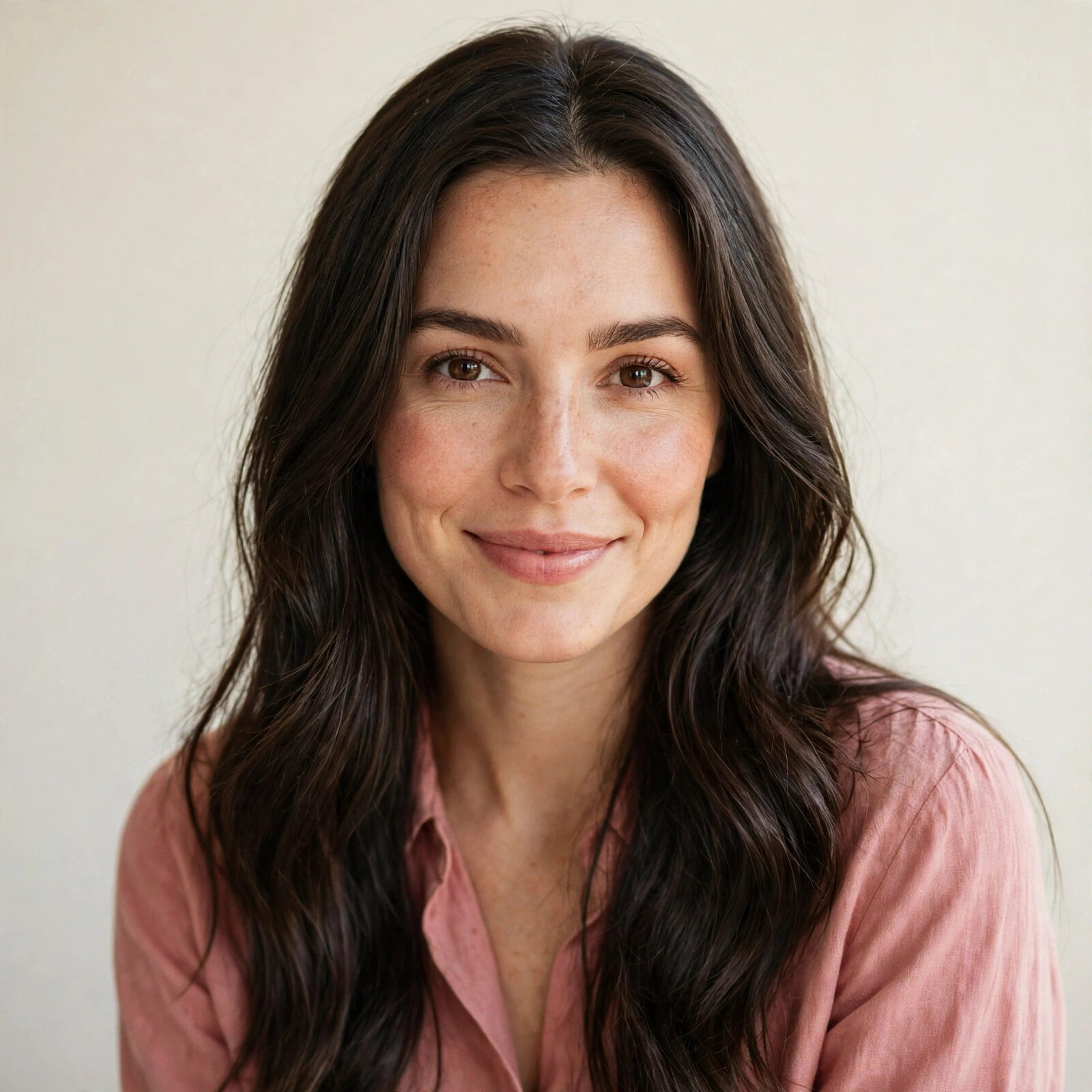
The long pixie sits in the sweet spot between a short crop and a bob. It keeps the lightness and low-maintenance feel of a pixie while leaving enough length on top to sweep, tuck, wave or pin back, which is exactly why it has become the go-to cut for anyone who wants short hair without giving up styling options. A few extra inches on top change everything: the cut frames the face, softens the jawline and gives fine hair the lift it usually lacks.
This roundup gathers twenty-seven inspiring long pixie haircuts, from classic layered cuts and soft wavy versions to edgy undercuts, curly takes and polished pixie bobs. Each style comes with a real photo and notes on the cut, texture and upkeep involved, so it is easy to find a version that suits a face shape, hair type and lifestyle – and to walk into the salon with a clear reference in hand.
1. Classic Long Pixie
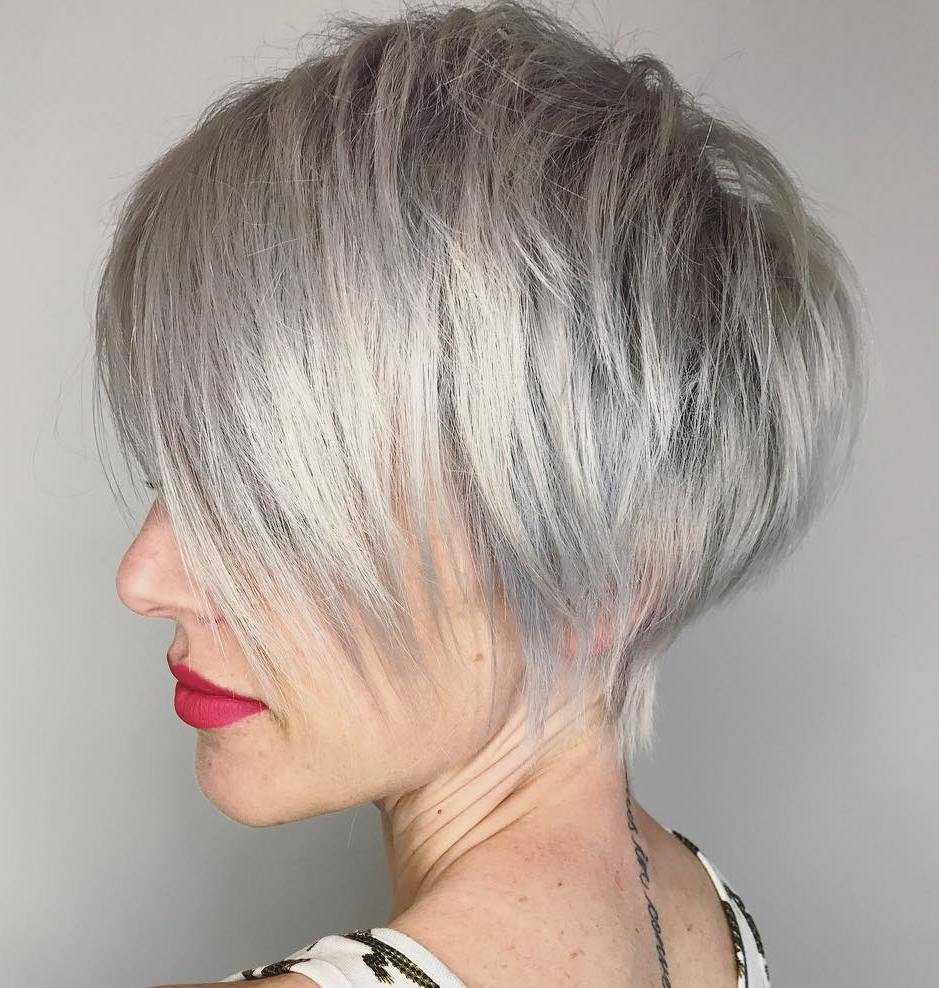
Photo via Woman Strong
The classic long pixie is the template every other version on this list starts from. The back and sides are cut short and neat, while the top keeps three to four inches of length that can be swept to one side, pushed back or left to fall naturally across the forehead. It is a clean, balanced shape that works on straight, wavy and thick hair alike, and it flatters most face shapes because the length on top adds height where it counts.
Upkeep is refreshingly simple. A trim every five to six weeks keeps the shape sharp, and styling takes little more than a pea-sized amount of pomade or texturizing cream worked through damp hair. The trade-off is that the cut shows its grow-out quickly around the ears and nape, so regular maintenance is the price of that polished look.
2. Long Pixie with Side-Swept Bangs
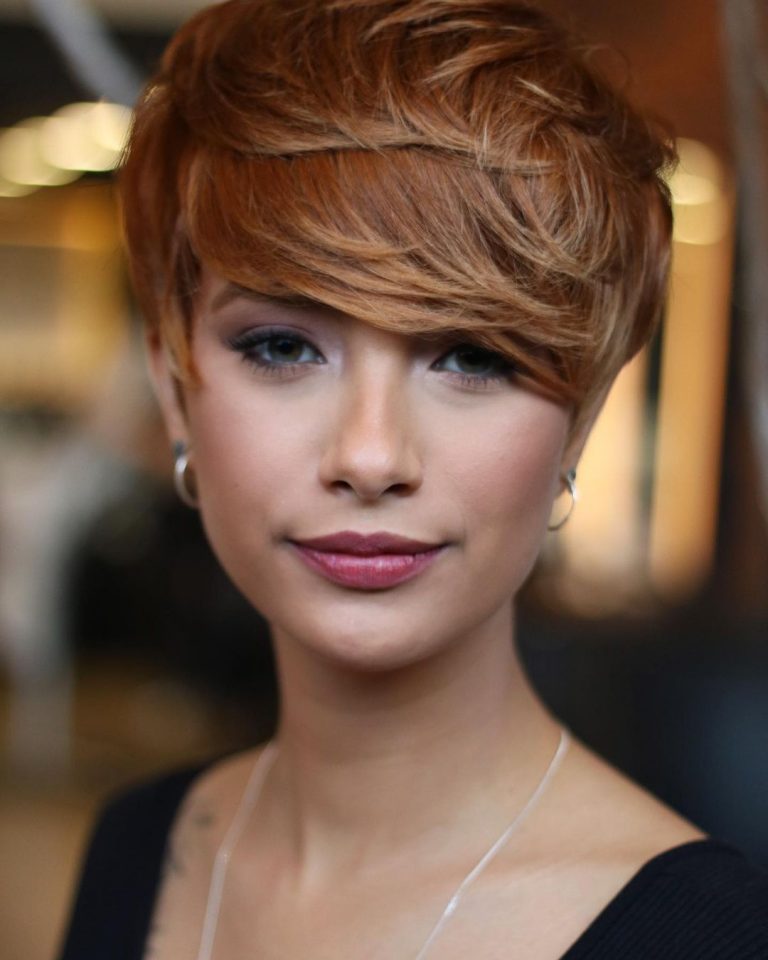
Photo via Flawless Hair
Side-swept bangs are the easiest way to make a long pixie feel soft and feminine. The fringe is cut long enough to fall across the forehead and blend into the layers at the sides, which draws attention to the eyes and cheekbones while hiding a high forehead. It is a particularly good choice for oval and long face shapes, where the diagonal line of the fringe breaks up length.
Styling is mostly a matter of direction. Blow-drying the fringe across the forehead with a round brush sets the sweep, and a light-hold spray keeps it in place without stiffness. The bangs will need trimming between full haircuts if they start falling into the eyes, but that is a quick five-minute job at the salon.
3. Long Pixie Bob
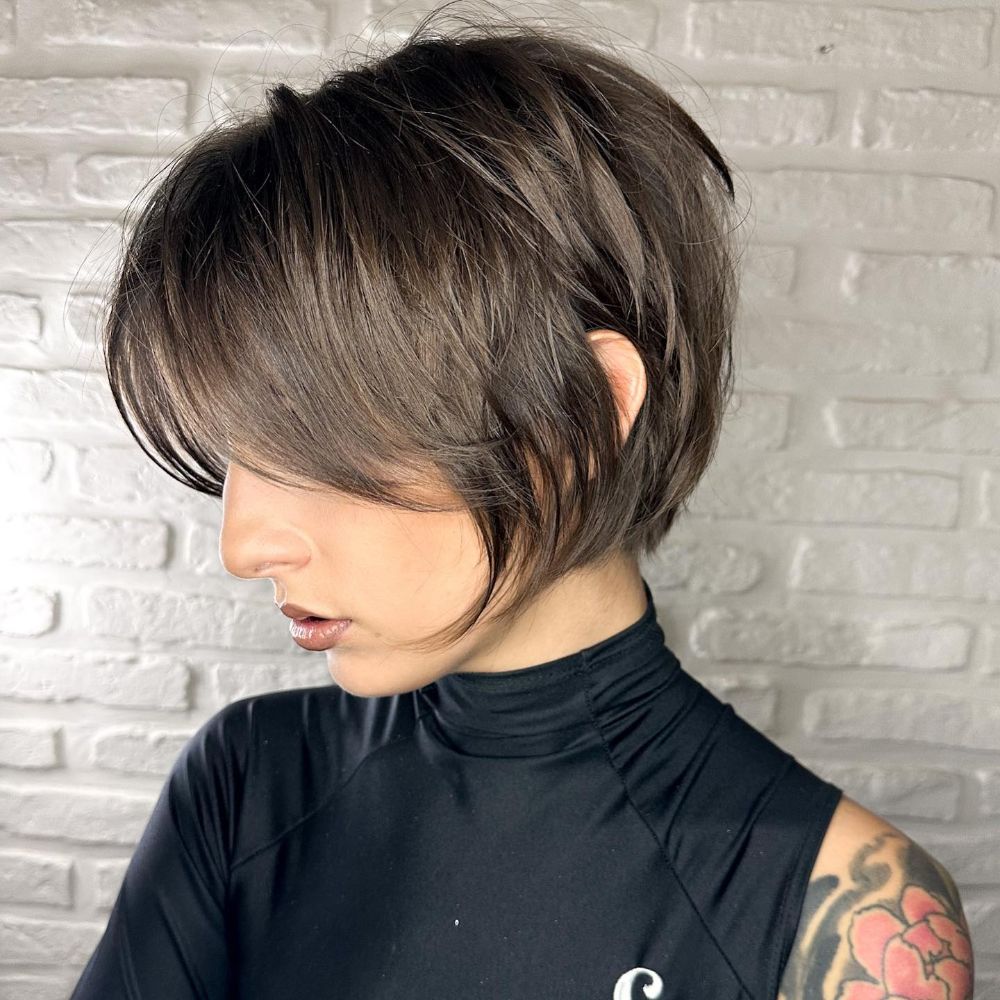
Photo via Fabbon
The pixie bob, sometimes called the bixie, is the longest and softest member of the pixie family. The nape stays short and tapered like a pixie, but the top and sides carry bob-like length that grazes the jawline or the cheekbones. The result is a cut with real movement and swing, and it is the most forgiving option for anyone nervous about going short for the first time.
Because it carries more weight than a classic pixie, the pixie bob suits thick and wavy hair beautifully, and it can be air-dried into soft waves or smoothed with a flat iron for a sleeker finish. The extra length also means it grows out gracefully, so appointments can stretch a little further apart than with a tighter pixie.
You may also like: 20 Stylish Friendsgiving Outfits: Chic, Cozy Looks for Dinner With Friends
4. Layered Long Pixie
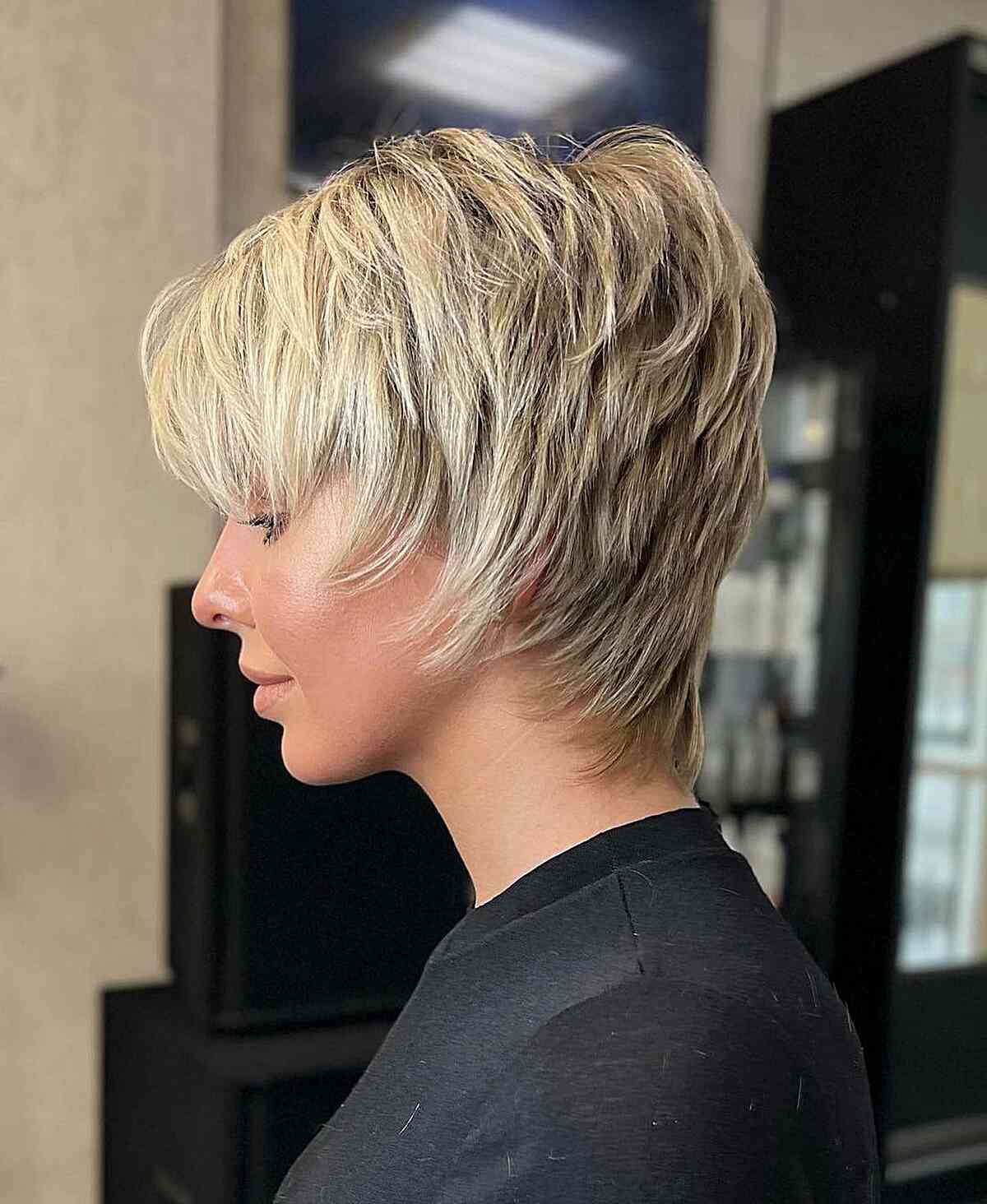
Photo via Latest Hairstyles
Layers are what give a long pixie its shape and lift, and a fully layered version is the best choice for fine or flat hair. Shorter layers through the crown create volume at the roots, while longer pieces around the face keep the cut soft and wearable. The layering also removes bulk from thick hair, so the cut sits lighter and moves more freely.
The key to getting this cut right is a stylist who understands weight distribution – too many short layers can leave the ends looking wispy, while too few leaves the shape heavy. At home, a volumizing mousse at the roots and a quick rough-dry with the fingers is usually all the styling this cut needs.
5. Long Pixie with an Undercut
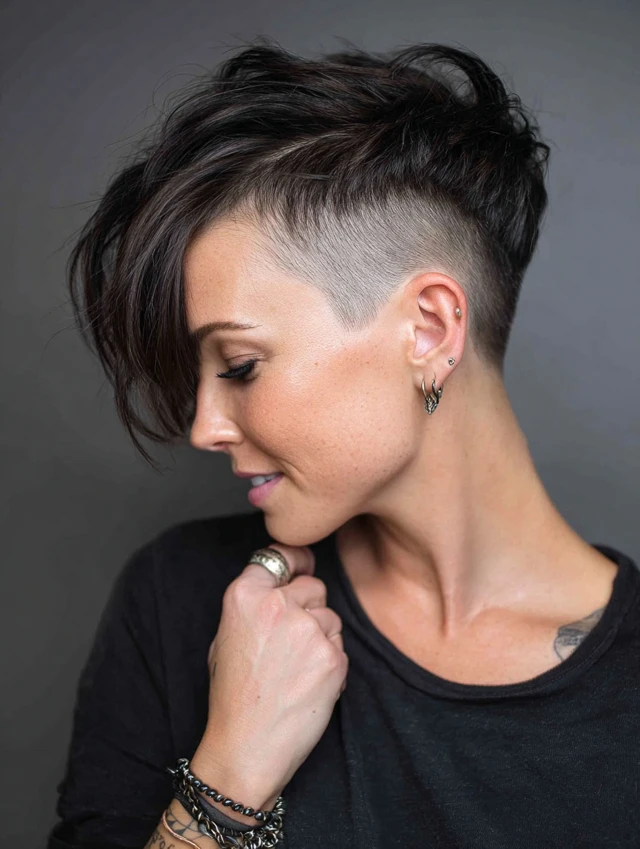
Photo via Facial Tasks
An undercut takes the long pixie in a bold direction. One or both sides – sometimes the nape too – are clipped close or shaved, while the top keeps its full long-pixie length. The contrast between the shaved sections and the longer hair on top creates a dramatic silhouette, and the longer top can be swept over the undercut to hide it or styled away to show it off.
The undercut is also a practical choice for thick hair, since removing the bulk at the sides makes the whole cut feel lighter and cooler. The catch is maintenance: clipped sections grow out fast and lose their edge within three to four weeks, so this version needs the most frequent salon visits of any pixie on this list.
6. Blonde Long Pixie
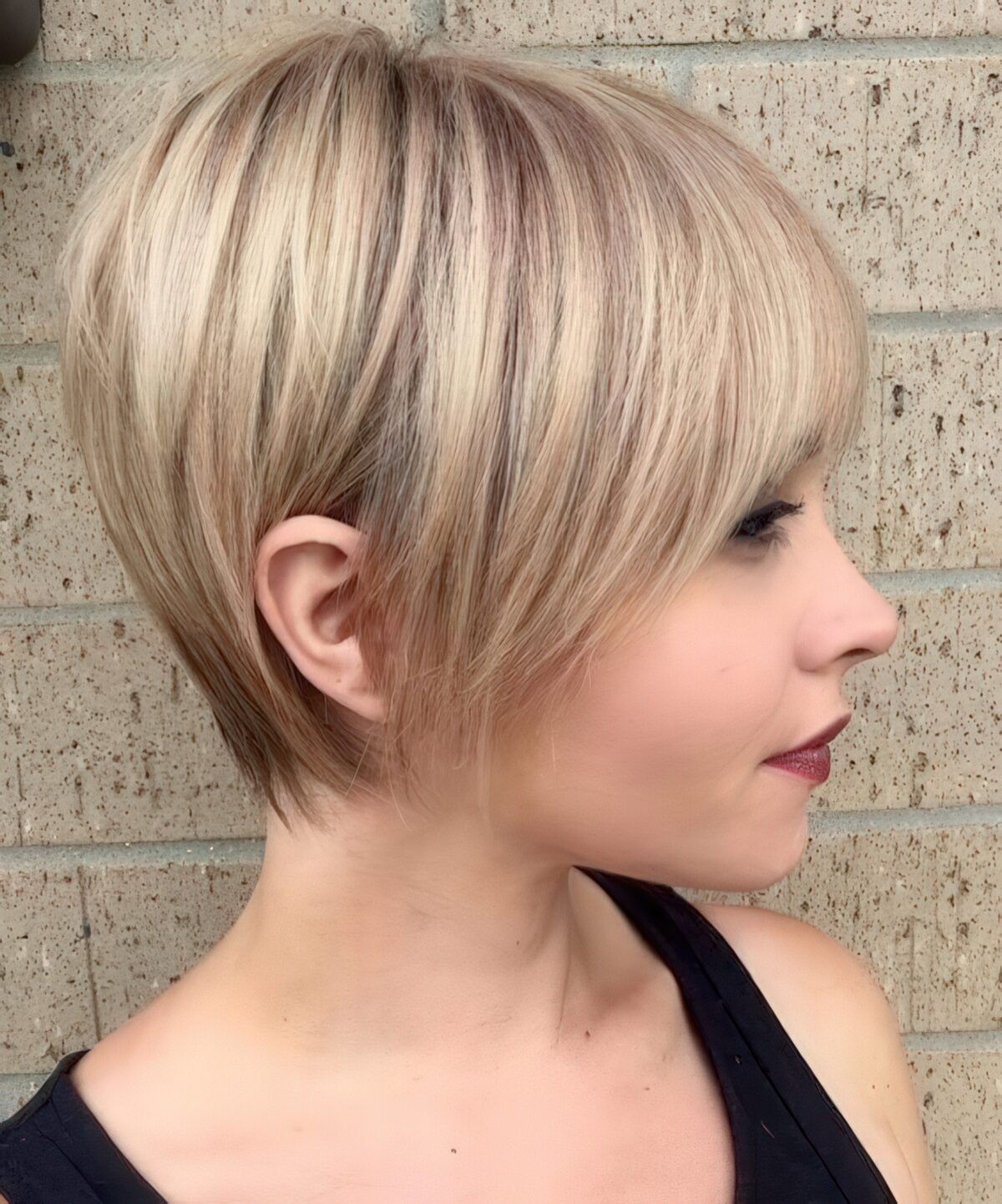
Photo via Styleoholic
Blonde brings out every layer of a long pixie. Lighter tones catch the light as the hair moves, which makes the cut look fuller and more dimensional than the same shape in a dark shade. A soft golden or honey blonde keeps the look warm and natural, while an icy or platinum blonde turns the pixie into a real statement.
The upkeep here is about colour as much as cut. Blonde pixies need purple shampoo to keep brassiness at bay, and roots show quickly on short hair, so colour appointments land every four to six weeks. The trade-off is worth it for the way blonde highlights the texture and movement of the cut.
7. Brunette Long Pixie
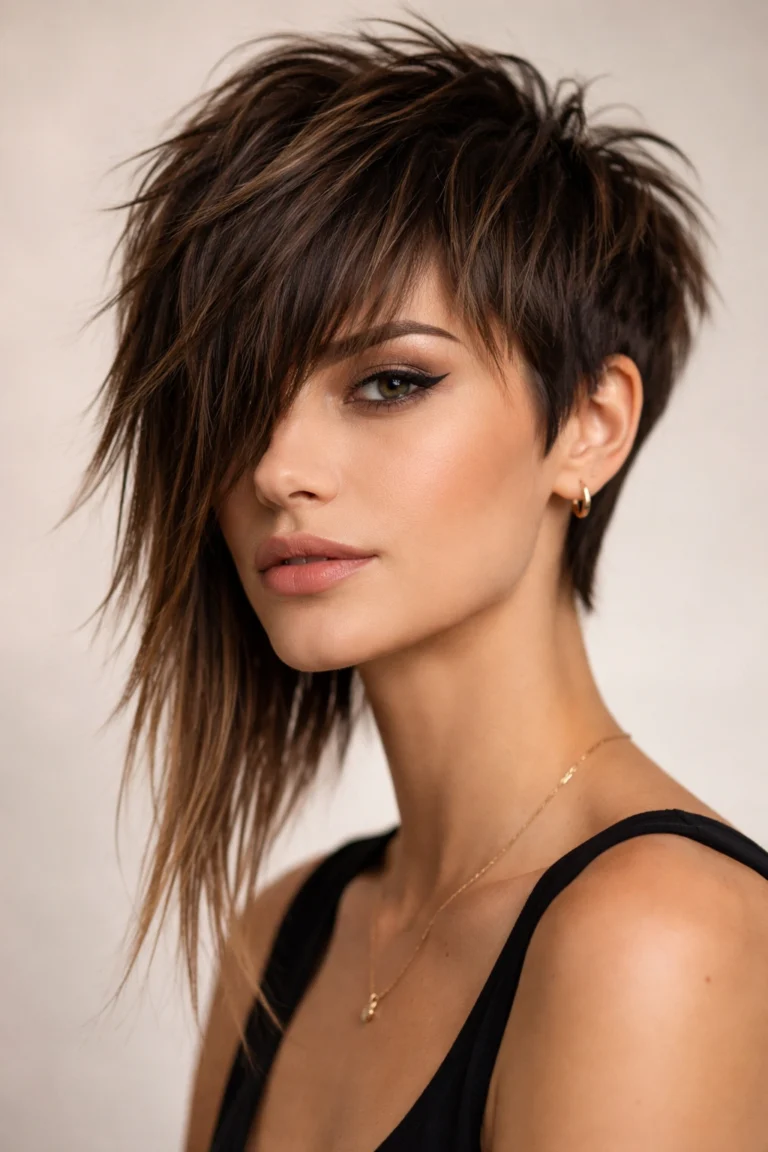
Photo via Hairtical
A brunette long pixie is all about depth and shine. Dark hair reflects light in a way that makes the cut look polished and expensive, and the clean lines of a pixie show off a rich chocolate or espresso shade beautifully. Subtle dimension can come from a gloss treatment rather than highlights, which keeps the colour low-maintenance.
This is one of the easiest versions to live with day to day. Dark colour hides grow-out better than blonde, the cut itself needs only a trim every five to six weeks, and a shine serum is enough to keep the finish looking salon-fresh. It is a strong choice for anyone who wants short hair with a refined, put-together feel.
8. Long Pixie with Highlights
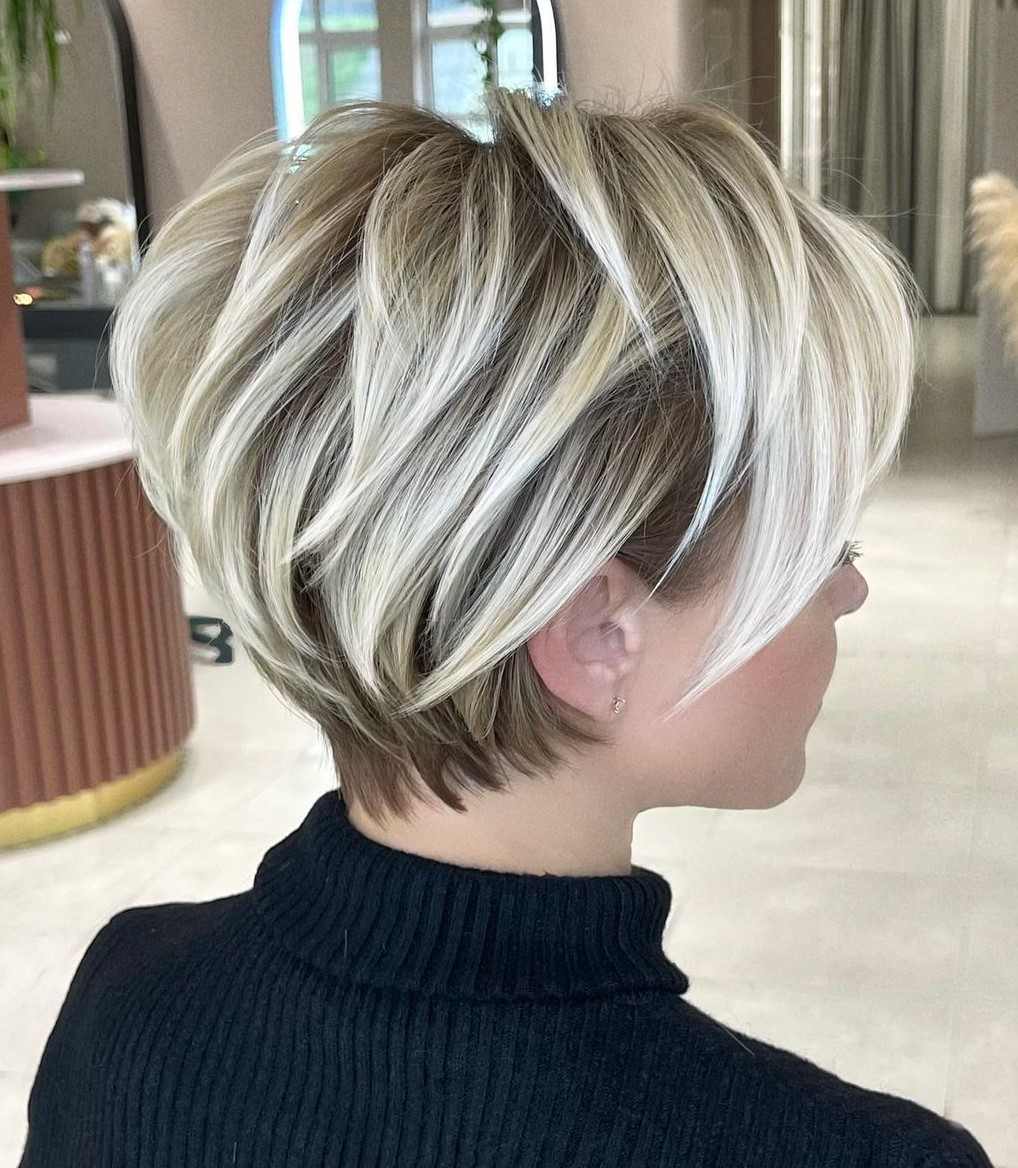
Photo via Hair Adviser
Highlights add dimension to a long pixie without changing the base colour. Fine ribbons of lighter shade woven through the top layers catch the light and make the cut look thicker and more textured, which is especially helpful on fine hair. Face-framing highlights around the fringe brighten the whole face and draw attention to the eyes.
Because the hair is short, highlights on a pixie grow out faster than on longer styles, so a refresh every six to eight weeks keeps them looking intentional rather than patchy. A colour-safe shampoo and a weekly deep-conditioning mask will keep the lightened pieces healthy and shiny.
9. Wavy Long Pixie
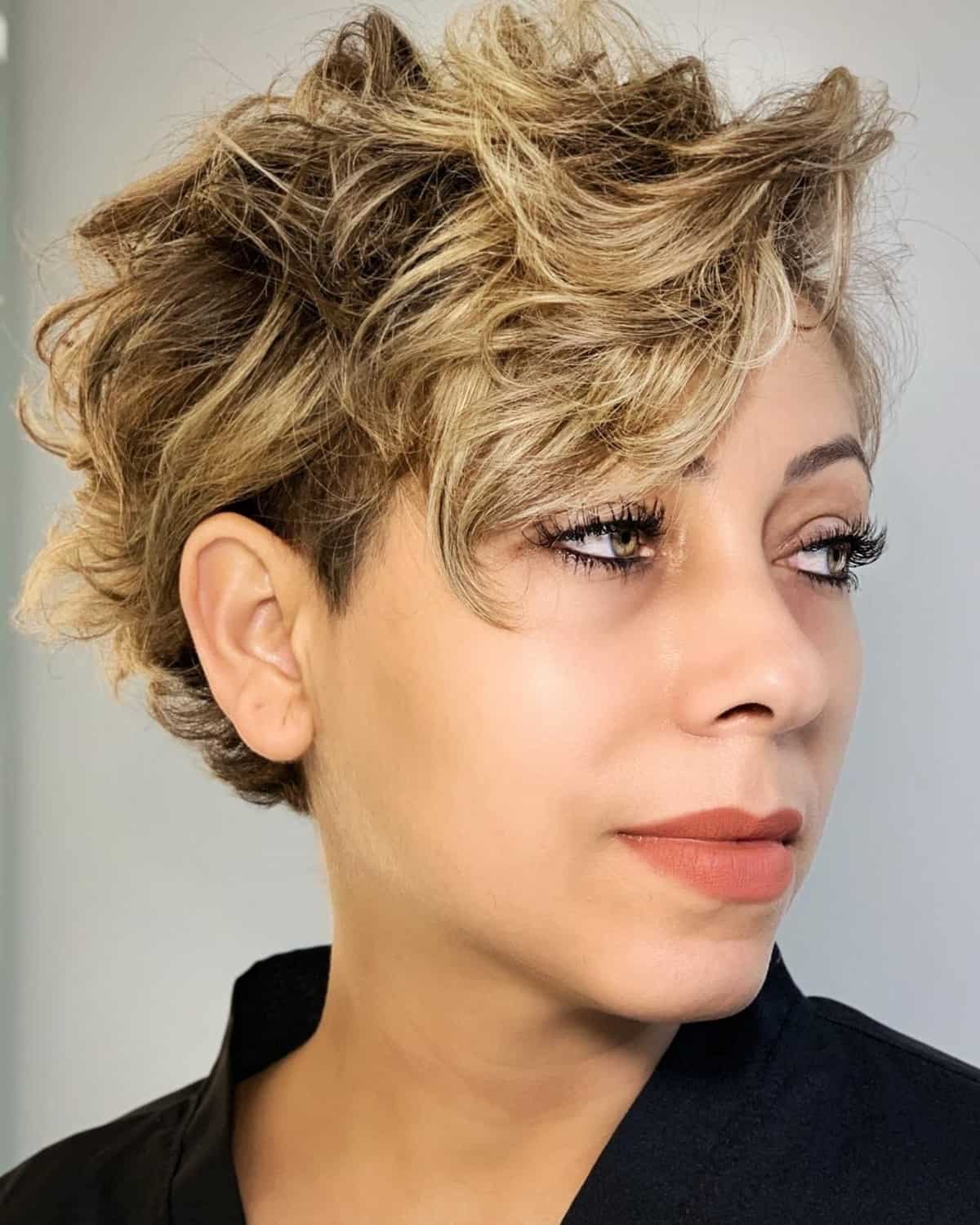
Photo via Latest Hairstyles
A wavy long pixie is made for natural texture. The waves give the cut movement and a relaxed, undone finish that straight hair has to work for, and the longer top lets the wave pattern show instead of being cut away. It is one of the most flattering versions for round and square faces, because the soft waves break up strong lines.
The best styling approach is a hands-off one. A curl-enhancing cream or sea-salt spray scrunched into damp hair, left to air-dry, usually produces the best result. Over-brushing is the enemy here – it turns waves into frizz, so fingers and a wide-tooth comb are the only tools this cut needs.
10. Curly Long Pixie
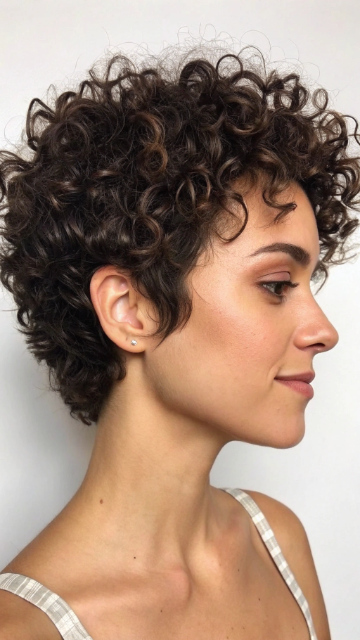
Photo via Glowing Style
Curly hair and a long pixie are a natural match. The short sides keep the shape tidy, while the longer top lets curls spring and coil with real personality. The result is a cut full of bounce and volume that looks different from every angle, and it is one of the most joyful versions of the pixie to wear.
The cut works best when it is shaped dry, curl by curl, so the stylist can see how each curl falls at its natural length. At home, a leave-in conditioner and a curl cream keep the curls defined and frizz-free, and a trim every eight weeks or so is enough – curls hide grow-out better than straight hair does.
11. Shaggy Long Pixie
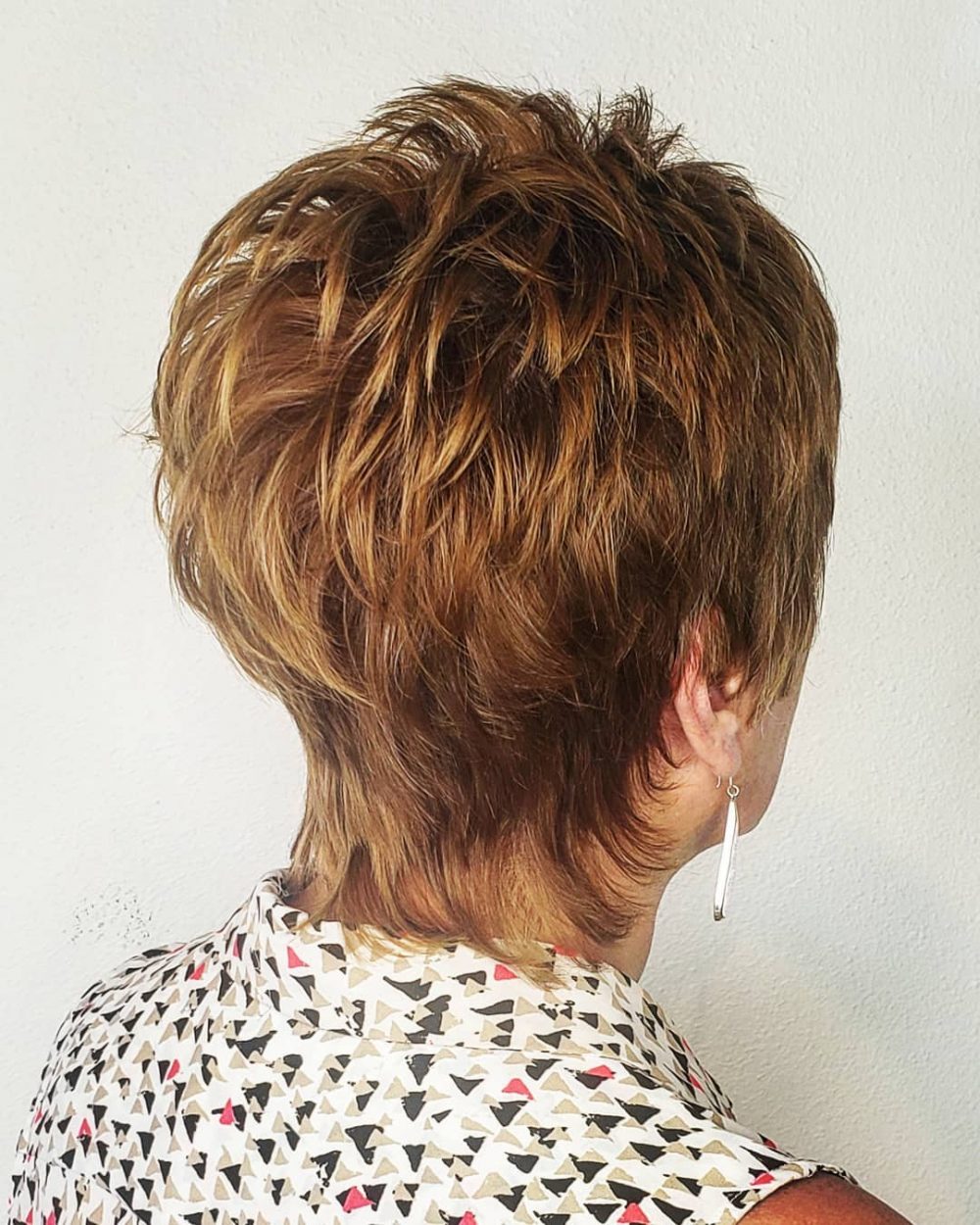
Photo via Latest Hairstyles
The shaggy long pixie is the relaxed, rock-and-roll cousin of the classic cut. Choppy layers, a piecey fringe and lots of texture give it a lived-in, undone finish that looks best slightly messy. It suits wavy and straight hair equally well, and the shaggy layers are forgiving on a wide range of face shapes.
Styling is deliberately low-effort. A texturizing spray or a dab of matte paste, worked through with the fingers, is all it takes, and the cut actually looks better on second-day hair. The shaggy shape also grows out more gracefully than a precise pixie, which means fewer emergency salon trips.
12. Long Pixie with a Long Fringe
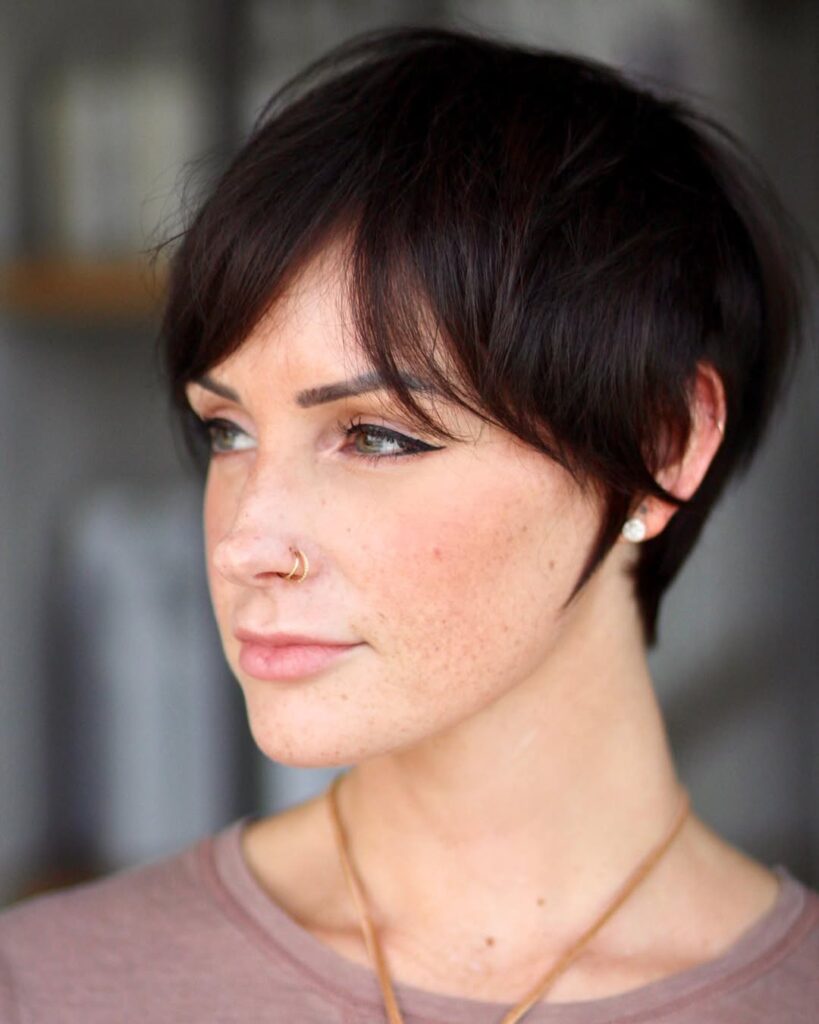
Photo via Trendy Universe
A long fringe is the defining feature of this version, with the front section left long enough to sweep past the cheekbone or even to the chin. The fringe can be worn swept to one side, parted in the middle or tucked behind an ear, which makes this one of the most versatile long pixies – it can look completely different from one day to the next.
The long fringe also does useful work for the face, softening a strong jawline and drawing attention to the cheekbones. It does need a little daily attention, though: a quick pass with a round brush or a flat iron keeps the fringe sitting where it should, and it will need trimming more often than the rest of the cut.
13. Long Pixie for Fine Hair
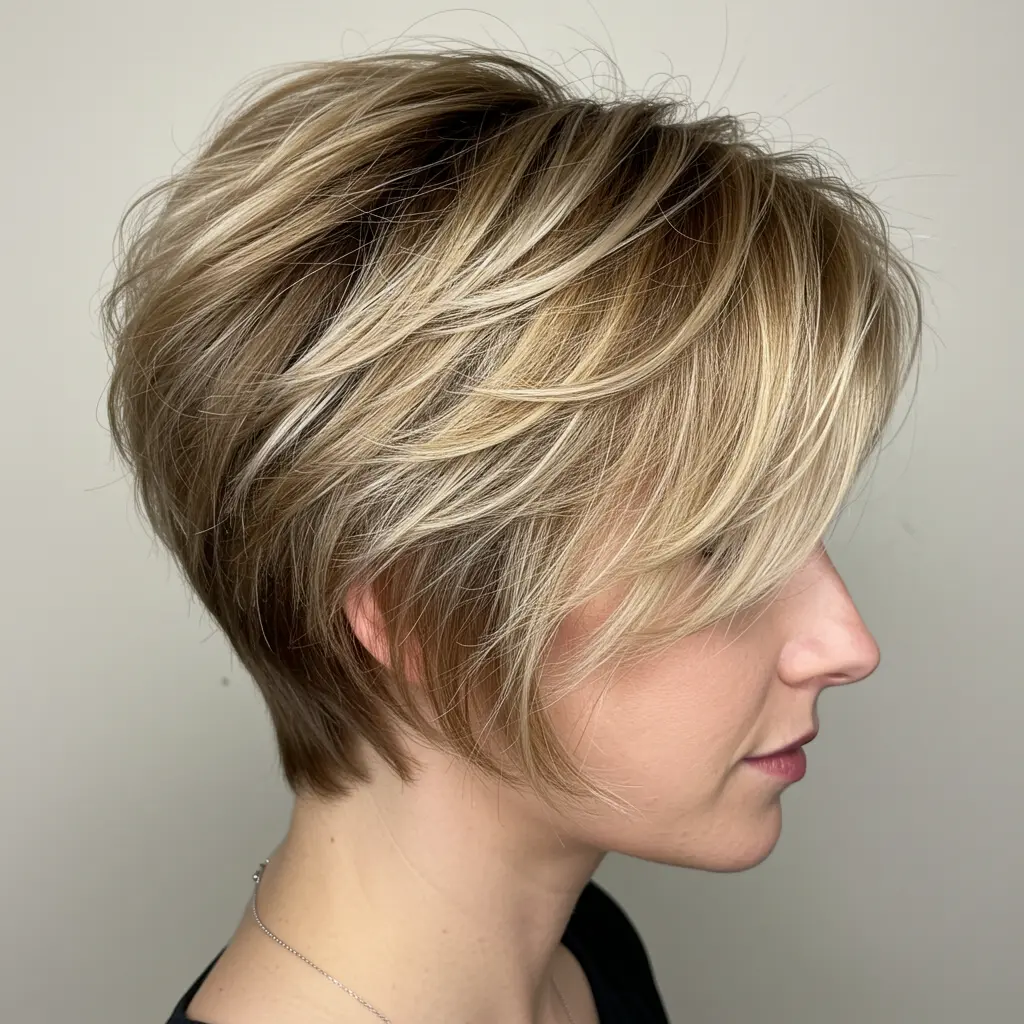
Photo via Attic Babys
Fine hair benefits enormously from a long pixie, because removing length removes weight, and weight is what pulls fine hair flat. Short layers through the crown create lift at the roots, and the cut’s natural texture makes fine strands look thicker than they are. Blunt-cut ends, rather than heavily razored ones, help the hair look as full as possible.
The right products make a real difference here. A volumizing mousse at the roots, blow-dried with the head tipped forward, gives lasting lift, while heavy oils and creams should be avoided – they weigh fine hair down and undo the cut’s built-in volume. A root touch-up spray can also help the parting look denser.
14. Long Pixie for Thick Hair
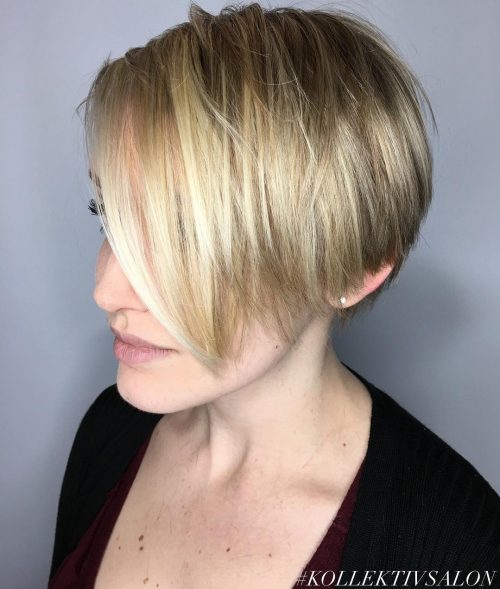
Photo via Hairs London
Thick hair can make a pixie look bulky if it is cut without enough internal texture, but a long pixie designed for thick hair turns that density into an advantage. Thinning and point-cutting through the interior removes weight without shortening the outside, so the cut keeps its shape while sitting lighter on the head.
The payoff is a pixie with real presence – full, glossy and substantial, with enough hair to style in several directions. The main upkeep note is the weight: thick hair grows fast, so the shape can start to feel heavy after five weeks, and a smoothing serum helps keep the surface sleek between trims.
15. Long Pixie with Feathered Layers
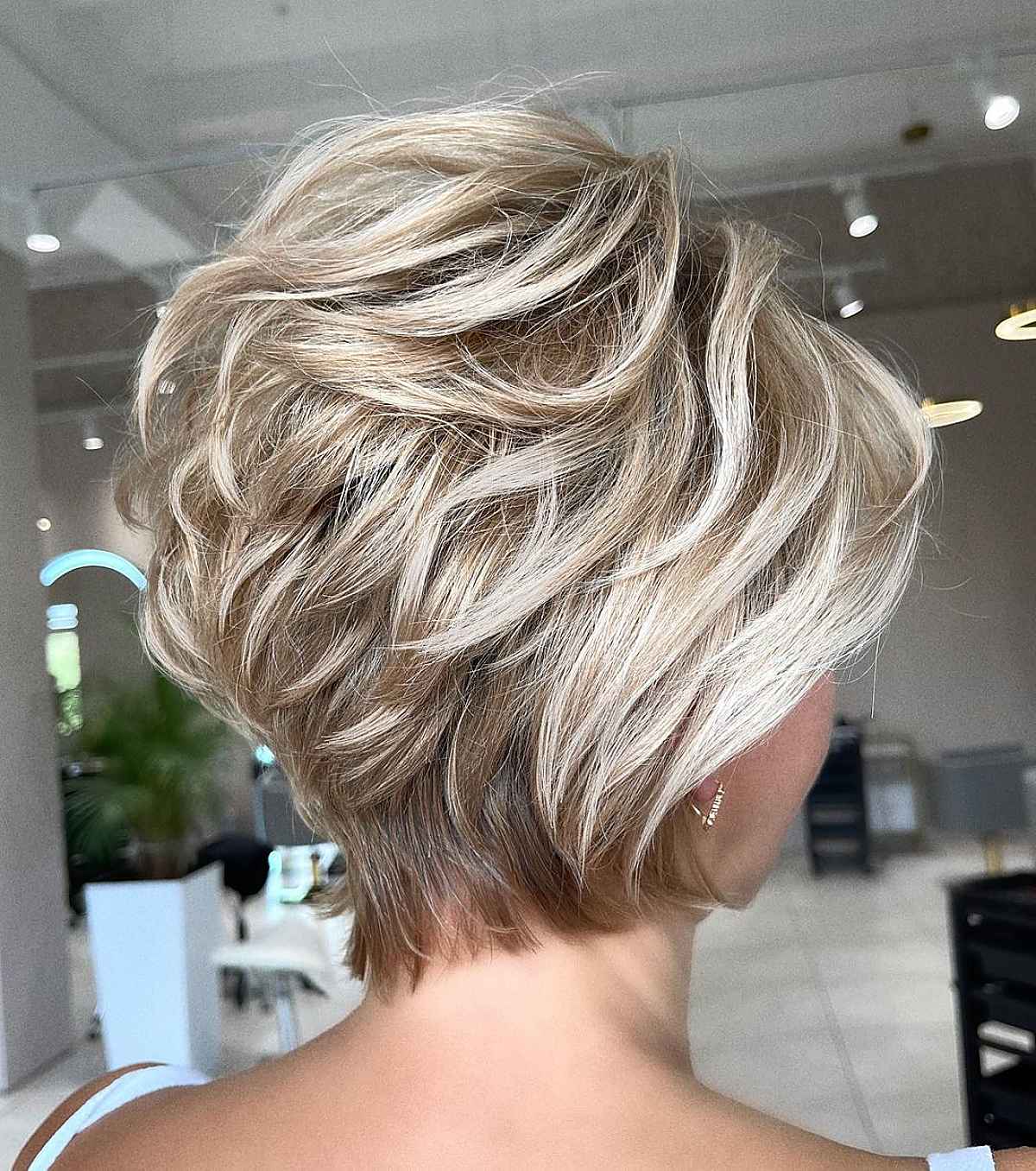
Photo via Hairs London
Feathered layers are cut with a razor or point-cutting technique so the ends taper into soft, wispy points rather than blunt lines. On a long pixie, feathering gives the cut a light, airy finish and makes the layers blend seamlessly into each other, which is ideal for anyone who dislikes a choppy or harsh-looking short cut.
This technique works best on straight to slightly wavy hair, where the feathered ends can show their movement. A light styling cream smoothed over the surface keeps the feathering defined without weighing it down, and the soft edges mean the cut grows out more gracefully than a blunt pixie.
16. Long Pixie with Tapered Sides
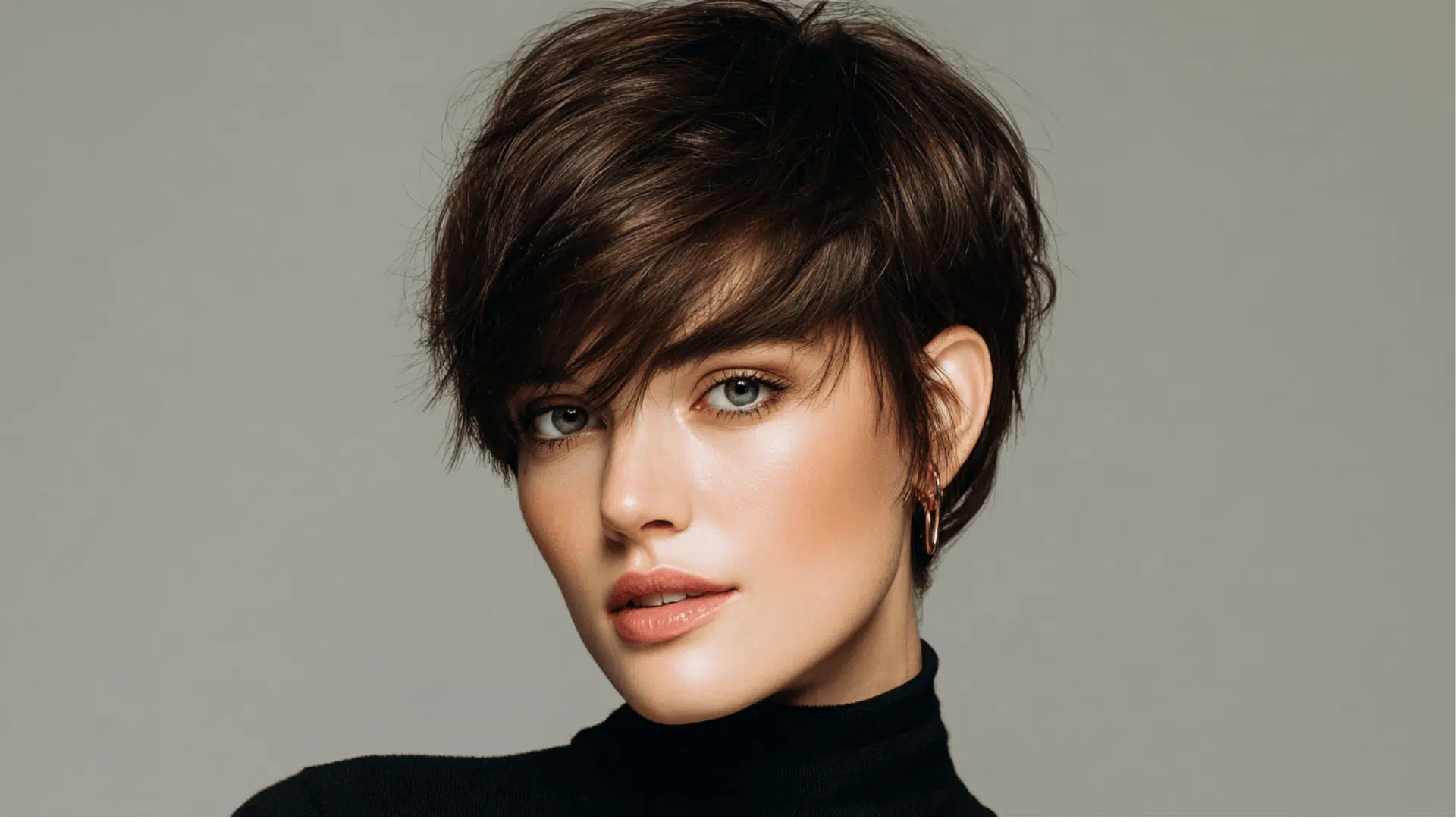
Photo via Copenhagen Fashion Summit
Tapered sides keep the long pixie neat and tailored. The hair graduates smoothly from very short at the ears and nape to longer lengths on top, with no harsh lines or visible steps. It is a refined, architectural take on the pixie that suits professional settings and anyone who likes a clean silhouette.
The taper is what makes this cut feel polished even on a no-styling day, since the short sides always sit neatly. It does need regular maintenance to keep the graduation crisp – once the taper grows out, the shape softens quickly, so a tidy-up every four to five weeks is realistic.
17. Long Pixie with Choppy Layers
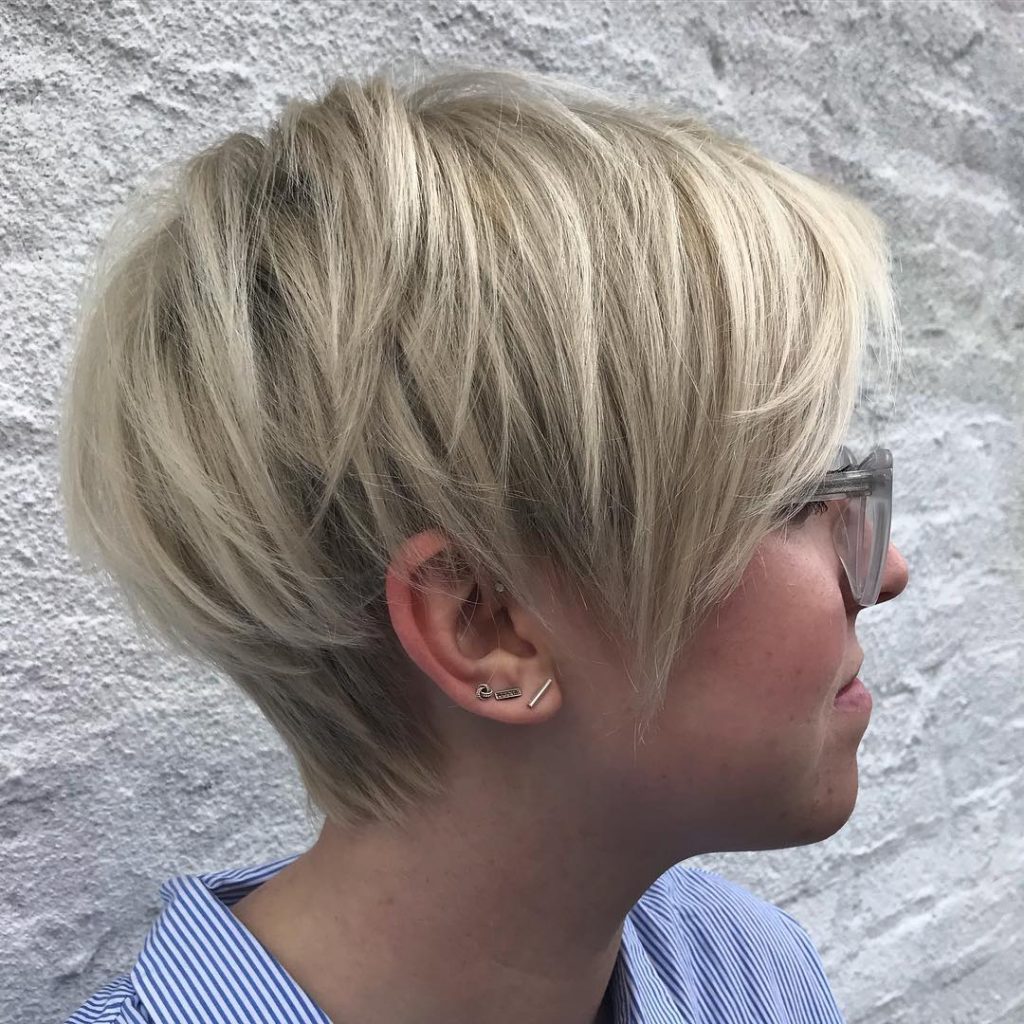
Photo via The Right Hairstyles
Choppy layers give a long pixie attitude. The layers are cut at varied lengths with a razor or point-cutting, creating texture and separation that make the hair look piecey and full of movement. It is a great option for straight hair that tends to fall flat, because the choppiness creates visual texture where there is none naturally.
Styling leans on texture products rather than heat. A matte paste or texturizing spray, pinched into the ends, defines the choppy pieces and keeps them separated. The cut is forgiving as it grows out, since the uneven lengths disguise new growth better than a precise, even cut does.
18. Asymmetrical Long Pixie
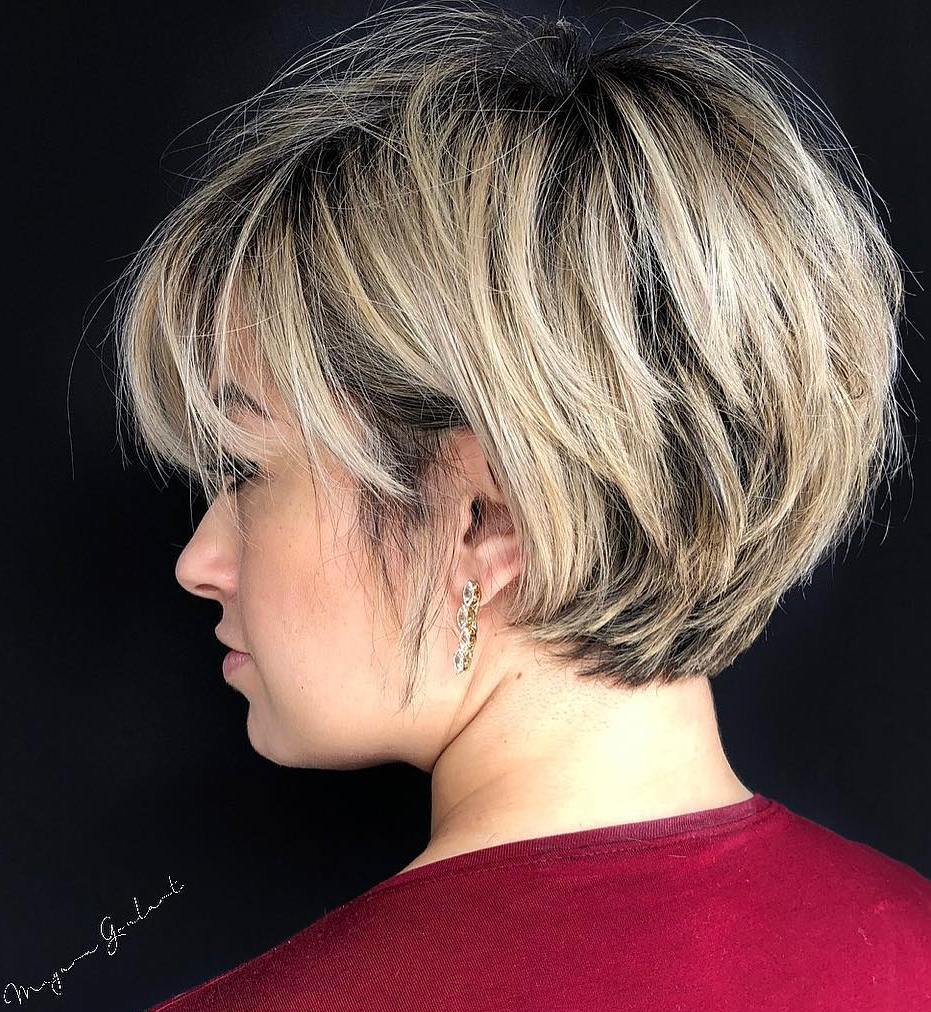
Photo via Palau Oceans
An asymmetrical long pixie plays with length, keeping one side noticeably longer than the other. The longer side might sweep past the cheekbone while the shorter side is tucked neatly behind the ear, which creates a striking diagonal line across the face. It is a bold, fashion-forward version that photographs beautifully.
The asymmetry works hardest on straight hair, where the difference in length reads clearly. Styling is straightforward – the longer side is the feature, so it gets the attention, whether that means smoothing it sleek or adding a soft wave. The shorter side needs more frequent trimming to keep the contrast sharp.
19. Long Pixie with Curtain Bangs
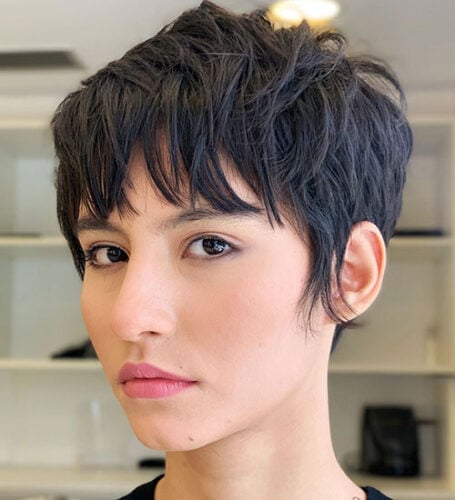
Photo via The Hairstyle Review
Curtain bangs split down the middle and frame the face like a curtain, and paired with a long pixie they soften the whole cut. The bangs blend into the side layers, which makes the style feel relaxed and romantic rather than severe. It is a good choice for wide foreheads and for anyone who wants bangs without the commitment of a full fringe.
The middle part is the key detail – it keeps the bangs symmetrical and lets them fall naturally to either side. A round brush and a few seconds of blow-drying set the shape, and because curtain bangs grow out into face-framing layers, they are one of the lowest-maintenance bang styles to live with.
20. Long Pixie with Face-Framing Layers
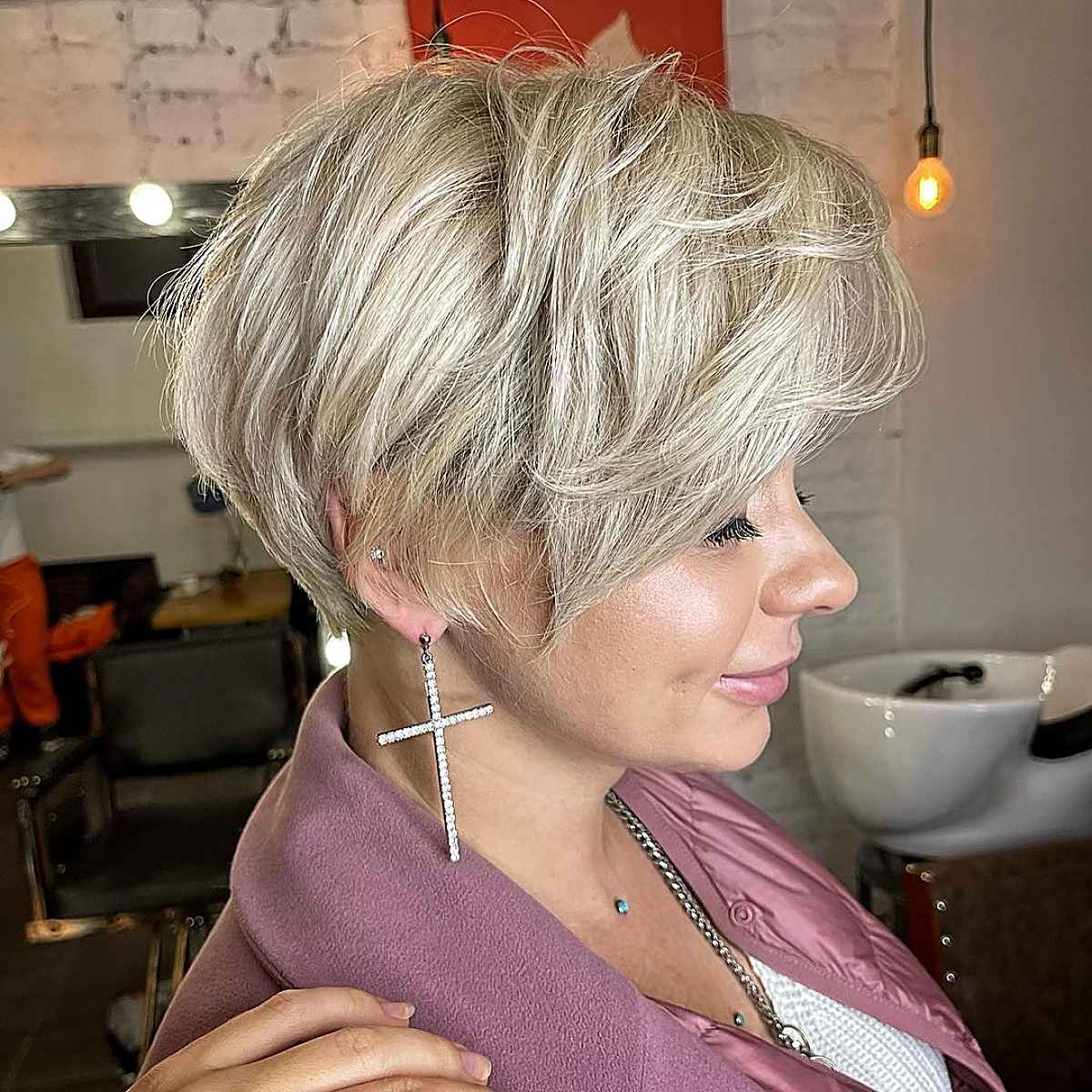
Photo via Hairs London
Face-framing layers are cut to follow the shape of the face, with the shortest pieces around the cheekbones and longer pieces falling toward the jaw. On a long pixie, they create a soft frame that highlights the eyes and cheekbones while keeping the overall length short and manageable. The effect is flattering on nearly every face shape.
These layers do their best work with minimal styling. A quick blow-dry with a round brush turns the ends under or flicks them out, and the layers fall back into place easily. They also grow out gracefully, gradually becoming longer face-framing pieces rather than an awkward in-between length.
21. Long Pixie for Round Faces
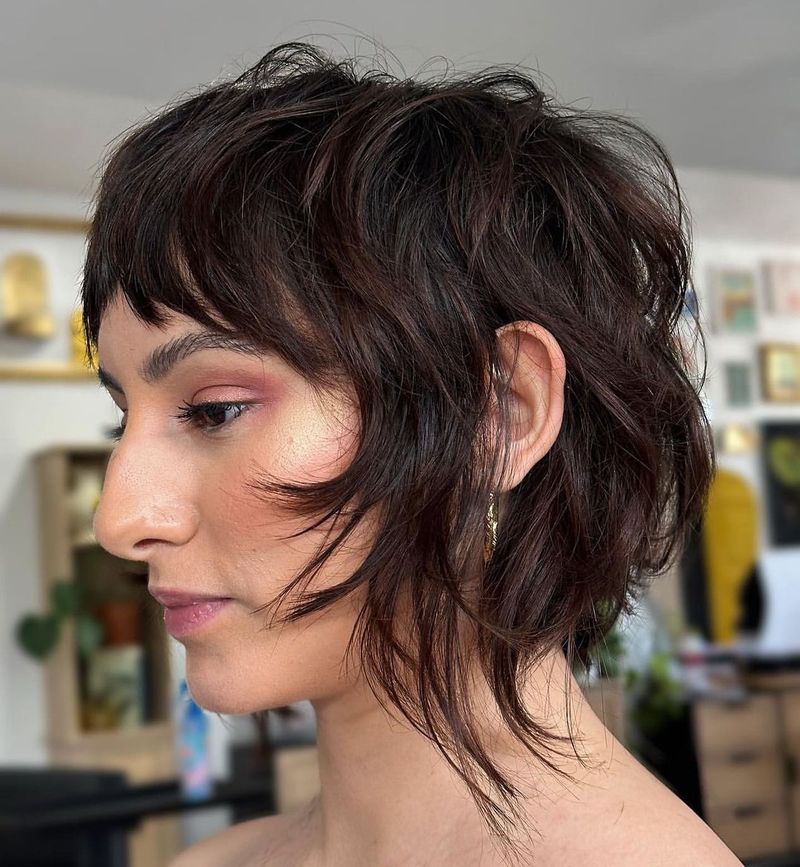
Photo via Flawless Hair
A long pixie is one of the most flattering cuts for a round face, because the height on top elongates the face and the tapered sides slim it. The key is keeping volume at the crown and length in the fringe, which draws the eye upward and creates the illusion of a longer face shape. Side-swept styling works better than a centre part here.
Avoiding too much width at the sides is the main rule – volume at the ears widens a round face, while volume on top lengthens it. A texturizing product at the roots and a deep side part are the simplest ways to get the proportions right every day.
22. Long Pixie for Women Over 50
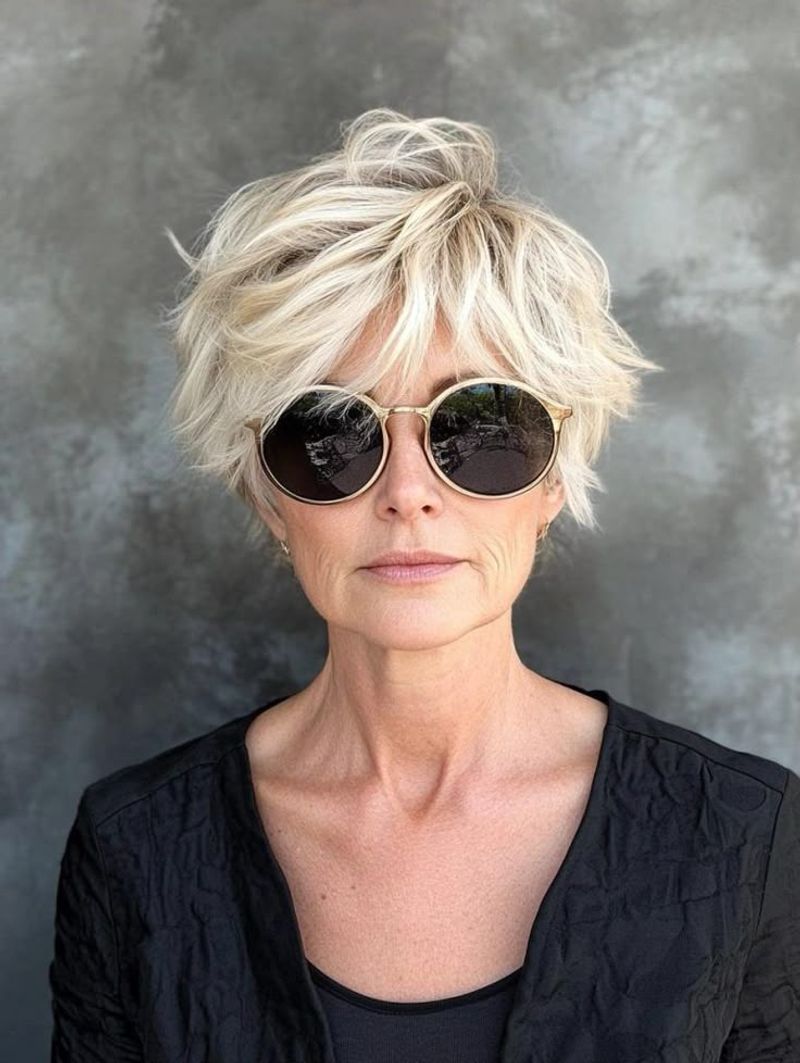
Photo via Flawless Hair
The long pixie is a favourite among women over fifty for good reason. It is light, easy to style and flattering, and the longer top keeps it soft and feminine rather than severe. Soft layers around the face lift the features, and the cut works beautifully with natural grey, silver or a warm colour.
This is also one of the most practical cuts to maintain. Wash-and-go styling suits it, a little volumizing mousse restores fullness to hair that has thinned with age, and the shape holds well between trims. It is a cut that looks intentional and polished with very little daily effort.
23. Long Pixie with a Deep Side Part
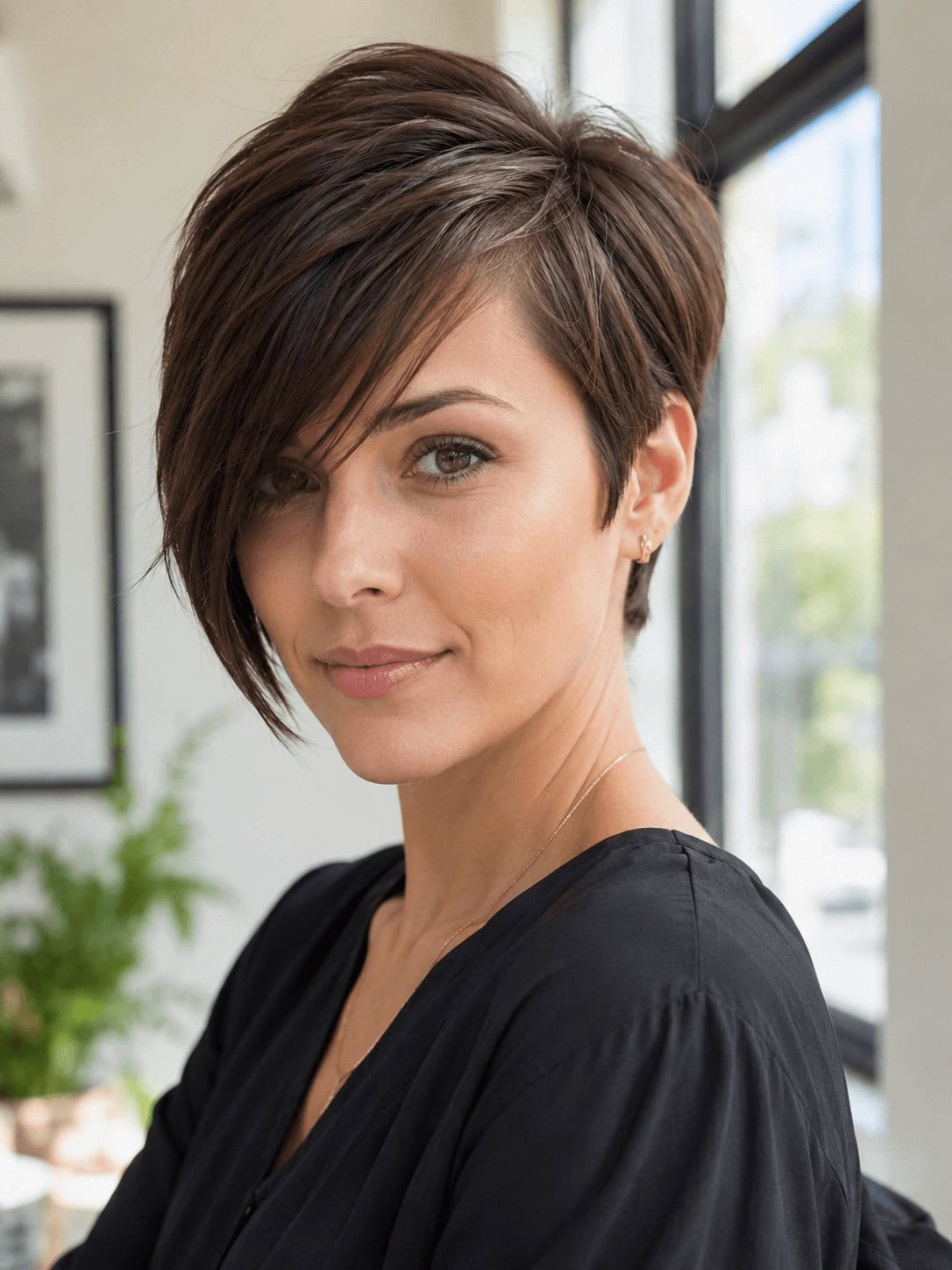
Photo via Next Style Ideas
A deep side part changes the whole geometry of a long pixie. Parting the hair far to one side creates a dramatic sweep across the forehead and piles volume on the heavier side, which gives the cut a glamorous, old-Hollywood feel. It is a simple styling change that can completely transform a familiar cut.
The part itself needs a little help to stay put – a comb and a light-hold product while the hair is damp will train it into place. This style works best on straight to wavy hair, where the sweep falls smoothly, and it is an easy way to make a pixie feel dressed up for an evening out.
24. Long Pixie with Balayage
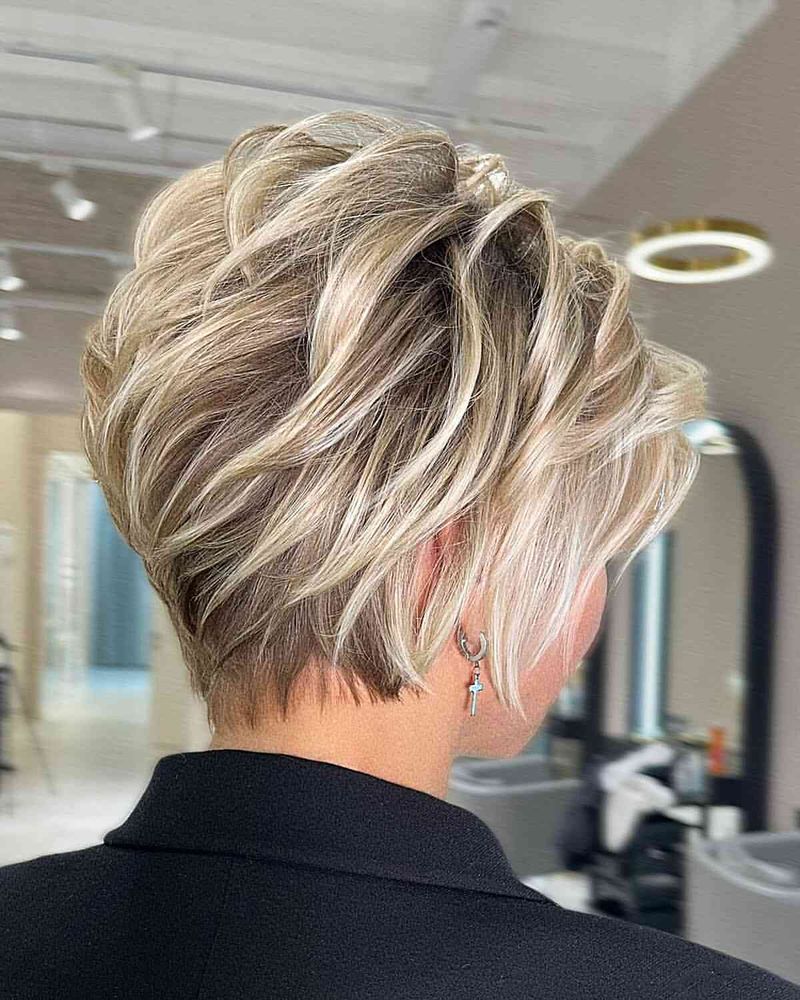
Photo via Trendy Universe
Balayage is hand-painted colour that graduates from darker roots to lighter ends, and on a long pixie it creates beautiful dimension. The lighter pieces sit exactly where the light hits – the crown, the fringe and the ends – which makes the layers of the cut visible and gives the hair a sun-kissed, lived-in look.
The best part of balayage on short hair is the grow-out. Because the colour is painted rather than foiled from the root, there is no harsh line as it grows, so colour appointments can stretch to eight or ten weeks. A gloss treatment between visits keeps the lighter pieces shiny and the tones fresh.
25. Long Pixie with a Voluminous Crown
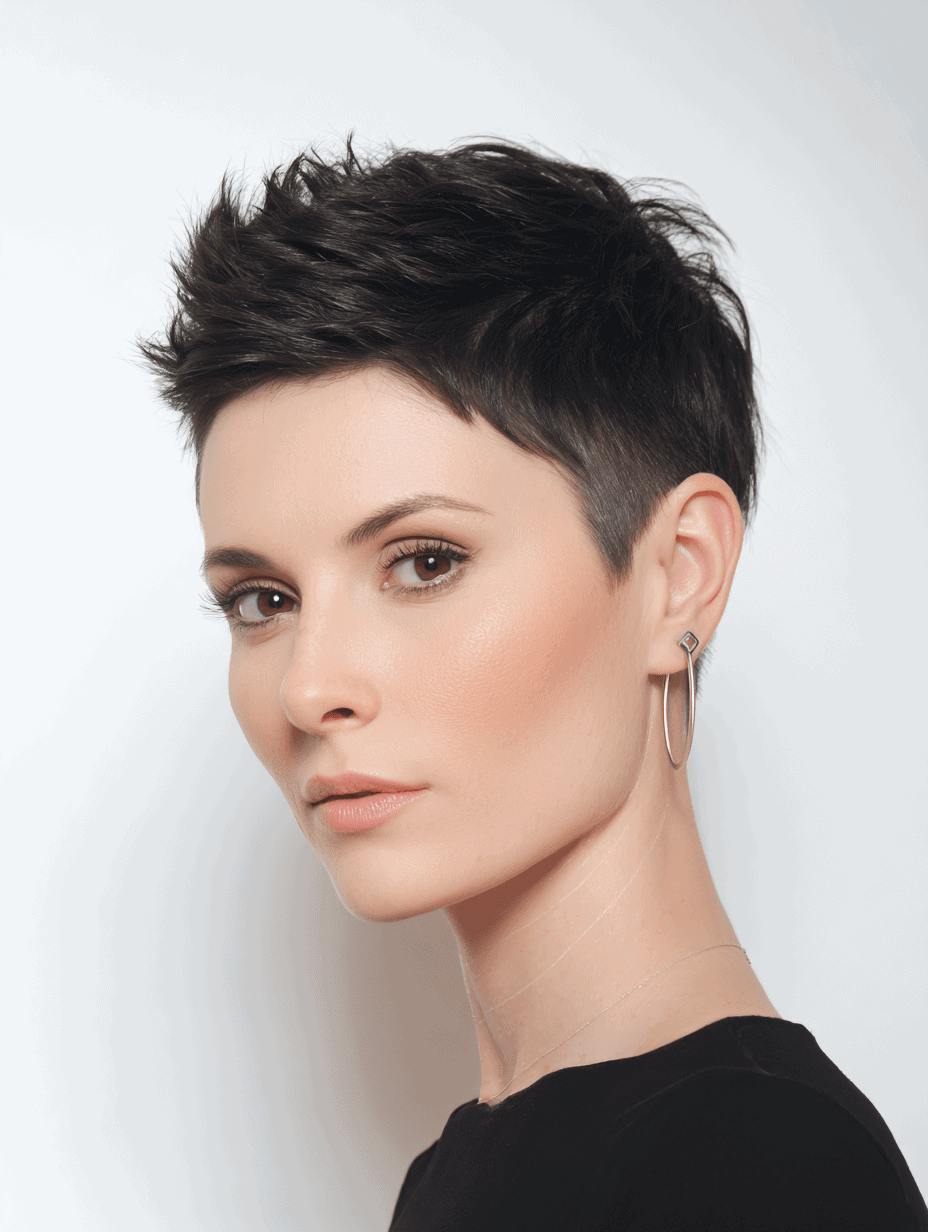
Photo via Hairstyle Picks
A voluminous crown is the secret weapon of a great long pixie. Shorter layers at the crown are cut to stand up and lift, creating height that elongates the face and makes the whole cut look fuller. It is especially flattering for fine hair and for round or square faces, where the added height balances the proportions.
Getting the volume to last is a matter of technique. Blow-drying the crown against its natural direction with a round brush, then setting it with a light hairspray, holds the lift all day. A root-lifting spray applied to damp hair gives the style its starting point.
26. Long Pixie with a Tapered Nape
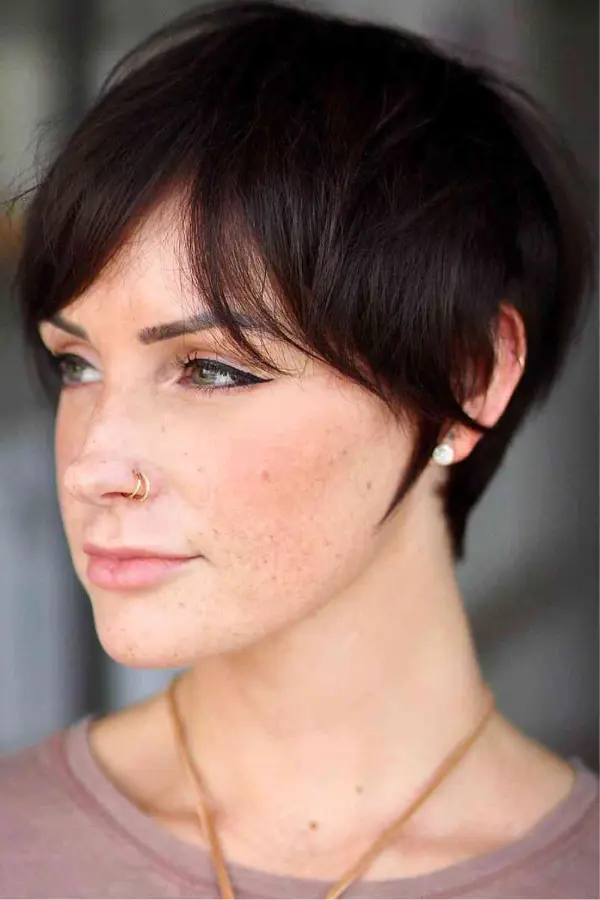
Photo via Kosspa
A tapered nape is the finishing detail that separates a polished long pixie from a grown-out one. The hair at the back of the neck is cut short and graduated so it hugs the neckline cleanly, which keeps the silhouette neat from behind and shows off the neck and jawline.
The tapered nape is also practical – it keeps hair off the neck in warm weather and makes the cut feel lighter. It does grow out quickly and can start to look fuzzy within a few weeks, so a quick nape tidy-up between full haircuts is worth asking for.
27. Long Pixie with Messy Texture
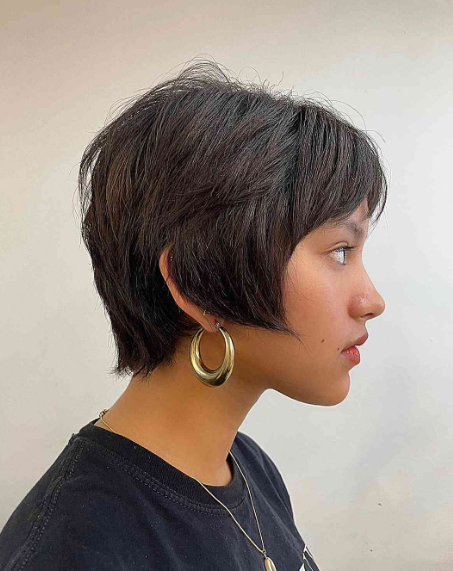
Photo via Makeup Wearables
A messy-textured long pixie embraces imperfection. The layers are cut to encourage movement in every direction, and the styling is deliberately undone – tousled, piecey and a little bit wild. It is the most casual version of the pixie, and it suits anyone who prefers a cut that looks good without a mirror.
The styling routine is the shortest on this list: a texturizing spray or dry shampoo, a quick tousle with the fingers, and done. The cut actually improves with a little natural oil and wear, so it looks its best on second- or third-day hair. It is short hair at its most relaxed.
Final Thoughts
The long pixie earns its popularity because it refuses to be just one haircut. Across these twenty-seven versions, the same basic shape becomes soft or edgy, polished or undone, depending on the layers, the texture and the colour – and that range is what makes it worth considering for almost any hair type or face shape. The versions that work best are the ones chosen for real life, not just for a photo: the amount of time available for styling, how often a salon visit is realistic, and how the hair naturally behaves.
Before booking the cut, it is worth saving two or three favourites from this list and showing them to a stylist who can adapt the shape to a specific face and hair texture. A good consultation turns a reference photo into a cut that actually fits, and a long pixie that fits is one of the easiest short styles to love – light to wear, quick to style and full of personality.