
How to Get Rid of Closed Comedones at Home

Run a fingertip across your forehead or chin and you may feel them before you ever see them: a scatter of small, skin-coloured bumps sitting just beneath the surface, too stubborn to pop and too flat to call pimples. They rarely hurt and they rarely turn red, which is exactly why they are so maddening. Makeup sits unevenly over them, light catches them at the worst angles, and no amount of scrubbing seems to shift them. These are closed comedones, and they are one of the most common texture complaints in skincare — and one of the most misunderstood.
The reason they resist the usual fixes is that they are not a surface problem. Each bump is a pore that has filled with oil and dead skin and then sealed itself shut, so whatever is trapped inside has nowhere to go. Clearing them takes a plan that works from the inside of the pore outward: the right cleanser, the right acids, enough hydration to keep the skin barrier intact, and a few habit changes that stop new clogs from forming. These nine steps cover the whole routine, in the order that makes sense.
1. First, Know What Closed Comedones Actually Are
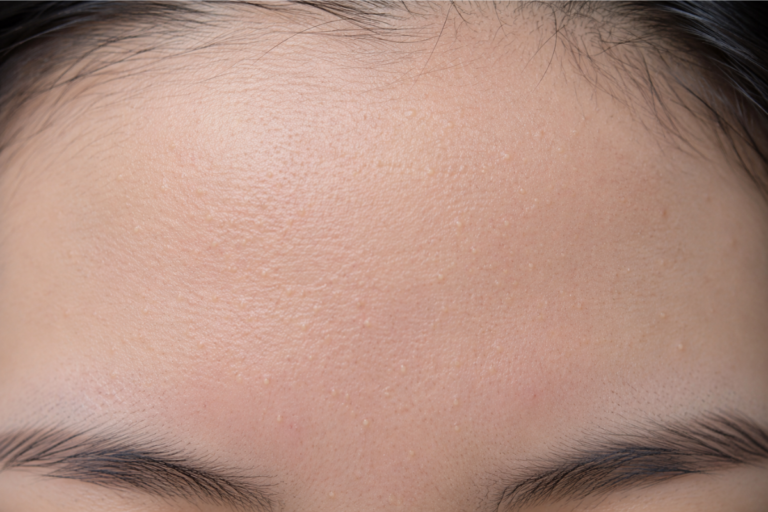
Photo via Private Skin Clinic
A closed comedone starts the same way a blackhead does: a pore fills with sebum, shed skin cells and a little debris. The difference is what happens next. With a blackhead the pore stays open, the trapped material meets the air, oxidises and darkens. With a closed comedone, a thin layer of skin grows over the opening and seals it, so the contents stay pale and buried. That is why the bumps look flesh-coloured rather than dark, and why squeezing them is both futile and risky — there is no exit, so pressure only pushes the clog deeper and invites inflammation.
Genetics and hormones set the baseline, but products do most of the damage in practice. Heavy creams, rich oils and hair products that migrate onto the forehead all add pore-clogging ingredients faster than the skin can clear them, and a routine with no exfoliation at all lets dead cells pile up until the pores seal over. Knowing this matters because it changes the goal: the fix is not to attack the bumps one by one, but to change the conditions that let them form, starting with what goes on the skin every day.
2. Double Cleanse With an Acid-Based Cleanser

Photo via Belle De Couture
A plain gentle cleanser is fine for a normal day, but it does very little for pores that are already clogged. What works better is a cleanser with chemical exfoliants built in: salicylic acid, a BHA that dissolves in oil and can travel inside the pore, or glycolic and lactic acid, AHAs that loosen the dead cells sitting on the surface. Used daily, an acid cleanser gives the pores a low, steady dose of exfoliation without adding another step to the routine, and it reaches the skin at its cleanest moment, when nothing else is in the way.
On evenings when sunscreen or makeup has been worn, a single wash is not enough, because the acid cleanser spends its energy dissolving the day’s layers instead of reaching the pores. A first cleanse with an oil or balm melts all of that away, and the acid cleanser that follows can then do its real job. Sixty seconds of massaging, rather than a quick splash, is what lets the acids actually work — and a cleanser that leaves the skin feeling tight and squeaky has gone too far and should be swapped for a gentler formula.
3. Let a BHA Serum Do the Unclogging

Photo via Asaya
If one ingredient deserves the starring role in a closed-comedone routine, it is salicylic acid. Unlike water-based exfoliants that work only on the surface, salicylic acid is oil-soluble, which means it can slip into the pore itself and dissolve the sebum-and-dead-cell mixture that forms the clog. A 2% serum applied to clean, dry skin a few nights a week is the standard starting point, and it is the step most likely to produce visible change — not overnight, but steadily, as each pore is cleared from the inside out.
Patience matters more than strength here. Starting at a high concentration every night is the fastest route to redness, peeling and a damaged barrier, which ironically makes the skin produce more oil and more clogs. Two or three nights a week is enough to begin with, building up only if the skin stays calm. And a short note on the purging that sometimes follows: when trapped clogs are loosened, some may surface as small pimples before the skin clears. That is a normal, temporary phase — but if breakouts appear in places that were previously clear, that is irritation, not purging, and the frequency should come down.
You may also like: How to Style Wide Leg Jeans: 20 Outfit Formulas That Actually Work
4. Follow Every Acid With Hydration

Photo via Style Weekender
Acids clear pores, but they also take moisture with them, and dehydrated skin is not clearer skin — it is skin that overproduces oil to compensate, which feeds the very clogs being treated. That is why a hydrating serum belongs directly after the exfoliating one. Hyaluronic acid draws water into the skin, glycerin holds it there, and ceramides help rebuild the barrier that acids can wear down. Applied about a minute after the BHA, once the acid has had its moment, the hydrating layer turns a harsh routine into a balanced one.
The order is not a small detail. Acids work best on clean, dry skin, while hydrating serums work best on slightly damp skin, so the sequence — acid, brief pause, hydration — suits both. Skipping the hydration step is the most common reason an acid routine stalls: the pores get clearer for a week or two, then the barrier weakens, sensitivity rises, and the routine gets abandoned as “too strong.” The acid was rarely the problem. The missing moisture was.
5. Switch to a Lightweight, Non-Comedogenic Moisturizer
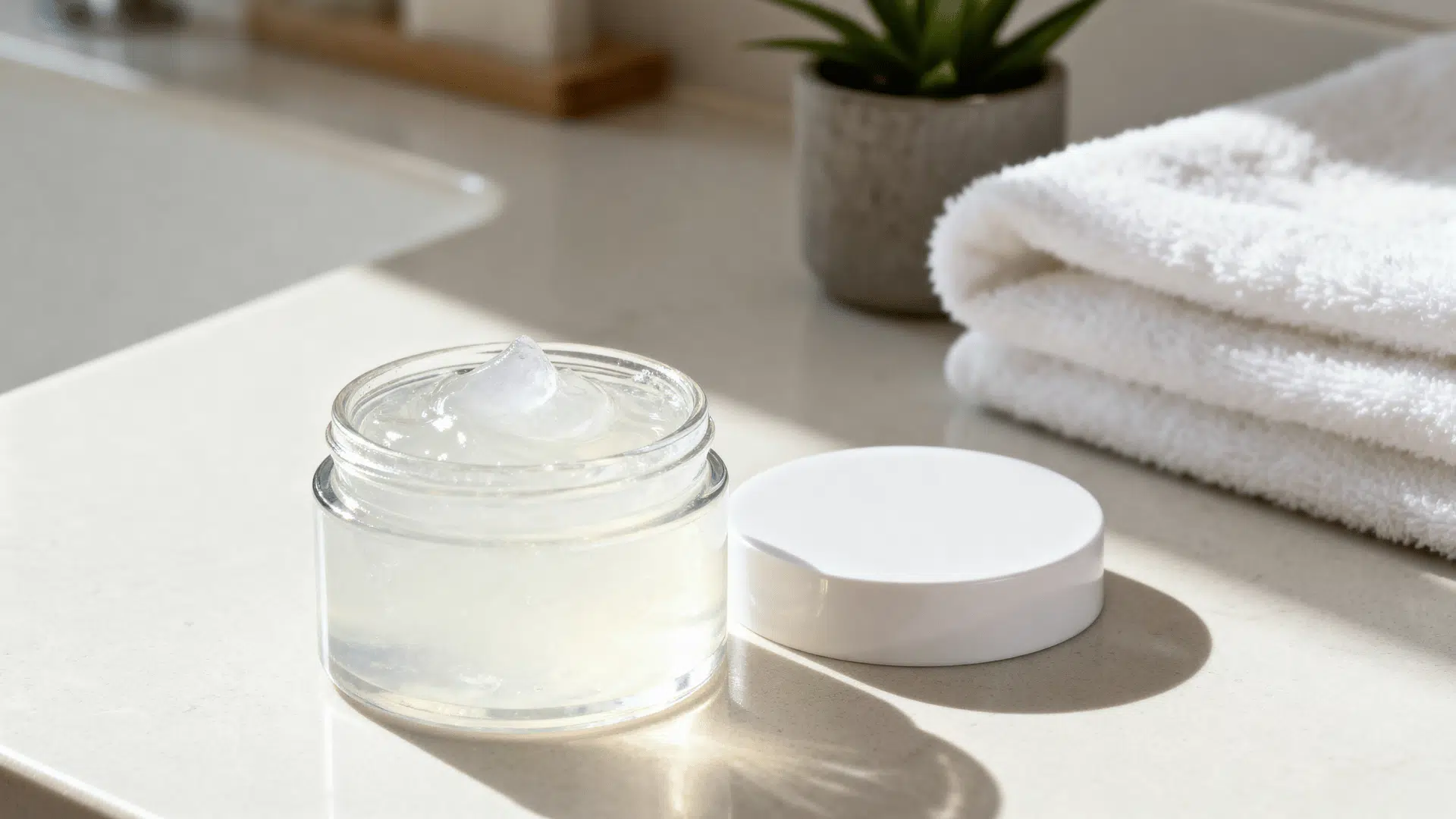
Photo via Style Weekender
Moisturizer is the step most likely to undo everything else, because a heavy cream can refill pores faster than acids can empty them. The fix is a texture change rather than a brand change: gel, gel-cream or light lotion formulas hydrate without leaving a greasy film, and anything labelled non-comedogenic has at least been formulated with pore-clogging in mind. Rich balms, thick butters and oils belong on dry skin types, not on skin that is already struggling with sealed pores.
Application matters too. Spreading moisturizer over skin that is still slightly damp from serum locks in more hydration with less product, which means a thinner layer does the job. And the forehead and chin — the zones where closed comedones cluster — often need less moisturizer than the cheeks, not more. Treating different zones differently, rather than applying one thick layer everywhere, is a small adjustment that pays off quickly.
6. Add a Weekly Exfoliating Treatment

Photo via Oakderm
Daily acids handle maintenance, but once or twice a week a stronger treatment can accelerate the clearing. At-home resurfacing masks and peels combine AHAs and BHAs at higher concentrations than a cleanser or serum, dissolving the surface layer of dead cells and reaching deeper into stubborn clogs in a single session. The result is usually visible the next morning — smoother texture, less congestion along the jawline and forehead — which is why this step feels the most rewarding of the whole routine.
It is also the step where overdoing it does the most damage. More than twice a week, or a peel layered on top of a retinoid the same night, strips the barrier and leaves skin raw, shiny and more breakout-prone than before. The rule is simple: one strong treatment per week, followed by a calming, hydrating mask or a generous layer of moisturizer, and a full day’s gap before any other exfoliant. If the skin feels tight or stings when products go on, the treatment schedule is too aggressive and needs to drop back, not push forward.
7. Deep-Clean Pores With a Weekly Clay Mask

Photo via 100% Pure
Clay works on closed comedones in a completely different way from acids: instead of dissolving the clog chemically, it absorbs the excess oil that feeds it. Bentonite and kaolin clays are the two to look for — bentonite is the stronger oil-absorber and suits very oily skin, while kaolin is gentler and better for combination skin. Applied once a week, ideally on a different day from the exfoliating treatment, a clay mask pulls surface oil and impurities out of the pores and leaves the skin looking noticeably less congested.
The one mistake to avoid is letting the mask dry until it cracks. A fully dried clay mask does not clean better; it dehydrates the skin underneath and can leave it tight and irritated. Rinsing when the mask is about eighty percent dry — still slightly tacky to the touch — gets all of the oil-absorbing benefit without the dehydration. For skin that is oily only in the T-zone, masking just the forehead, nose and chin and leaving the cheeks alone is the smarter way to use it.
8. Bring in a Retinoid — Slowly

Photo via Mibe Pharma
For long-term prevention, no ingredient matches a retinoid. Vitamin A derivatives normalise how skin cells turn over, which means dead cells shed on schedule instead of sticking together and sealing pores shut. Where acids clear the clogs that already exist, a retinoid addresses the reason they keep forming — and over months, it is the step most likely to keep the skin clear once the bumps are gone. It is the closest thing this routine has to a permanent fix.
The catch is that retinoids demand respect. Start with a low strength, around 0.25% or 0.3% retinol, one or two nights a week, and buffer it with the sandwich method — a thin layer of moisturizer, then the retinol, then another layer of moisturizer — to reduce irritation while the skin adapts. Never use a retinoid on the same night as a strong exfoliating treatment, and daily sunscreen becomes genuinely non-negotiable, because retinoids make the skin more sensitive to UV. Used patiently, it is the ingredient that turns a temporary clearing into lasting smooth skin.
9. Fix the Everyday Habits That Refill Your Pores
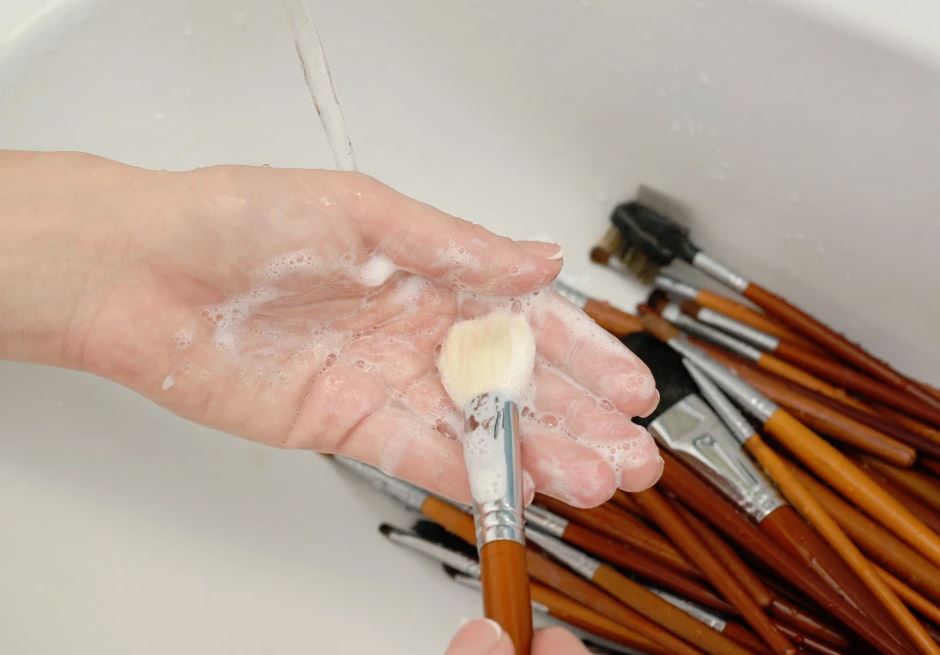
Photo via Limpiezapedia
Skincare does the heavy lifting, but a few unglamorous habits decide whether the results last. The pillowcase is the biggest one: the face presses against it for hours every night, and it collects oil, hair products and bacteria in the meantime. Changing it at least twice a week is a small chore with an outsized effect. Makeup brushes deserve the same attention — a weekly wash stops them from painting old oil and bacteria back onto freshly cleaned skin — and the phone screen, pressed against the cheek all day, benefits from a daily wipe.
Diet is worth watching too, though it is not a cause for everyone. High-glycemic foods and dairy are the most commonly reported triggers, so noticing whether a sugar-heavy week lines up with more bumps is more useful than cutting anything out blindly. And for the occasional comedone that turns red and sore, keep a low-strength benzoyl peroxide on hand — not slathered across the whole face, but dabbed on the single spot to calm it down. With the habits handled, the products finally get a fair chance to work.
Final Thoughts
Closed comedones test patience more than any other skin concern, because the timeline is measured in skin cycles, not days. Six to eight weeks of consistent routine is a realistic expectation before the texture genuinely transforms, and there may be a purging phase along the way where things look slightly worse before they get dramatically better. That is not a sign the routine is failing — it is a sign the trapped clogs are finally moving.
The real secret is not any single product but the balance between them: enough exfoliation to keep pores clear, enough hydration to keep the barrier strong, and habits that stop new clogs from forming while the old ones clear. Stick with the plan, resist the urge to squeeze, and the smooth skin underneath is closer than the bumps make it feel.