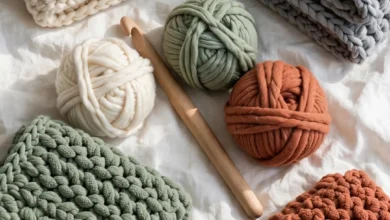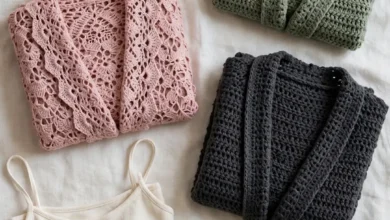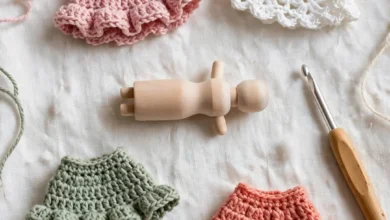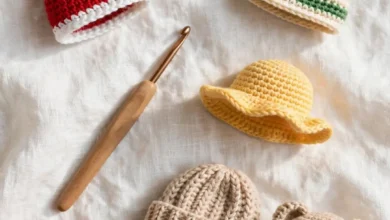

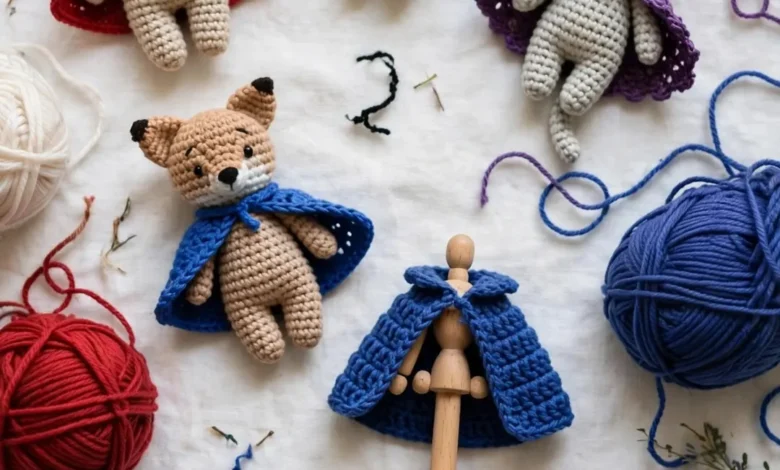
There is something utterly charming about a tiny cape. A doll that was perfectly sweet on its own suddenly looks ready for an adventure the moment you fasten a little draped layer around its neck, and a crochet doll cape is the quickest way I know to give a handmade toy a whole new personality. Capes are small, they are fast, they use up the odds and ends in your yarn basket, and they turn an ordinary amigurumi friend into a superhero, a witch, a vampire or a storybook heroine with almost no effort at all.
So here are twenty genuinely free cape patterns for dolls and toys, collected for every kind of maker in mind. Sixteen of them are written patterns, and four are written patterns with a companion video tutorial alongside the full text, so you can read every row and still watch the tricky parts if you like. A few of the designers call their garments cloaks rather than capes, and I have counted those here because the construction is exactly the same thing — a sleeveless, draped outer layer fastened at the neck — and I say so plainly wherever it happens. Where a pattern page shows no personal byline, I credit the site itself, since the site presents its own original design. Little Red Riding Hood and her mouse cousin are public-domain fairy-tale characters, not licensed ones, and every superhero, witch and vampire here is a generic original rather than a character from a film or comic. Choose a cape, pick a doll, and let the dress-up begin.
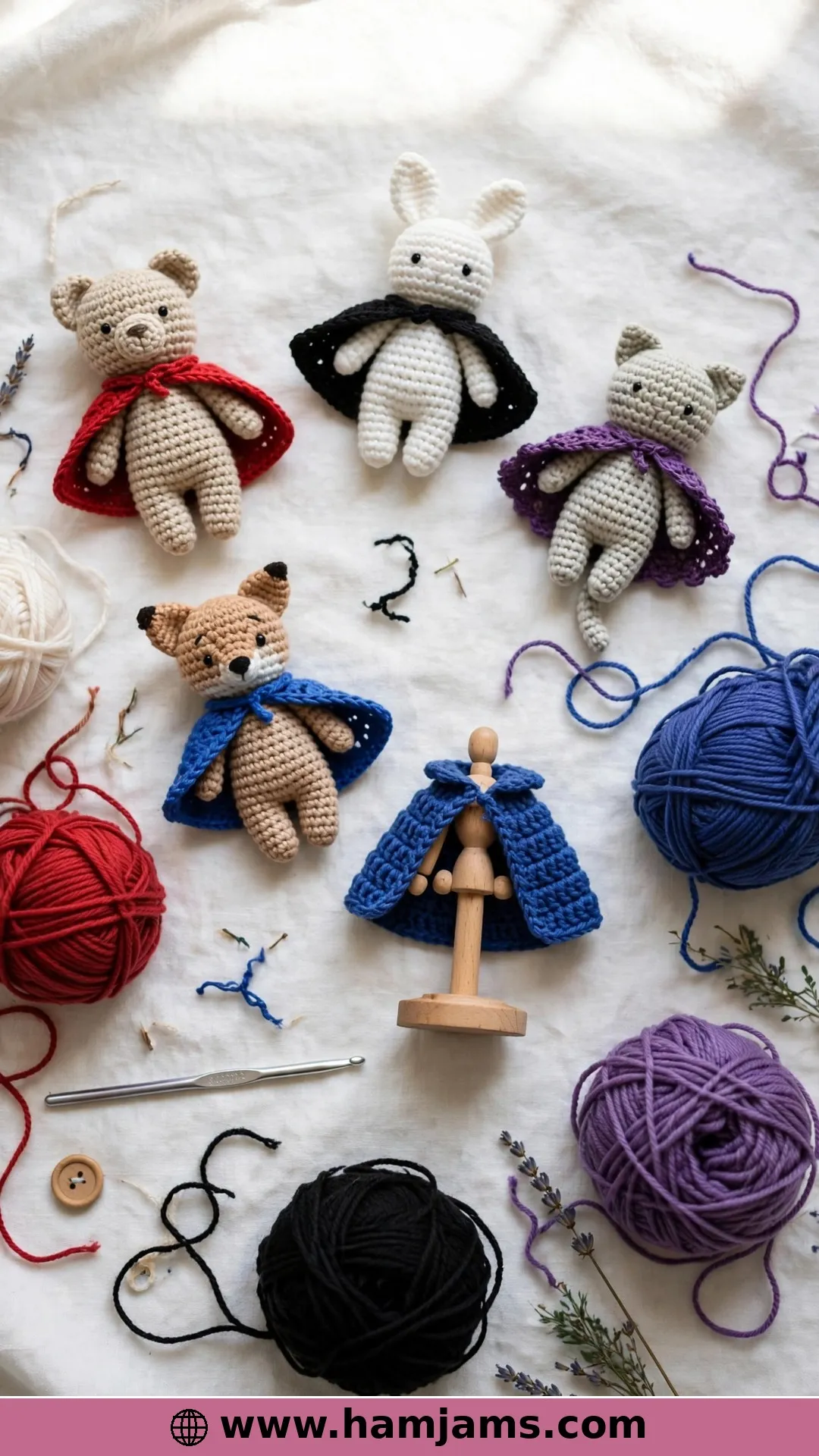
1. A Witchy Cape for a Little Black Cat
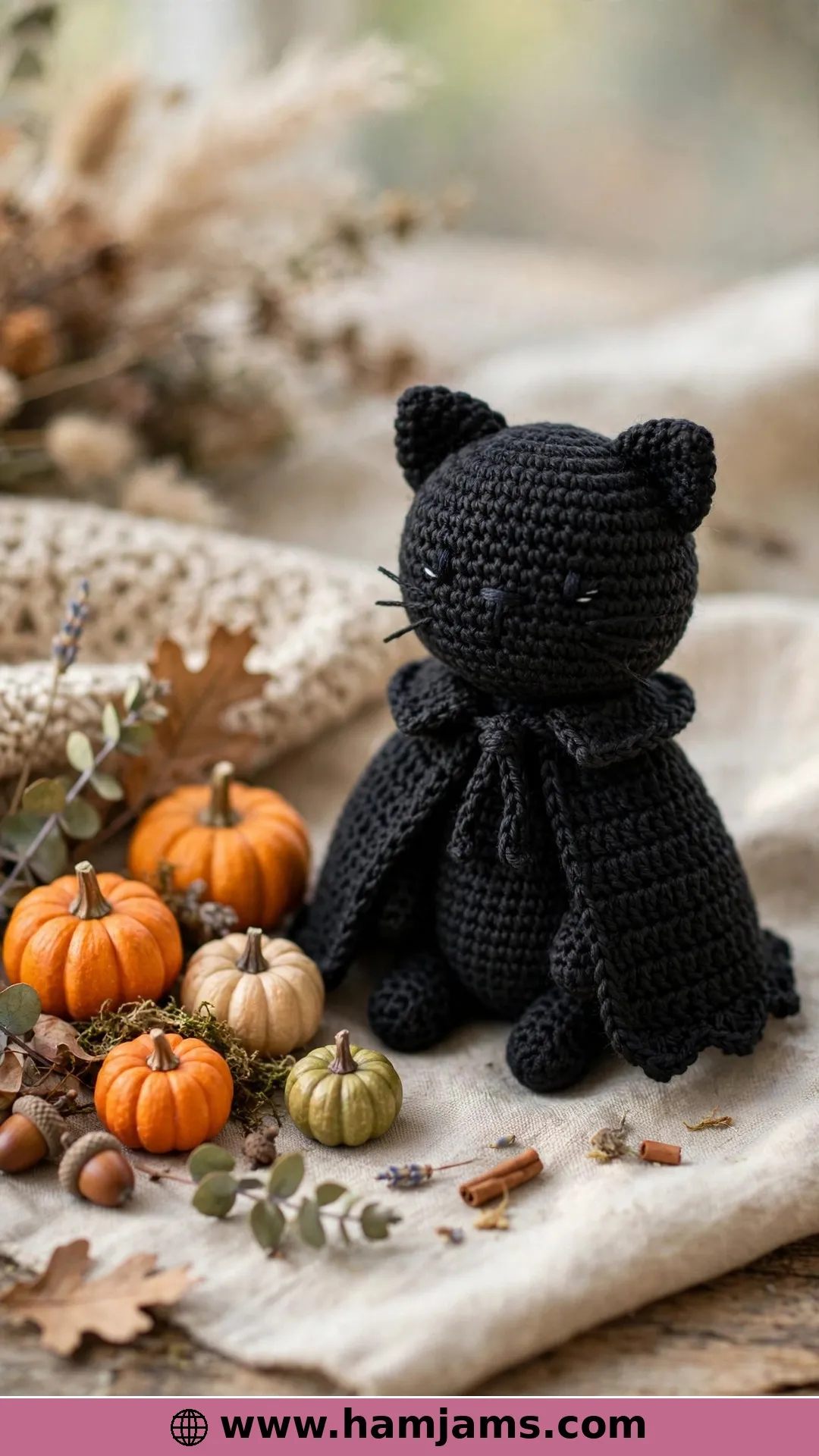
We are starting with the most Halloween-ready cape in the whole collection, a neat little collar-and-drape design made for Cosmo the amigurumi cat. The pattern works the collar first in thirteen rows, then builds the drape in fifteen more, and finishes with a simple tie, so the whole cape measures about seven inches long with a four-and-a-half-inch drape — a perfect miniature for a small cat toy. The shaping is gentle and beginner-friendly, the collar gives it that proper witchy silhouette, and in classic black it looks wonderful against orange autumn decorations or perched on a bookshelf through October. One honest note: the pattern page mentions a second set made for the maker's Hello Kitty doll, but the pattern credited here is the generic cape itself, not a Hello Kitty doll pattern, and the site presents its own design with no personal byline, so I credit Craft Passion as the source.
Pattern: Witch Cape for Cosmo by Craft Passion — Get the free pattern
2. A Cosy Cape With a Hood for a Little Mouse
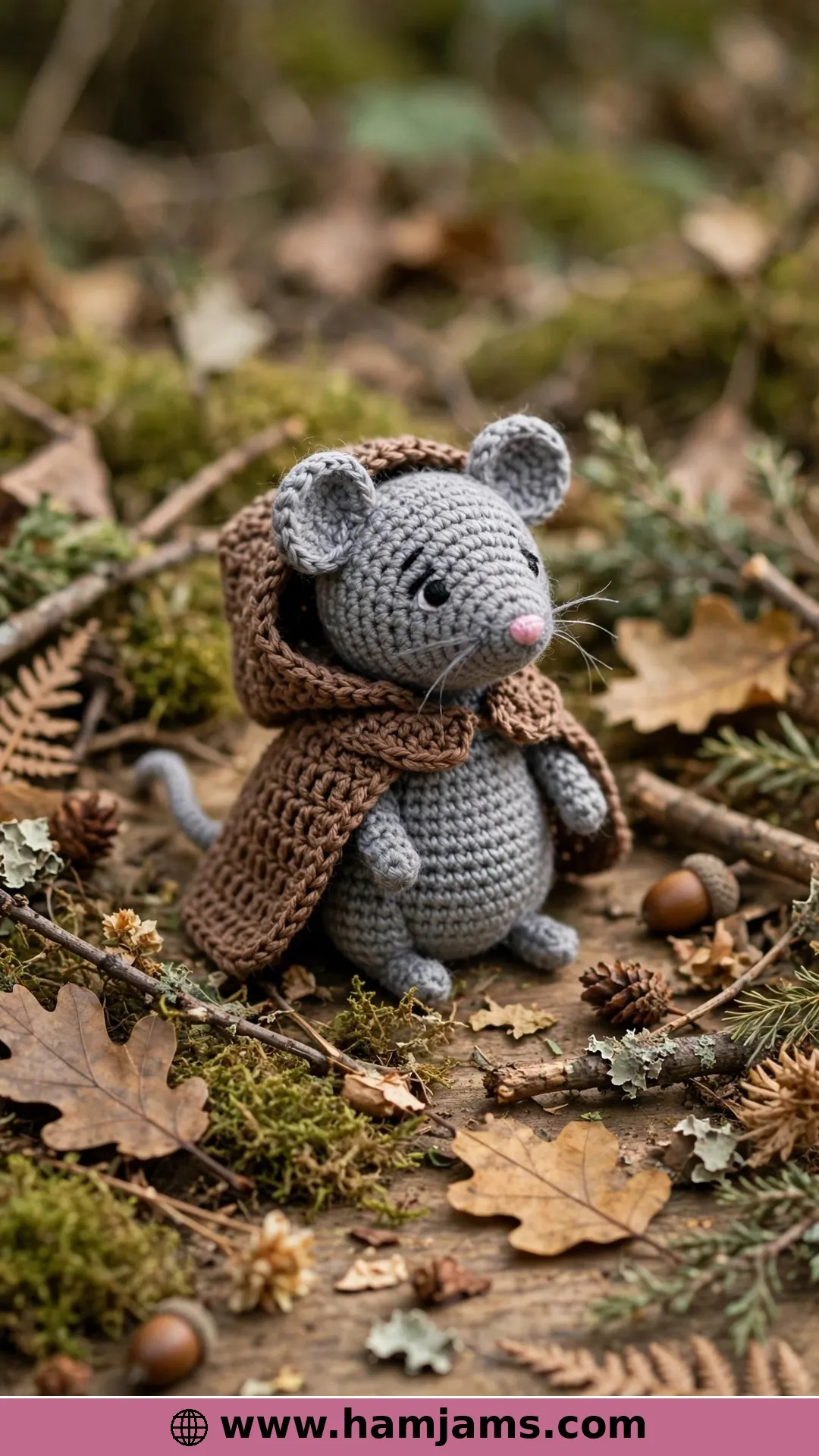
Sharon Ojala's mouse cape is one of my favourites here because it is really three pieces in one: a cape, a hood and a back collar, all worked separately and sewn together into a proper little outdoor outfit for her amigurumi mouse. The cape itself is worked in six rows, then the hood and the back collar are added, and the sewing-together instructions are written out in full, so nothing is left to guesswork. It is a written pattern with a companion video tutorial as well, which is handy if you want to watch the assembly before you pick up your needle. In a soft grey or warm brown it makes the mouse look ready for a woodland walk, and the hood is the detail that sells the whole thing — it frames the little face so sweetly. If you have already made the Amigurumi To Go mouse, this is the outfit it has been waiting for.
Pattern: Cape for Mouse by Sharon Ojala — Get the free pattern
3. A Removable Cape for a Plush Superhero Doll
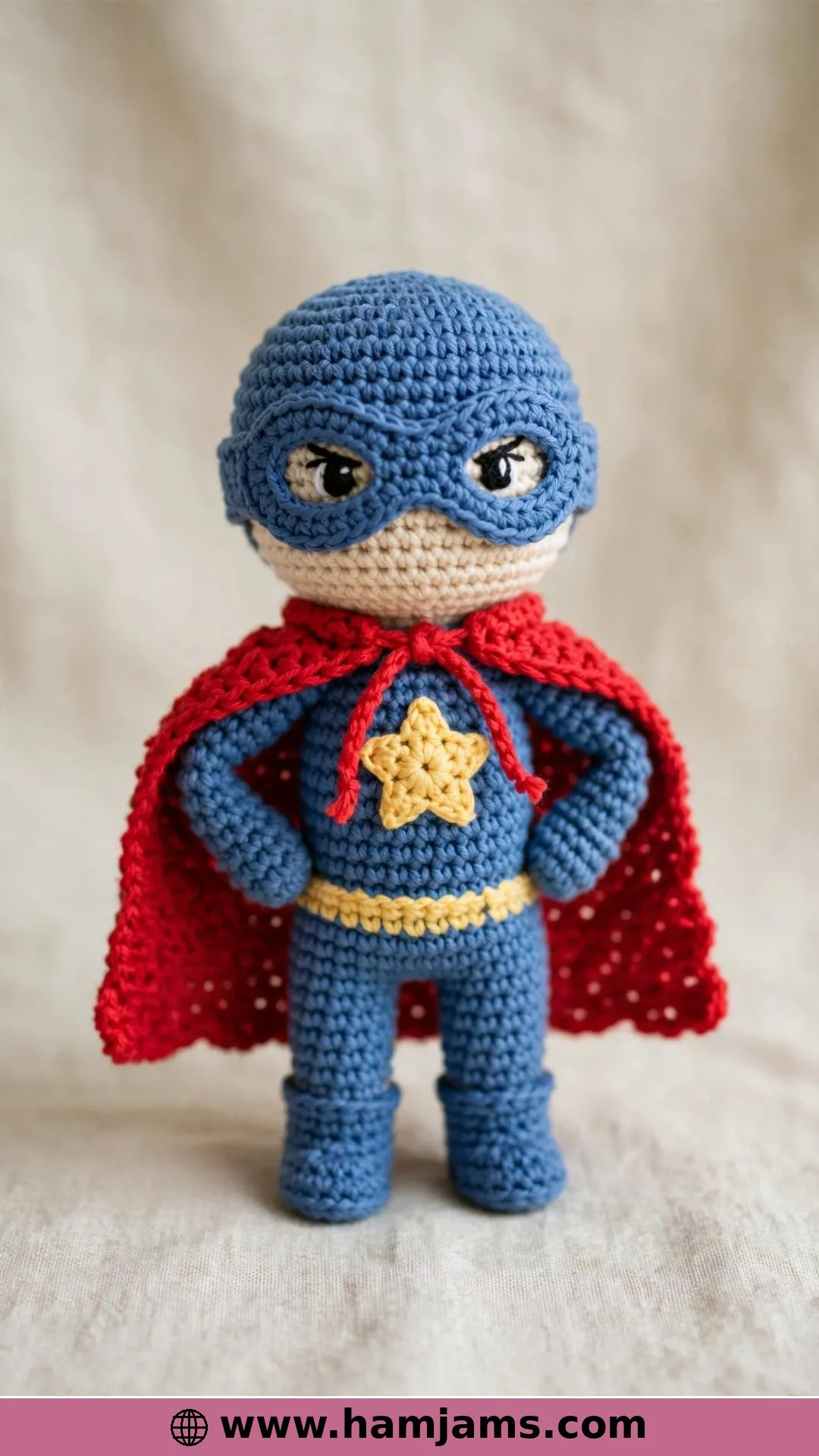
Every superhero needs a cape, and this plush doll's cape is worked in seven rows with tie strings, so it is fully removable — your doll can be a hero one minute and an ordinary plush friend the next. The Friendly Red Fox designed this as an updated version of her original friendly superhero doll, and the cape is refreshingly simple: a small rectangle of stitches that flares gently, finished with ties that fasten it around the doll's shoulders. It is the kind of pattern a confident beginner can finish in an evening, and it is a wonderful stash-buster because the cape takes so little yarn. Make it in bright red for the classic look, or match it to whatever colour your doll's mask and boots are wearing. This is the first of two different Friendly Red Fox capes in this collection, and the second one, much later in the list, is a genuinely different pattern for a different doll.
Pattern: Plush Superhero Doll Cape by The Friendly Red Fox — Get the free pattern
4. A Storybook Cape in Riding-Hood Red
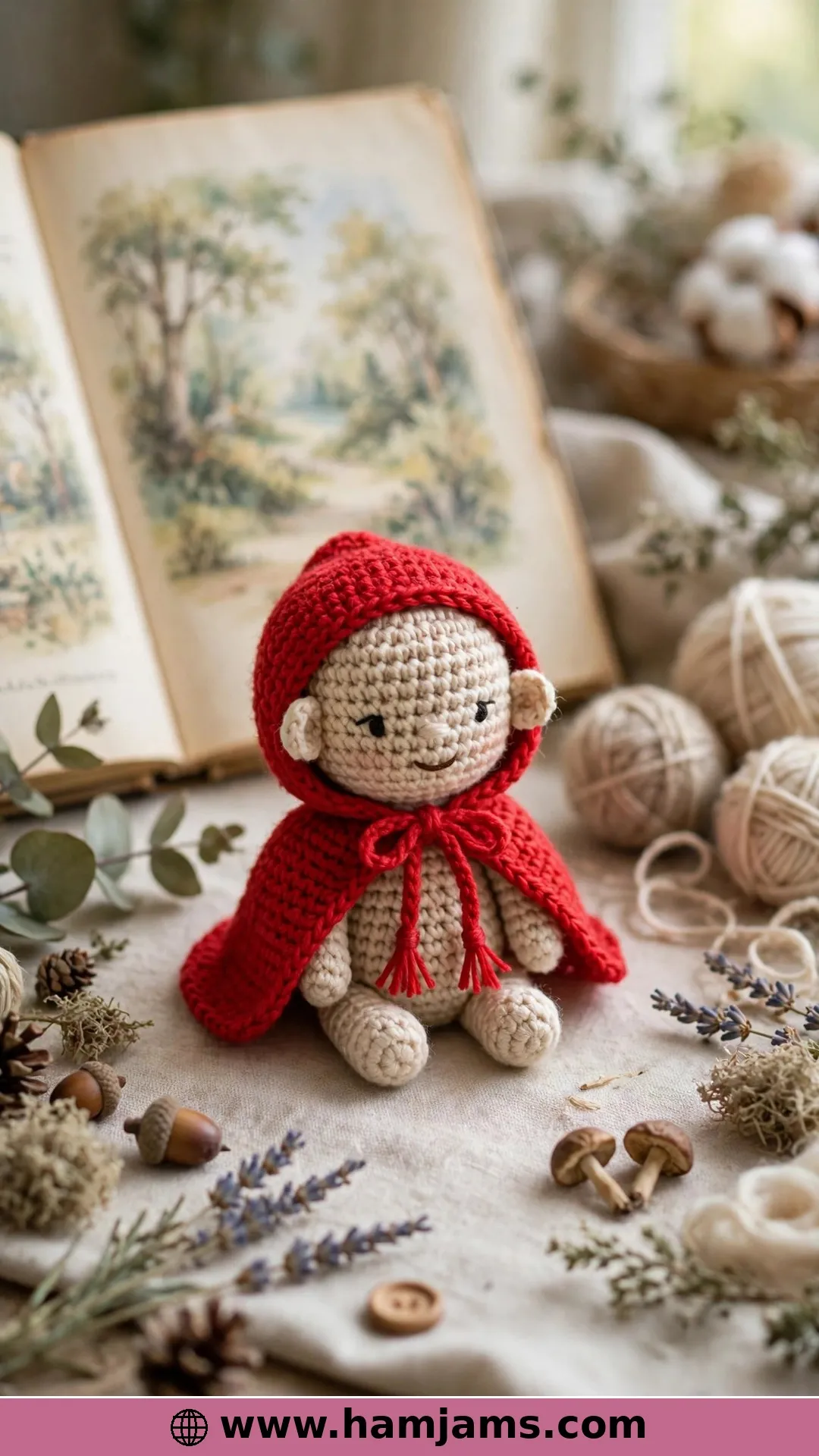
Little Red Riding Hood is one of those stories every child knows, and this cape is the piece that makes the whole doll read instantly as her. The cape is worked in ten rows with two cords for fastening, and it joins to the hood, so the red frames the doll's face in exactly the way the fairy tale demands. Little Red Riding Hood is a public-domain fairy-tale character rather than a licensed one, and the designer is credited on the hosting page, so this is a republication with proper attribution rather than an anonymous copy. In a rich, true red it is unmistakable, and it is a lovely gift for a child who loves the story — or for a grown-up who collects storybook dolls. The cape is small enough to be a quick weekend make, and it is the single most recognisable garment in this entire collection.
Pattern: Little Red Riding Hood Cape by @kediperiayolyesi — Get the free pattern
5. A Winter Cape With Fur Trim for a Highland Cow
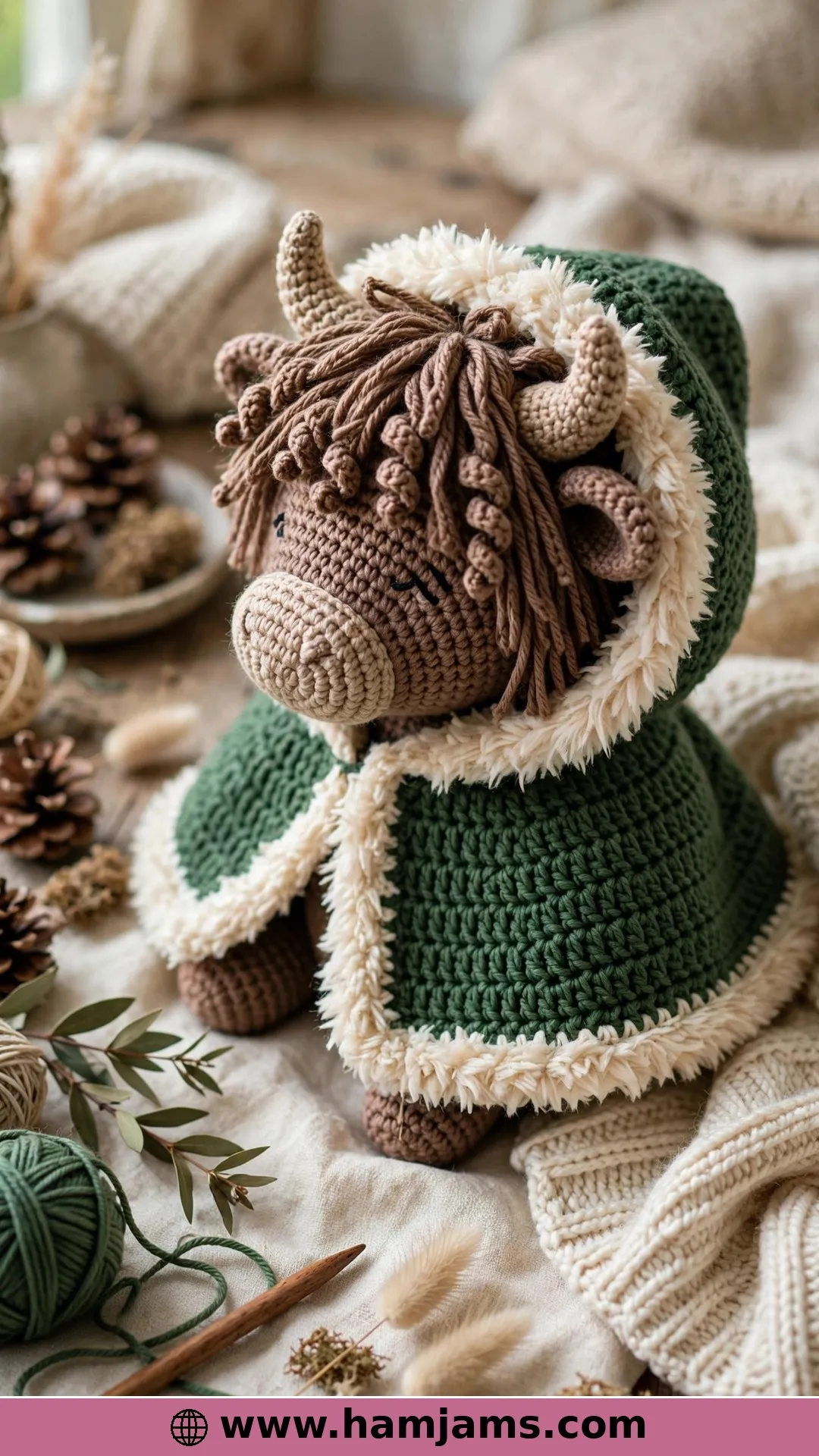
A highland cow in a winter cape is the kind of thing that makes people stop scrolling, and Yarnhild's design does not disappoint. The cape is worked in six rows, then a hood is added from a rectangle with rounds, and a fur trim finishes the whole thing off, giving Fergus the cow a properly cosy winter look. It is a written pattern with a companion video tutorial, and it was written for a medium plush toy, with a note on the page that it can be adapted for a human wearer — the toy framing is what governs here, and the human note is secondary. In a deep forest green or a warm rust, with cream fur trim, it looks like something from a festive market stall. If you have a plush cow, or any medium toy of a similar size, this cape will fit the bill beautifully.
Pattern: Winter Cape for Highland Cow Fergus by Yarnhild — Get the free pattern
6. A Tiny Cape for a Four-Inch Super Ted
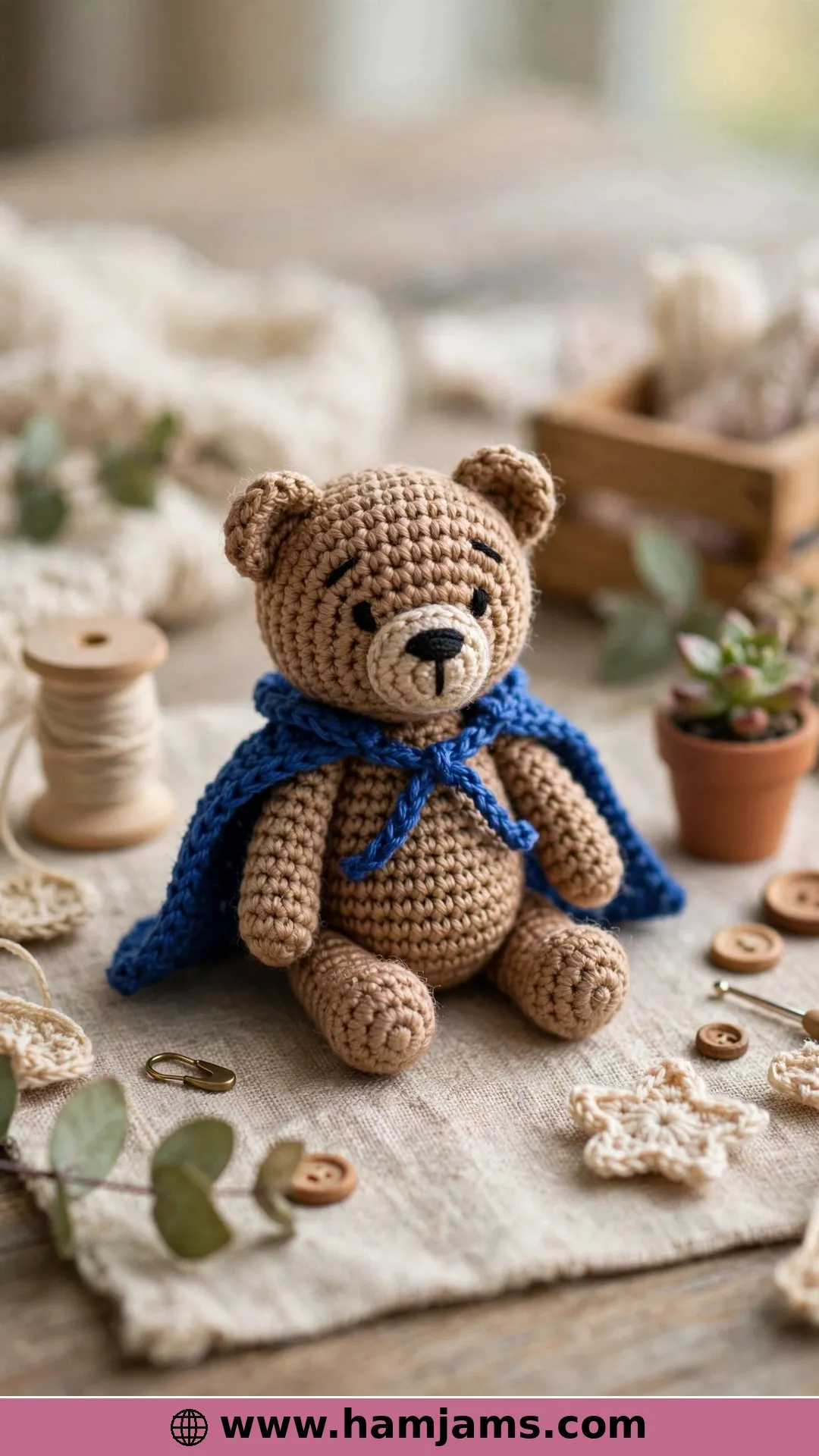
Super Ted is only four inches tall, and his cape is worked in eleven rows with straps, which makes it one of the smallest garments in this collection and one of the most satisfying quick makes. The pattern lives on a community project site where the designer is properly credited, so you can follow the full text there for free and see exactly how the little cape comes together. Because the bear is so small, this is a wonderful first garment for someone who has only ever made amigurumi bodies before — the cape is essentially a tiny rectangle with shaping, and the straps are the only fiddly part. In bright red or royal blue it turns an ordinary teddy into a pocket-sized hero, and it is the perfect size for a keyring bear or a stocking filler. Do not let the small scale fool you: this little cape has real presence.
Pattern: Super Ted Cape by Tales of Twisted Fibers — Get the free pattern
7. A Rainbow-Ready Cape for a Pride Superteddy
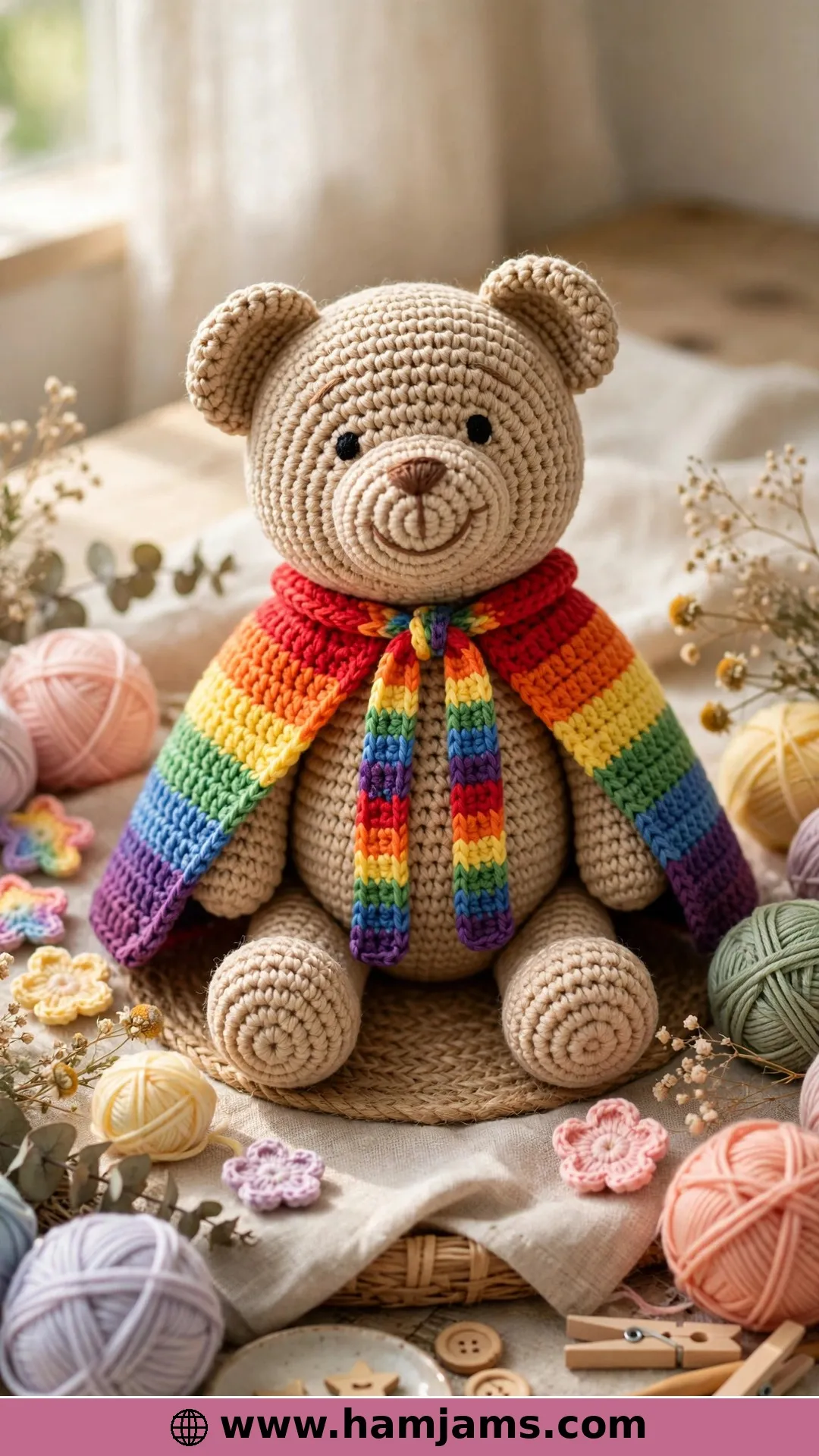
Haven the Pride Superteddy wears a cape worked in twelve rows with two border rows and neck ties, and the colour-chart customisation is what makes this pattern special — you can plan your own rainbow or pride colour sequence before you start, and the chart keeps it all tidy. The designer is credited on the hosting page, and the full text is free there, with the cape as a distinct, separately-worked piece rather than anything knitted into the bear's body. It is a generic superhero bear, not a licensed character, and the cape is the hero of the outfit in every sense. I love the idea of making one in each colour of the rainbow for a shelf display, or choosing one bold colourway for a gift with real meaning. The neck ties make it easy to take on and off, which children always appreciate.
Pattern: Haven the Pride Superteddy Cape by DreamingPandaCreations — Get the free pattern
8. A Vampire Cape Tied On Last
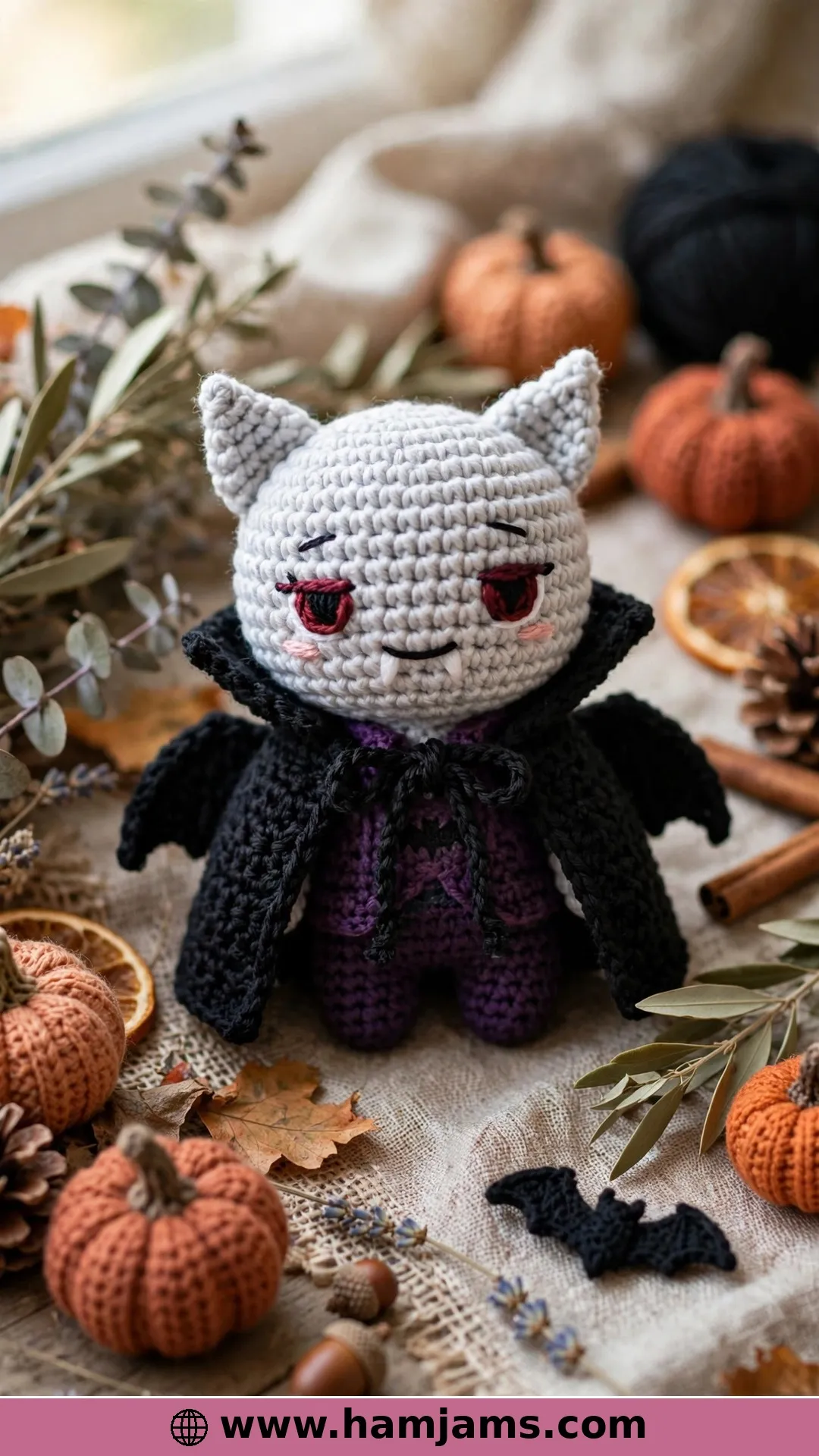
Sunny the Vampire's cape is worked in rows one to eleven with a tie cord, and the detail I most want you to notice is that it is made as a distinct piece and tied on last — it is not colourwork worked into the vampire's body, which is a distinction that matters when you want a garment you can actually remove. The site presents its own original pattern with no personal byline, so I credit Elendipity as the source, and the vampire himself is a generic original rather than any licensed character. In black with a red lining, or all black with a high collar effect, it is instantly spooky in the best way. This is a wonderful Halloween make, and because the cape is separate, you can make several in different colours and swap them around your vampire collection like a tiny wardrobe.
Pattern: Sunny the Vampire Cape by Elendipity — Get the free pattern
9. A Superhero Cape for a Chihuahua Doll
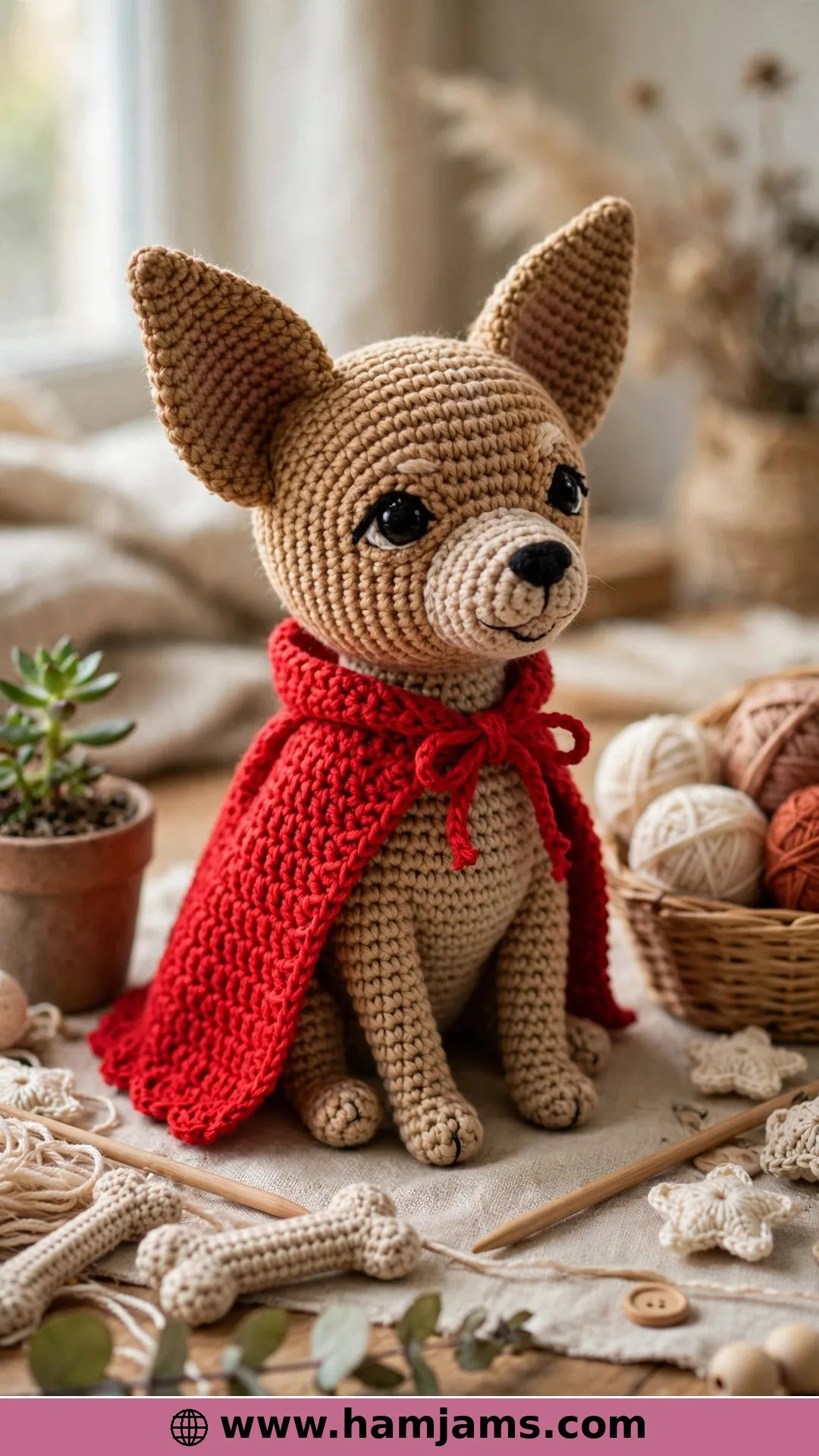
Sara Sach's chihuahua doll superhero cape is worked in sixteen rows with instructions to tie it around your doll's neck, and it is made for a doll about sixteen inches tall, so it is one of the larger capes in this collection. The doll it was designed for is named after Harley, a real rescue dog and puppy-mill survivor, and I want to be clear about that: Harley is a real dog's namesake, not a licensed fictional character, so this is an original design with a heartfelt backstory rather than anything borrowed from a franchise. In a bold primary colour it looks wonderful on a dog doll, and the sixteen rows give it a lovely drape that smaller capes cannot quite manage. If you make dog dolls, or you know someone who does, this is a cape with a story worth telling alongside the gift.
Pattern: Chihuahua Doll Super Hero Cape by Sara Sach — Get the free pattern
10. A Ghostly Cape With Picot Tips
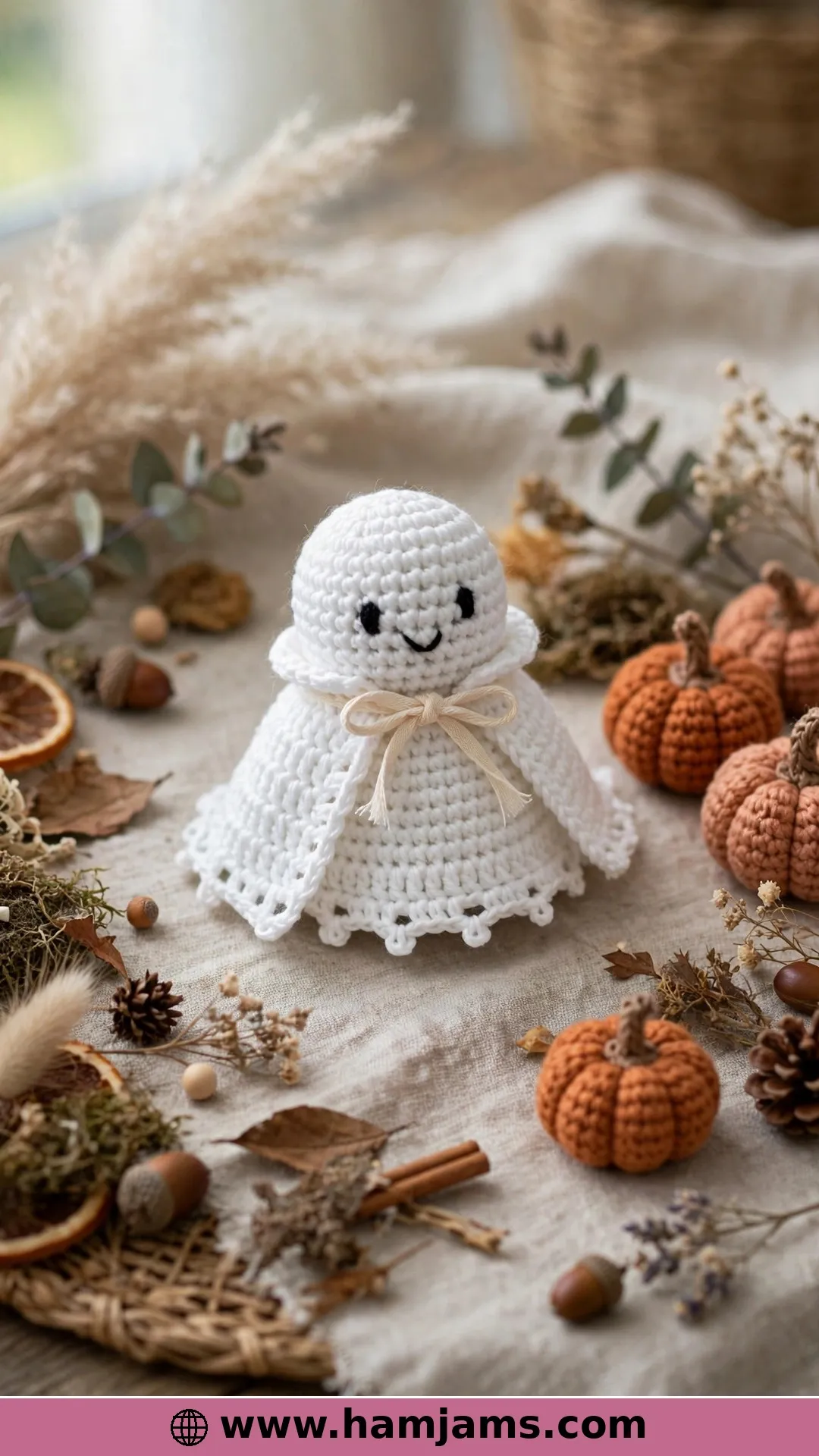
A ghost in a cape is delightfully spooky, and Nina Wegner's witch ghost wears one worked in ten rows with picot tips and a long ribbon tie of fifty-five to sixty chains, with arm openings built into the second row. The ghost itself is only about eleven centimetres tall, so this is a small, quick make that still manages to look detailed, thanks to those picot edges catching the light. The designer is credited on the hosting page, so this is a republication with proper attribution, and I am counting it once only: the same pattern also appears on another hosting site, and that copy is the same pattern, never a separate credit. In white or a soft glow-in-the-dark yarn it is a perfect Halloween shelf piece, and the ribbon tie means it fits a range of small ghost toys, not just this one.
Pattern: Witch Ghost Cape by Nina Wegner — Get the free pattern
11. A Tiny Three-Row Cape for a Little Super Hero
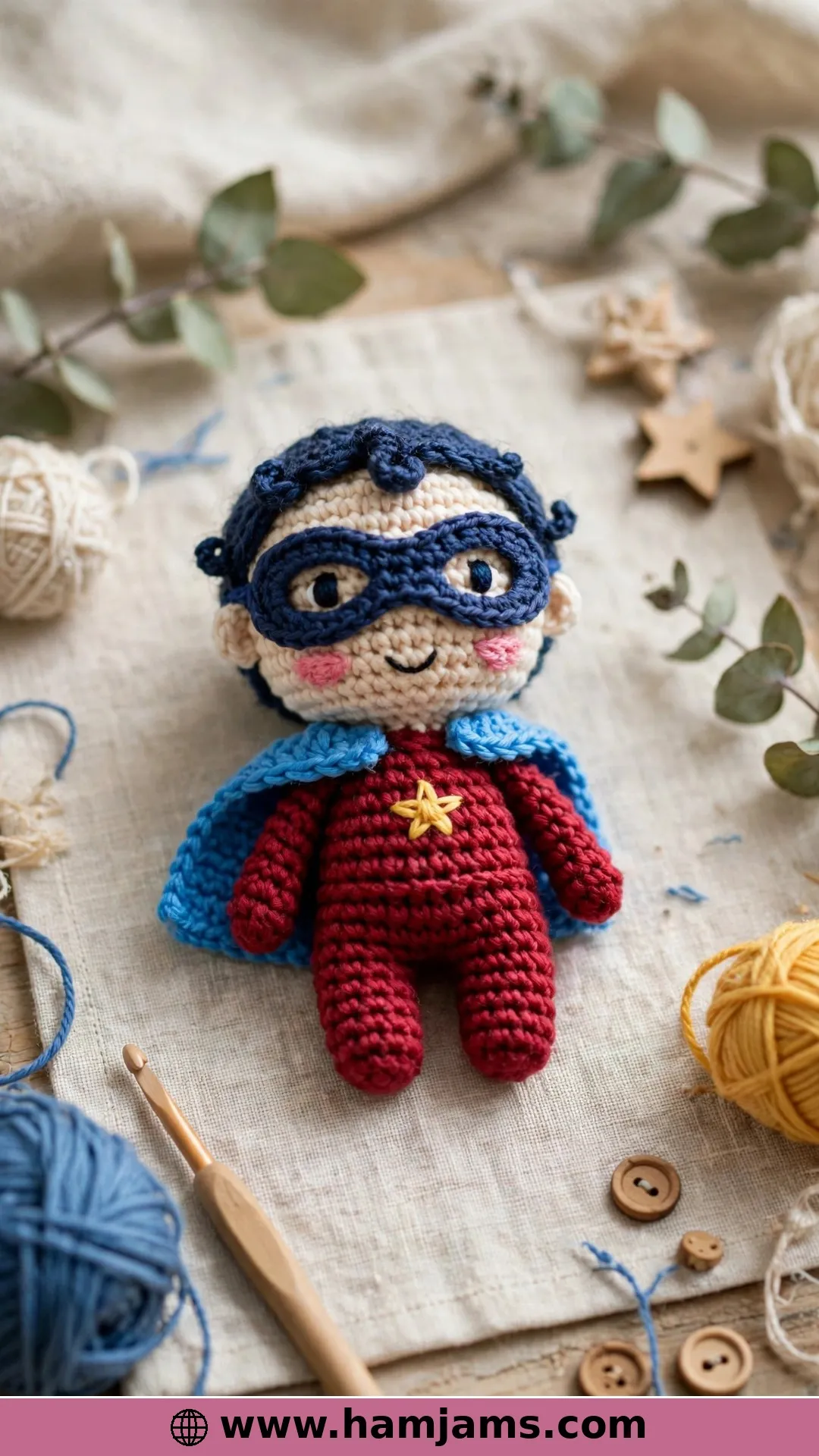
This little superhero's cape could hardly be simpler: a chain of twenty-one, three rows of single crochet, sewn below the neck, on a doll of about ten to twelve inches. The site presents its own original pattern with no personal byline, so I credit the site as the source, and I want to be transparent about one thing — the page's specifications closely match another well-known little superhero doll's specs, and the names are similar, but the construction here differs materially, with a tiny three-row single-crochet rectangle rather than the larger double-crochet capes of that other design, and a separate head-and-body construction rather than a one-piece style. It reads as an independently written simple pattern, not a copy, and the other doll's little superhero is not in this article at all. If you want the quickest cape in this collection, this is it: an evening's work at most, and a perfect first garment.
Pattern: The Friendly Little Super Hero Cape by EHarrisGallery — Get the free pattern
12. A Nineteen-Row Cape for a Generic Superhero Doll
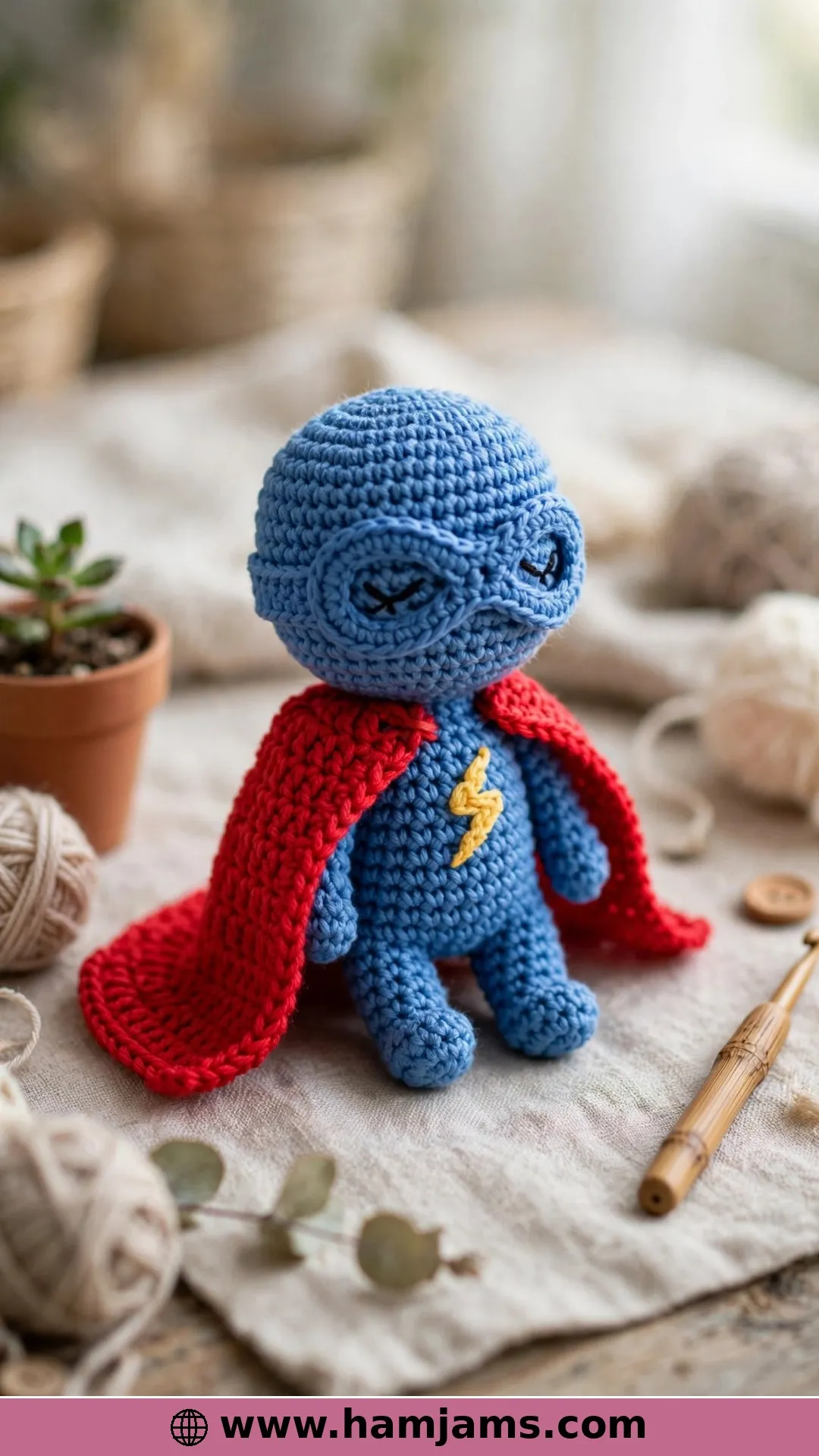
Chai Coffee Crochet's superhero doll cape is worked in nineteen rows of half-double crochet with a single-crochet edge, sewn to the doll's shoulders, on a doll of about ten and a half inches. The page states explicitly that the dolls are generic rather than customised to any particular superhero, which is exactly the kind of honesty I like to see, and the site presents its own original pattern with no personal byline, so I credit the site as the source. Nineteen rows gives this cape more drape and presence than the tiny three-row cape just before it, and the half-double fabric has a lovely soft density that holds its shape well. In red, blue or any bright hero colour it looks wonderful, and because it is sewn to the shoulders rather than tied, it stays put during play. This is a great middle-ground cape: substantial enough to look impressive, simple enough for a confident beginner.
Pattern: Crochet Superhero Doll Cape by Chai Coffee Crochet — Get the free pattern
13. The Original Friendly Superhero's Cape, Part Two
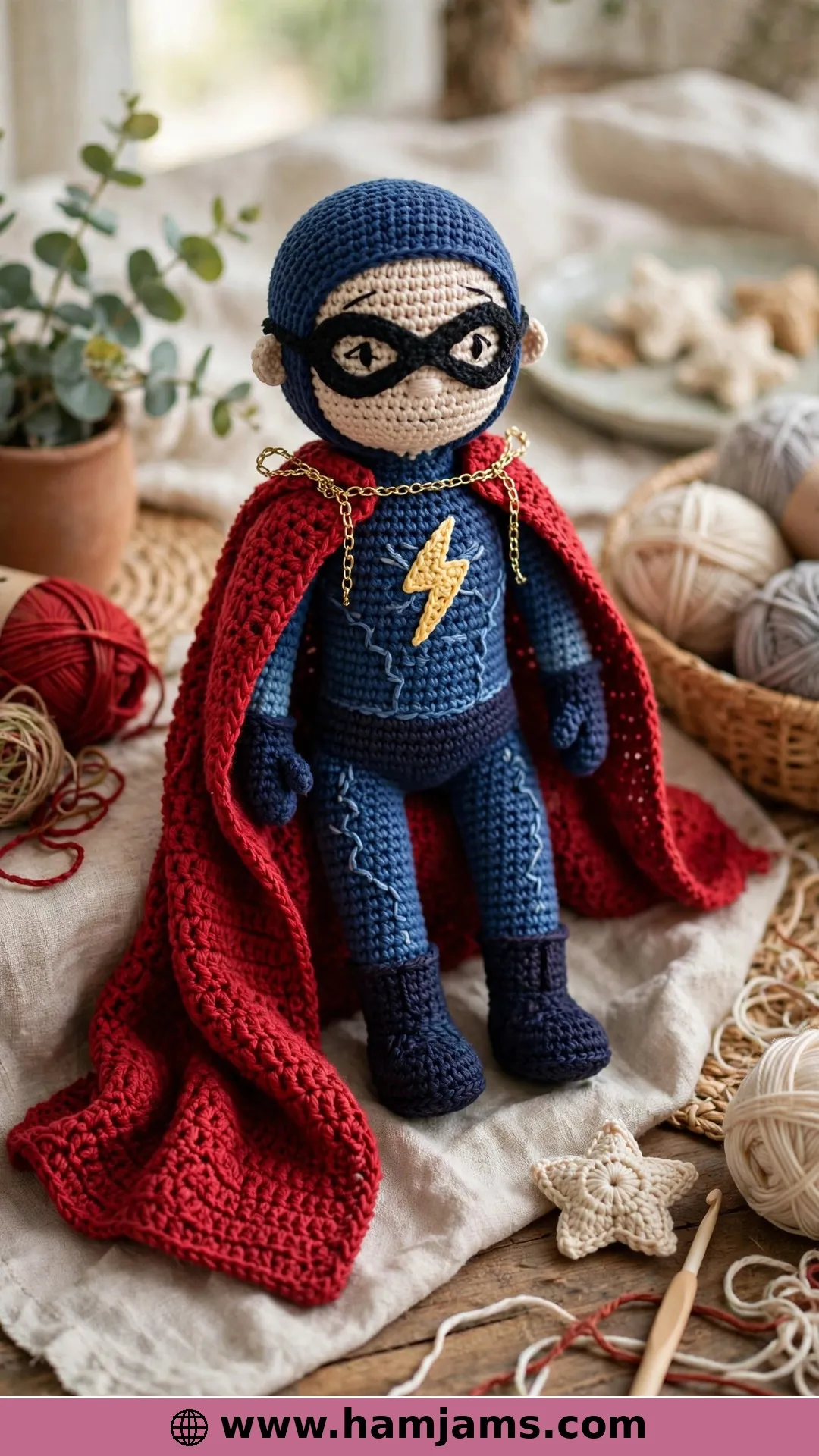
Here is the second Friendly Red Fox cape I promised you, and I want to stress that it is a genuinely different pattern from the plush superhero cape at number three: this one starts with a chain of eighteen and works fourteen rows of double crochet with a half-double edge and chain-twenty ties, on a fifteen-inch doll, where the earlier cape was a twenty-stitch single and double crochet cape on a different doll. That is the second Friendly Red Fox credit in this article, which fills the usual two-per-designer allowance, and it is worth it because the two capes really do behave differently — this one is longer, drapier and more dramatic, thanks to the double-crochet fabric and the larger doll. The ties fasten it around the shoulders, so it is removable, and in a classic hero red it has real presence on a shelf. If you are making the original friendly superhero doll, this is its cape, and it is not interchangeable with the plush version.
Pattern: The Friendly Superhero (Original, Part 2) Cape by The Friendly Red Fox — Get the free pattern
14. A Standalone Superhero Cape for a Ten-Inch Doll
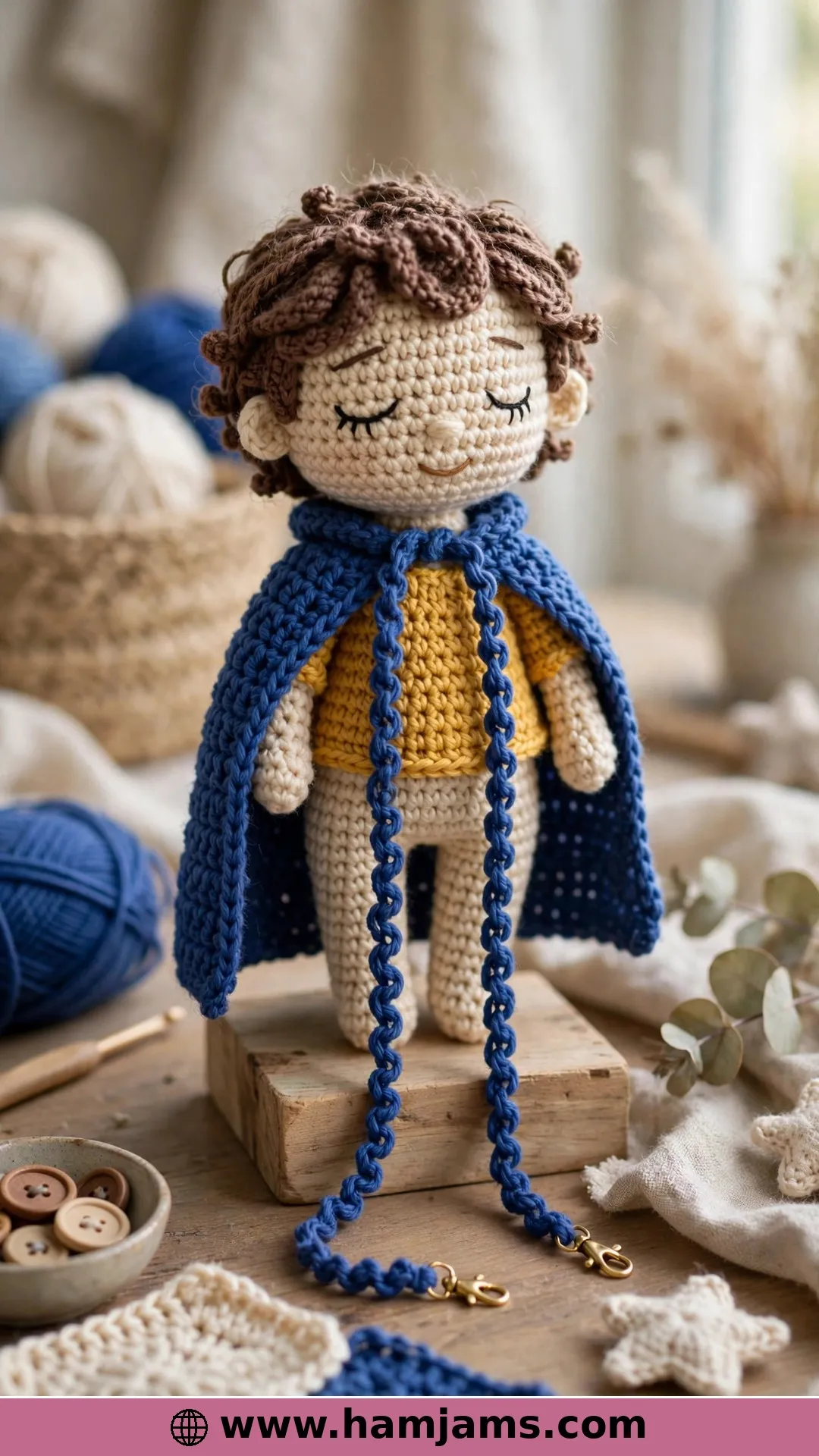
Ashley Parker's superhero cape for dolls starts with a chain of twenty and works sixteen rows of half-double crochet with decrease shaping, finished with chain-twenty-five tie chains, and it is designed for the ten-inch Advent Adam doll. It is a written pattern with a companion video tutorial, and it is a standalone accessory pattern, not a piece of a costume — that distinction matters, because the same designer's superhero costume is mentioned as cap-blocked in another collection's notes, and this cape is a different pattern from that one-piece costume entirely. The decrease shaping gives it a lovely tapered drape that flares gently at the hem, and the long tie chains make it easy to fasten securely. In any bright hero colour it is a cheerful, quick make, and it is one of the most wearable capes here because it was designed as an accessory first.
Pattern: Crochet Superhero Cape for Dolls by Ashley Parker — Get the free pattern
15. A Tall Vampire Cape With a Black Neck Tie
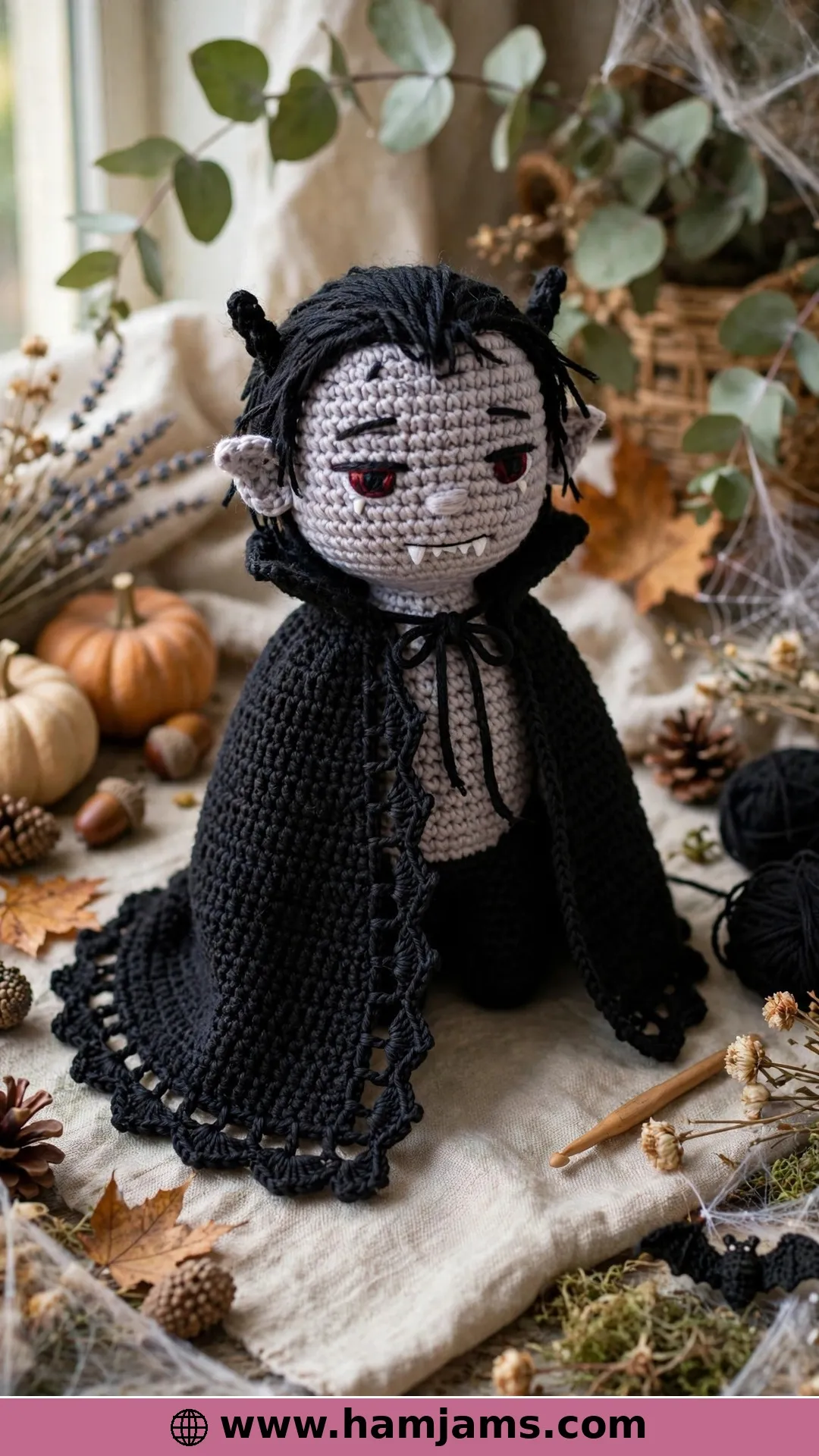
Viktor the Vampire stands eleven inches tall, and his cape starts with a chain of thirteen and works seventeen rows of double crochet with a single-crochet border, finished with a black yarn neck tie cord. The site presents its own original pattern with no personal byline, so I credit the site as the source, and the vampire is a generic original rather than any licensed character. Seventeen rows of double crochet gives this cape a proper dramatic length, and the border keeps the edges tidy and structured, which matters on a taller doll where a floppy cape would look lost. In black with a deep red or purple lining it is the most classically vampiric cape in the collection, and it pairs beautifully with the smaller vampire cape at number eight if you are building a whole vampire family. The tie cord means it fits securely and can be swapped between dolls of a similar size.
Pattern: Viktor the Vampire Cape by The Blue Elephants — Get the free pattern
16. A Princess Cape in Cloak Construction
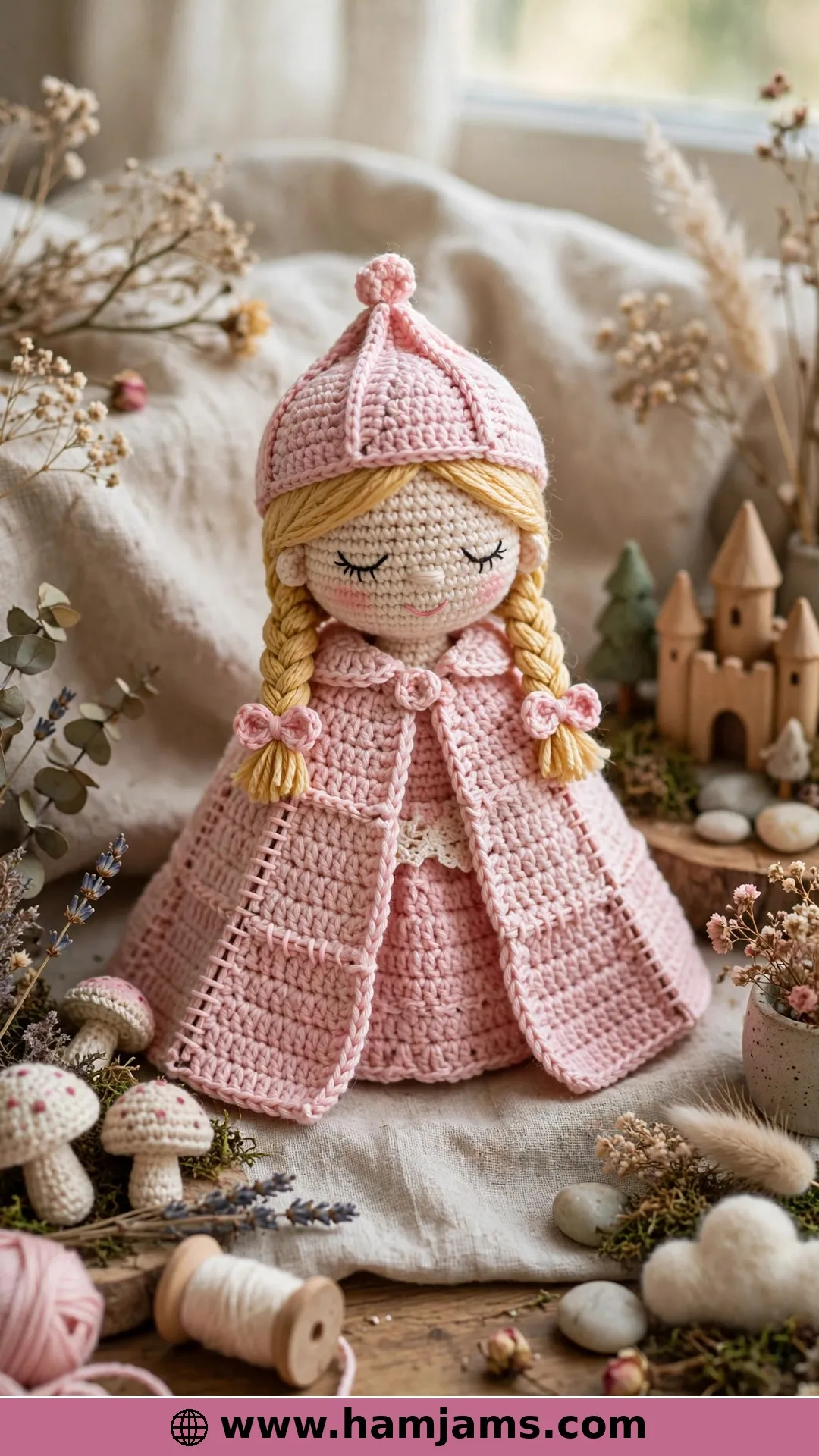
Now we come to the first of the four cloak-worded entries, and I want to be plain about the wording: the pattern's title says cape, while the text calls the joined piece a cloak once, but the garment itself is a neck-fastened draped layer, which is a cape in construction whatever word the designer reaches for in one sentence. The cloak section is worked as a body in eight rows, then left front, back and right front are worked separately and joined as one piece in rows nineteen to forty-six, with a hat to complete the outfit. The doll is a generic princess doll with a noted inspiration from a television fairy-tale show, and I want to be clear: no character is named, and this is not a licensed-character pattern, just a generic princess with an acknowledged inspiration. In soft pink or lavender it is a dreamy, romantic cape, and the joined-panel construction gives it a lovely fullness that simpler capes do not have.
Pattern: Princess Doll in Cape by zichin — Get the free pattern
17. A Buttoned Witch's Cloak for an Eighteen-Inch Doll
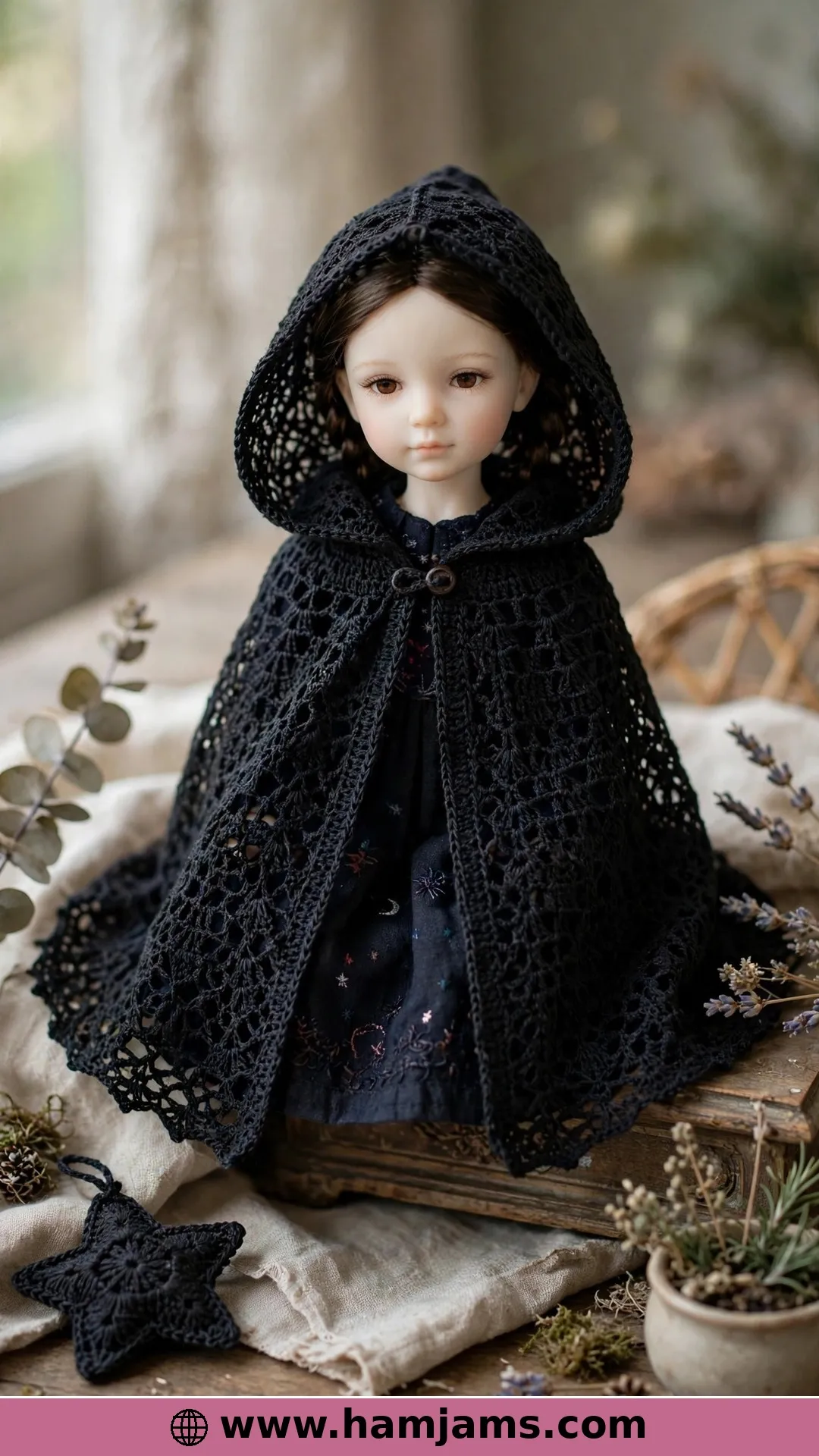
This is the second cloak-worded entry, and the same disclosure applies: the designer frames it as a cloak, but it is a neck-fastened draped garment, so it counts here as a cape in construction, and I am saying so rather than quietly renaming it. It is worked in nineteen rows with a button loop and a button decoration, in crochet thread, for an eighteen-inch doll, which makes it one of the most elegant capes in the collection — fine thread gives it a delicate, almost heirloom drape that chunkier yarns cannot match. The site presents its own patterns under its own brand with no external designer attribution, so I credit the site as the source. In black thread it is a classic witch's cloak for a larger doll, and the button loop closure is a charming detail that makes it feel properly finished. If you dress eighteen-inch dolls, this is a cape worth the fine-thread patience.
Pattern: Witch’s Cloak for 18-inch Doll by ABC Knitting Patterns — Get the free pattern
18. A Tiny Evil Witch's Cloak
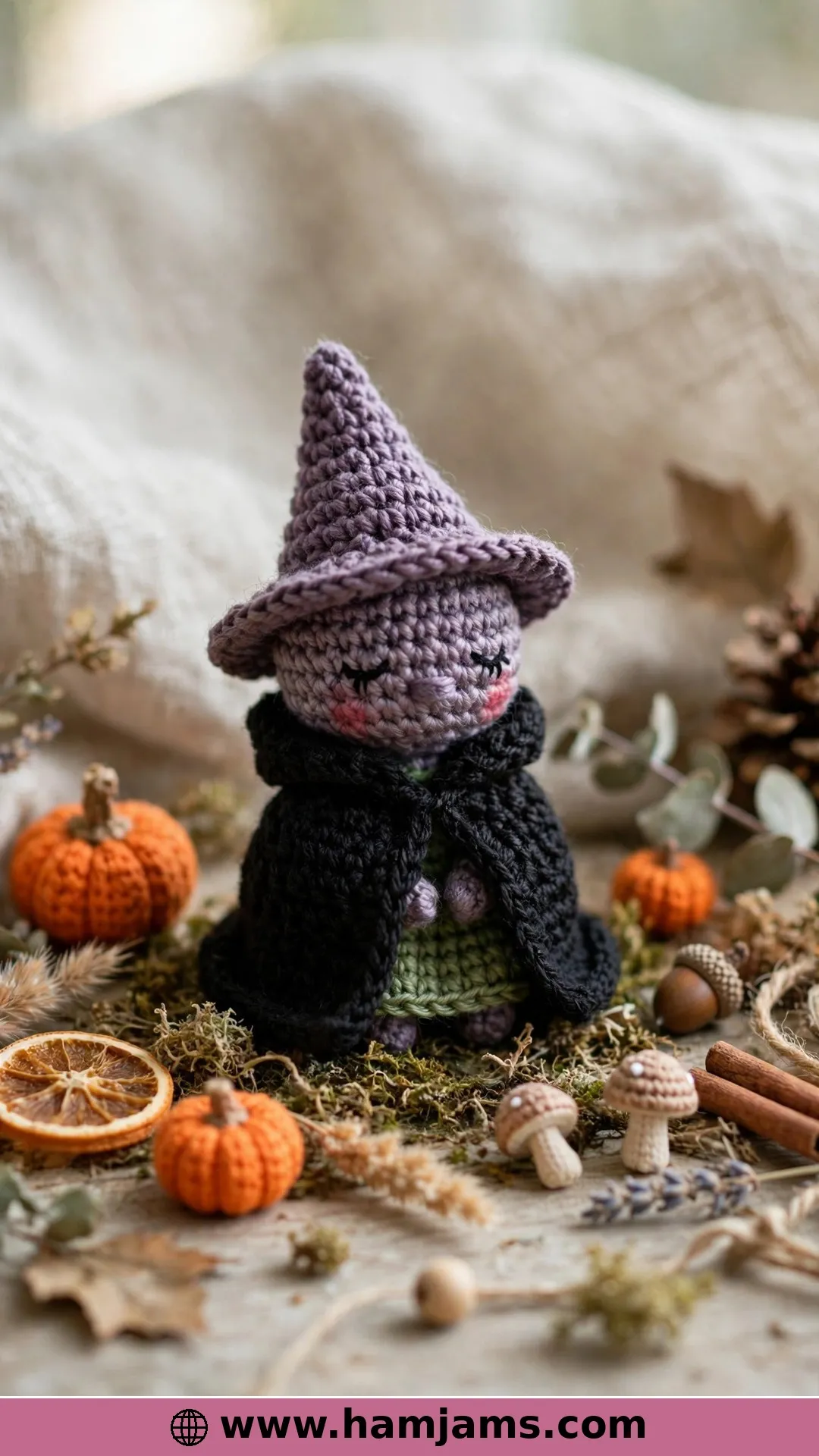
The third cloak-worded entry is a tiny evil witch's cloak, worked in nine rows of single crochet with decreases, wrapped around the neck with the opening to the front and sewn to the body, on a witch only about five and a half centimetres tall when sitting. The site presents its own original patterns with no personal byline, so I credit the site as the source, and again the disclosure stands: the designer calls it a cloak, and it is a cape in construction, a neck-fastened draped garment like every other entry here. At this tiny scale the cloak is a quick evening make, and the front opening gives it a proper witchy silhouette even on a miniature. In black or deep purple it is wonderfully spooky, and it is the first of two entries from this site in this article, which fills that site's usual two-entry allowance. Pair it with the tiny vampire cloak next for a miniature Halloween pair.
Pattern: Evil Witch Cloak by Supergurumi — Get the free pattern
19. A Tiny Vampire's Cloak With Collar Shaping
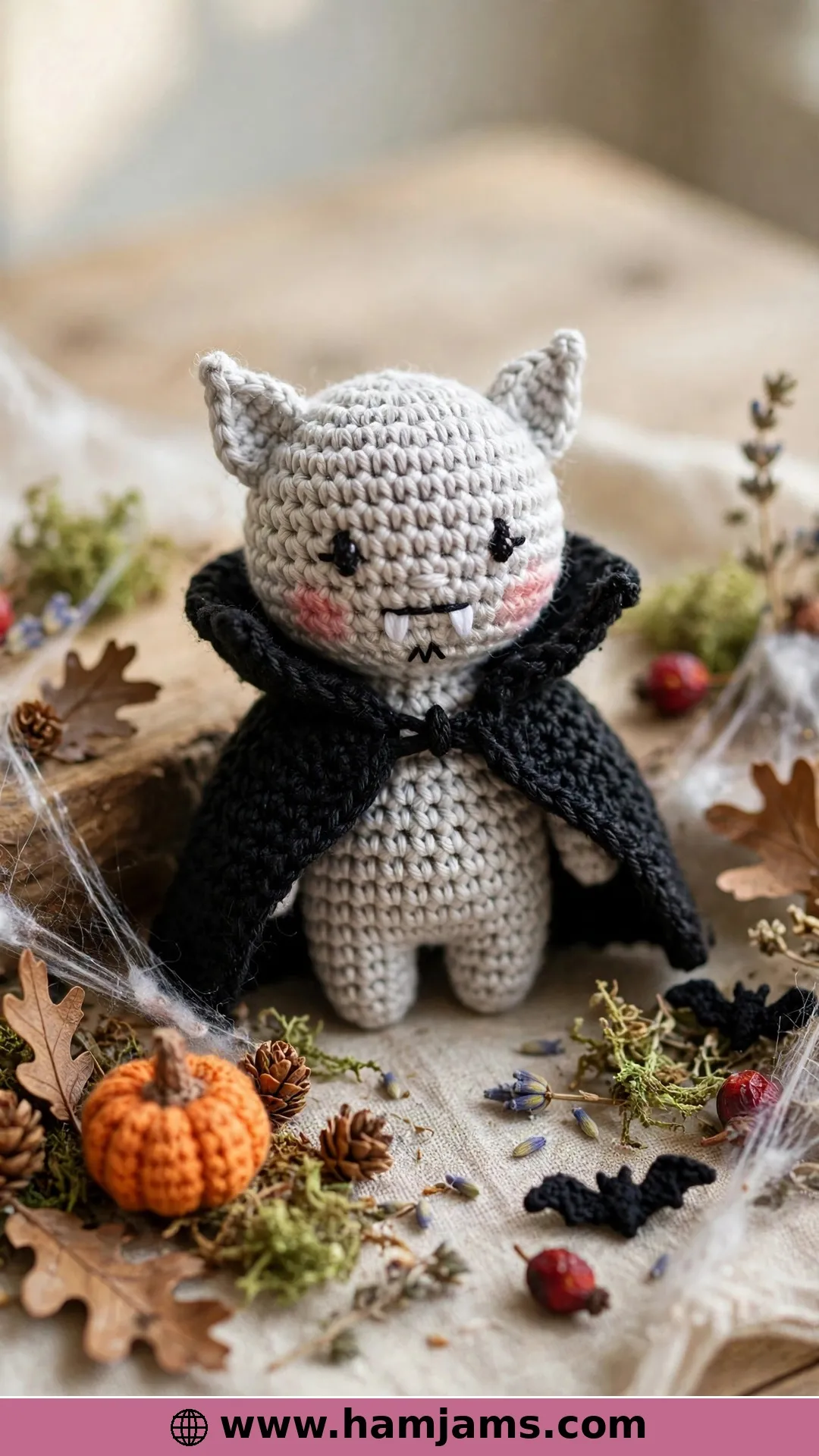
The fourth and final cloak-worded entry is a tiny vampire's cloak, worked in thirteen rows of single crochet with collar shaping, wrapped around the body with the opening to the front and the collar sewn to the neck, on a vampire only about four and a half centimetres tall. The same disclosures apply as for its witchy sibling just before it: the designer calls it a cloak, it is a cape in construction, and the site presents its own original patterns with no personal byline, so I credit the site as the source. This is the second entry from this site, completing its two-entry allowance, and the collar shaping is the detail that lifts it — it gives the tiny vampire a proper high-collared silhouette that reads instantly as vampiric. In black with a red collar edge, or all black, it is a perfect miniature Halloween make, and it sits beautifully beside the evil witch's cloak as a matched pair.
Pattern: Vampire Cloak by Supergurumi — Get the free pattern
20. A Modified Cape With a Back Collar for a Riding-Hood Mouse
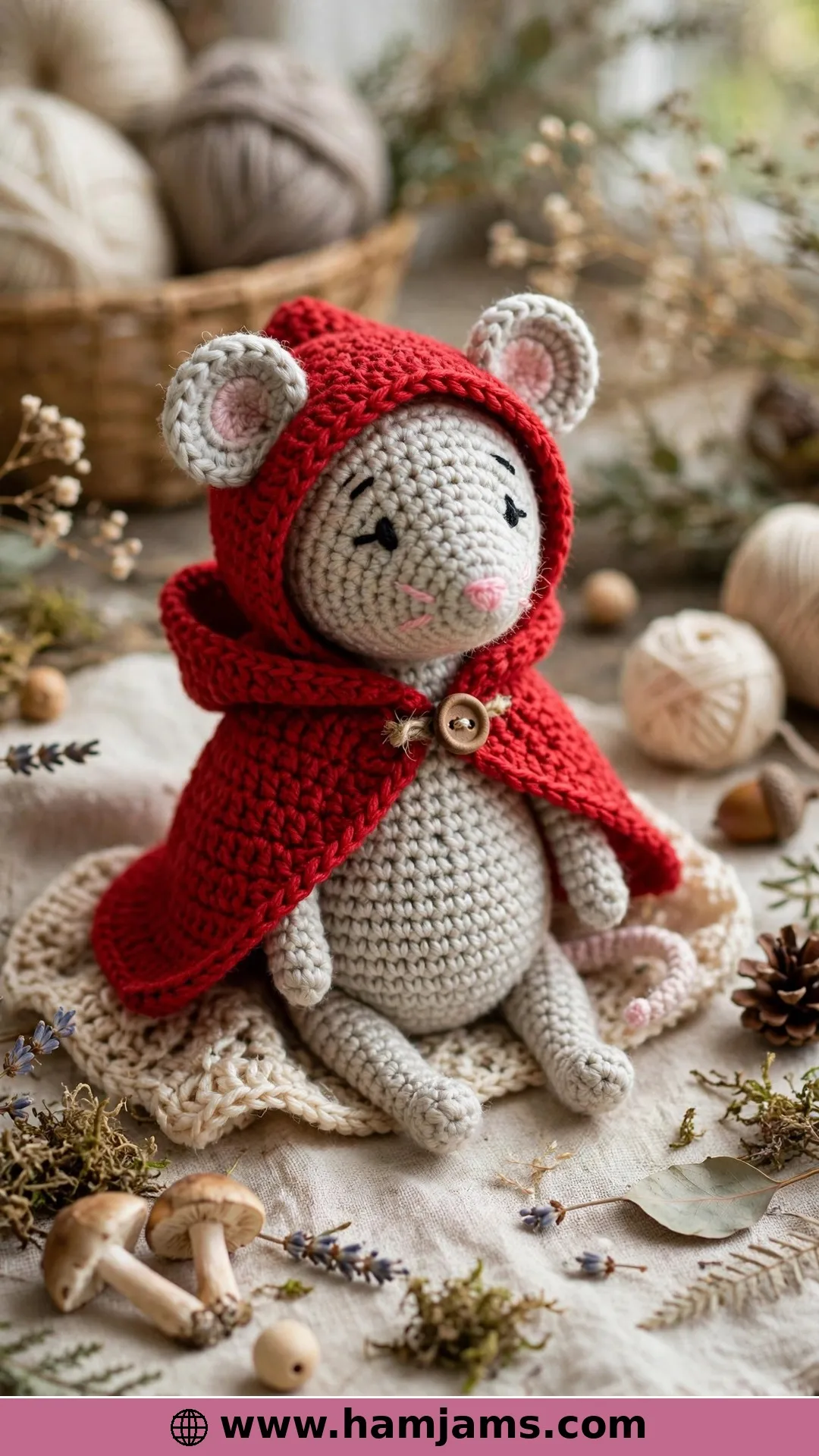
We finish with a cape that wears its history openly: Sharon Ojala frames this one explicitly as a modification of the regular mouse cape at number two in this very article, and I am disclosing that framing rather than pretending otherwise. The modified cape is worked in seven rows from a chain of nineteen to forty-five stitches, with a back collar in five rows and a loop-and-button closure, for her Little Red Riding Mouse — and those different stitch counts, plus the added back collar, make it a distinct pattern in its own right, even though it grows out of the earlier design. Little Red Riding Mouse is a public-domain fairy-tale character, not a licensed one, and this is the second Amigurumi To Go credit in the article, completing that designer's two-entry allowance. It is a written pattern with a companion video tutorial, and in riding-hood red it is the perfect bookend to the collection: the same mouse family, a new cape, and a reminder that the best patterns are the ones makers keep improving.
Pattern: Little Red Riding Mouse Modified Cape by Sharon Ojala — Get the free pattern
Conclusion
And that is twenty doll capes, my friend — superhero capes in every size from four inches to eighteen, witchy capes and cloaks, vampire capes with collars and ties, a storybook red cape, a princess cape, a highland cow's winter cape and a tiny ghost's picot-edged cape, every single one free and every single one fastened at the neck the way a proper cape should be. If you are new to doll clothes, start with the tiny three-row superhero cape or the removable plush hero cape; if you want a showpiece, the princess cape's joined panels or the eighteen-inch witch's cloak will reward your patience. Whichever you choose, remember the cape-maker's golden rule: the cape is not there to hide the doll, it is there to give it a story.
Now tell me — are you team superhero cape or team spooky witch-and-vampire cape, and which of these twenty is going on your hook first? I read every comment, and I cannot wait to see your caped creations!