
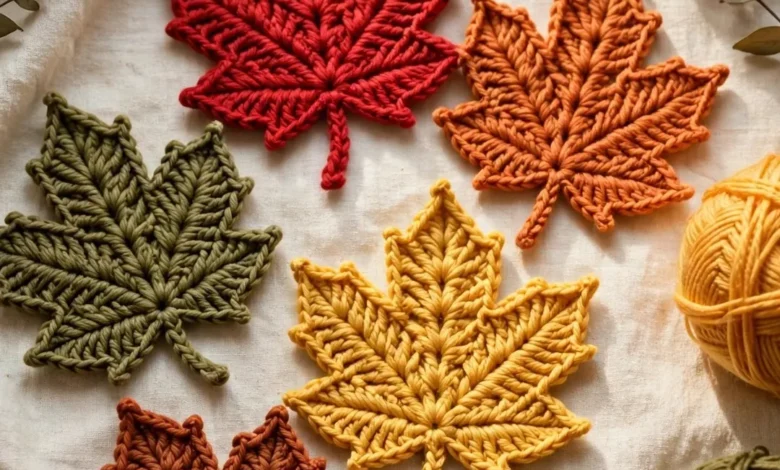
There is a moment every autumn when the pavements turn gold and I want to bring the whole season indoors — and the quickest way I know is a crochet leaf. One leaf takes minutes, uses barely a handful of yarn, and yet a happy pile of them can become a garland, a set of coasters, a bookmark or the finishing touch on a wrapped gift. Leaves are the ultimate stash-busting project: no fitting, no sizing maths, no gauge anxiety — just pretty shapes in glorious colours, finished before your tea goes cold.
So I have gathered twenty of my favourite leaf patterns for you here: maple leaves with proper points, wavy little oak leaves, a delicate Japanese maple, a tropical monstera, bookmarks, coasters and even holly, ready for the festive season ahead. Every one is a real written pattern, and every one is free where it is published; where a designer also sells an optional printable PDF, or asks you to keep a design for personal use, I have said so honestly under that item. Choose your favourites, raid the scrap basket, and let's make autumn last all year.
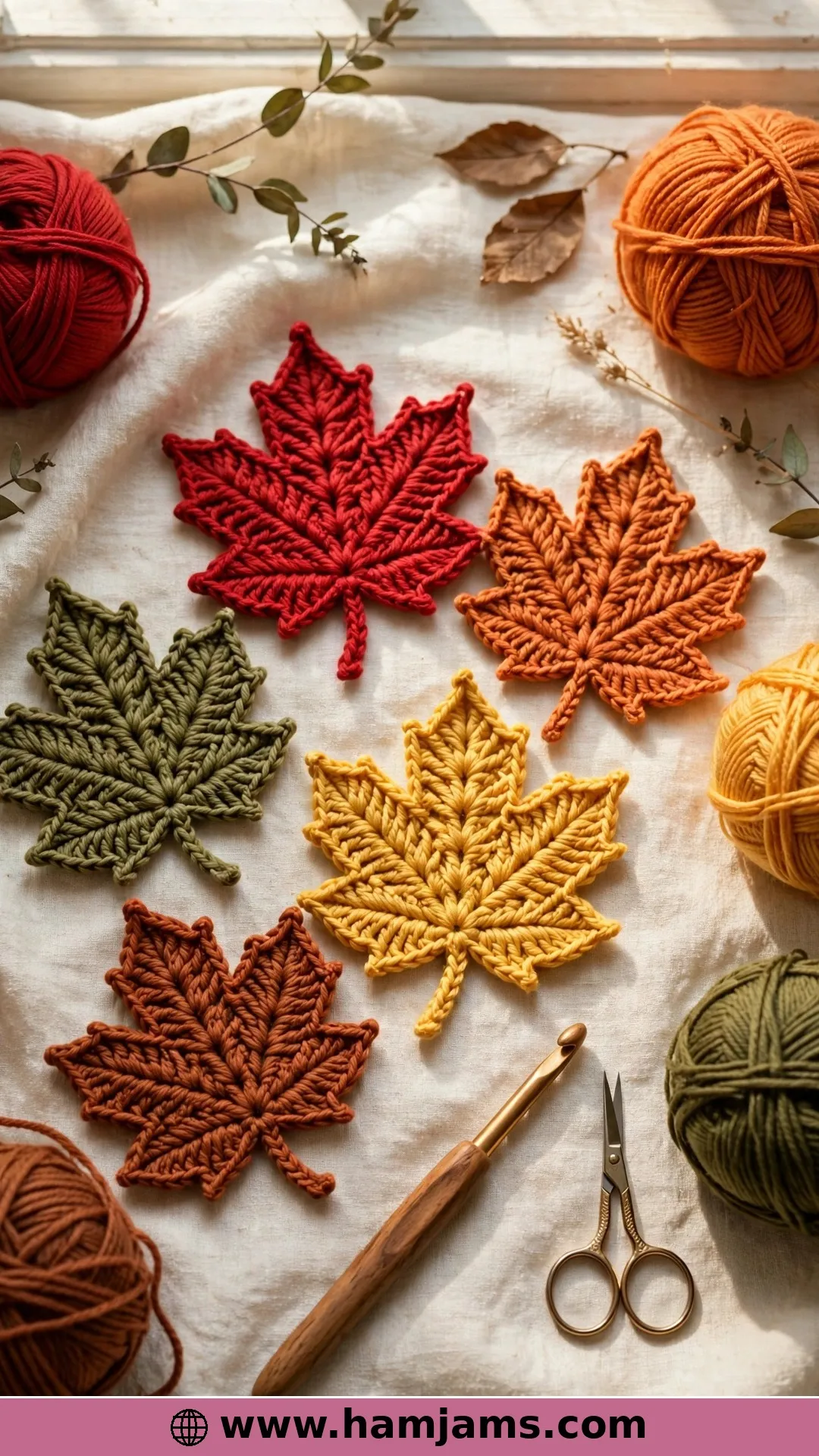
1. The Maple Garland That Doubles as Place Settings
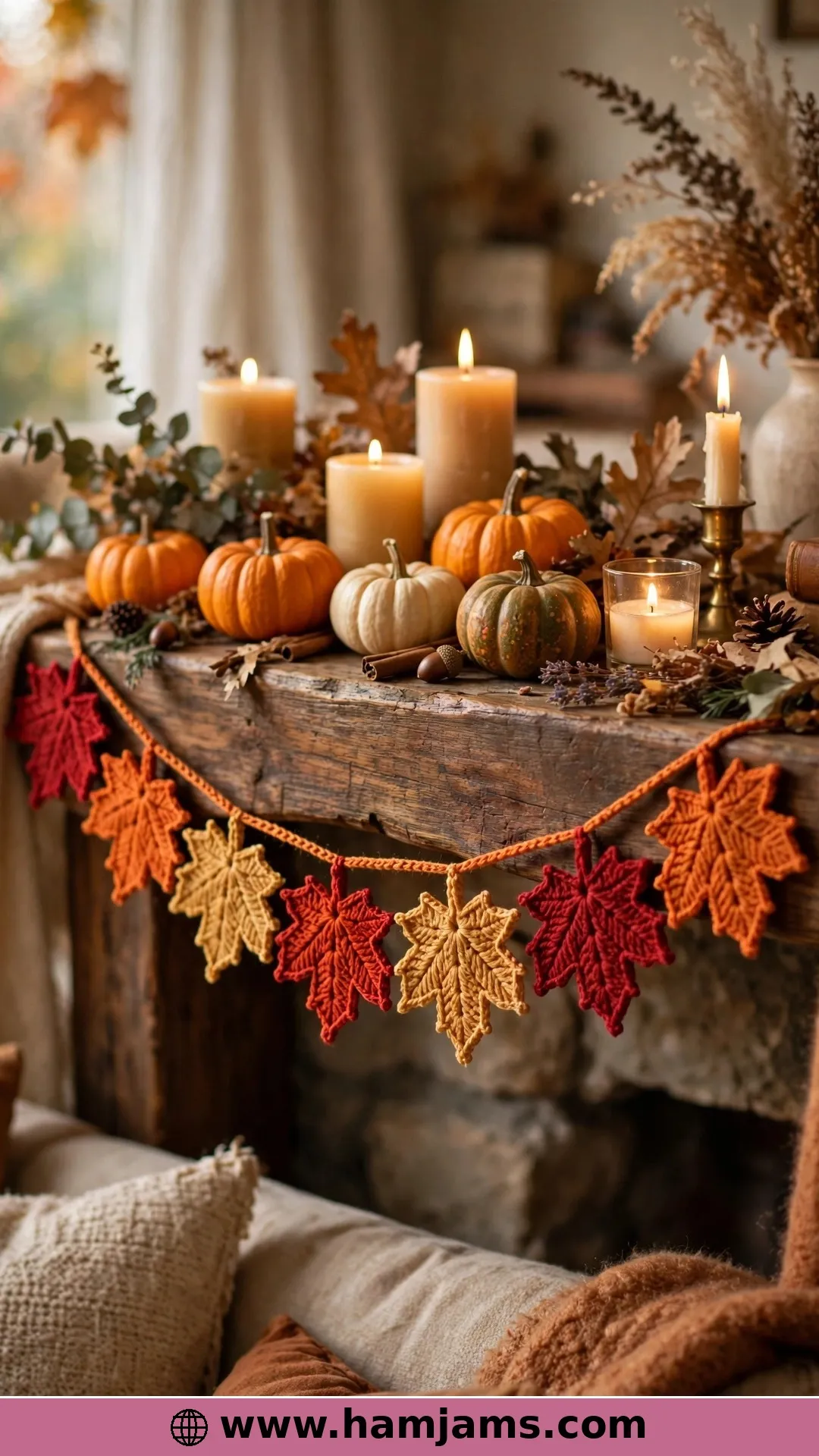
We are starting with the hardest-working leaf in the whole collection: SeeLoveShare's Autumn Maple Leaf Garland, whose chunky five-point leaves are worked in four continuous rounds of bulky yarn on a 6 mm hook. Each leaf finishes at about five inches across — seven with its stem — and the pattern even includes a two-tone colour-change technique, so you can shade from olive into ginger and scarlet just like a real turning leaf. Blocking is non-negotiable here; pinned flat, the points come out crisp and almost sculptural. String five to seven leaves on twine for a mantel garland, or lay a single leaf under each guest's name card at a harvest dinner and let everyone take theirs home. The full written pattern is free on her page; an ad-free printable PDF is also sold on Etsy if you prefer paper.
Pattern: Autumn Maple Leaf Garland by SeeLoveShare — Get the free pattern
2. A Maple Leaf Built Row by Row
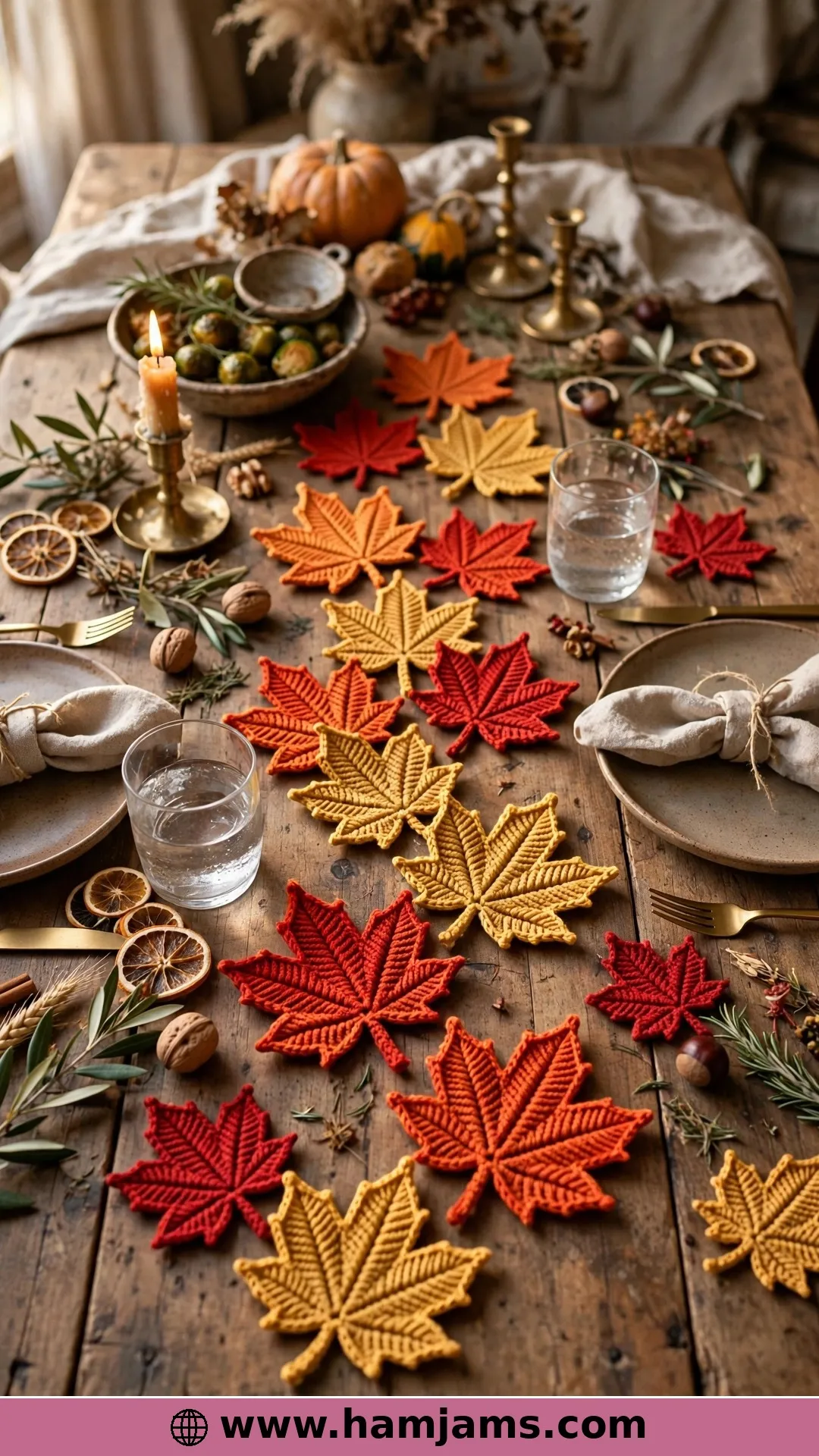
Nicki's maple leaf takes a completely different route from the usual in-the-round designs: you crochet a slim central leaf first, working single crochet in the back loop only, then grow the side points out from it in short shaped sections. The ribbed back-loop texture gives the finished leaf lovely realistic veining, and at about four and a half inches long it is a generous size for scattering down a Thanksgiving table or sewing onto a tote bag. It is written for fine yarn on a 3 mm hook, so the fabric stays delicate rather than chunky, and a stitch marker at the centre point keeps the shaping honest. This is an advanced-beginner pattern that quietly teaches you real shaping skills. The written pattern is free on her site; an ad-free PDF is also available on Ravelry and Etsy if you like working from print.
Pattern: Maple Leaf by Nicki’s Homemade Crafts — Get the free pattern
3. The Delicate Japanese Maple
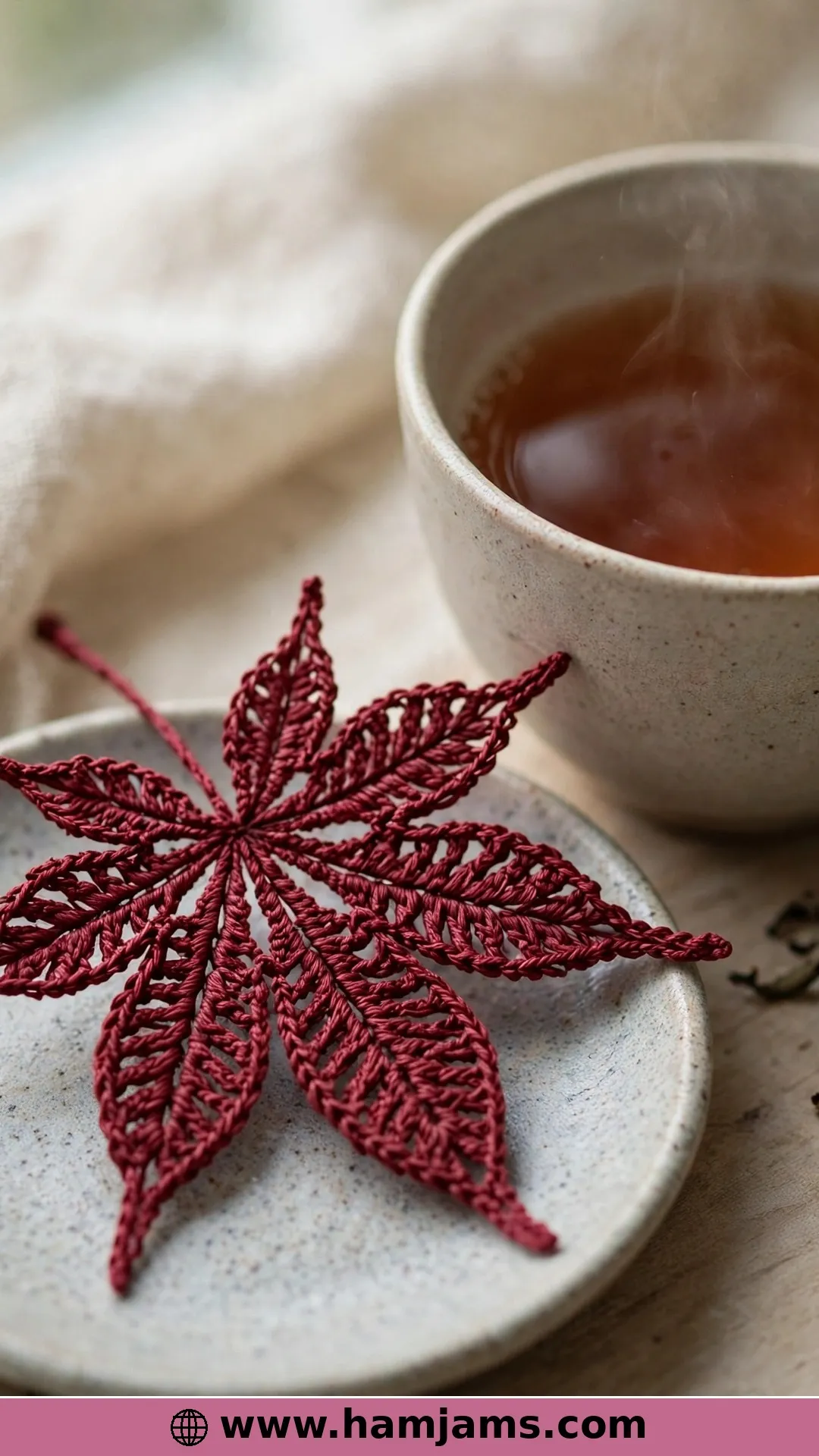
If you like your leaves lacy and fine rather than chunky, Craft Passion's Japanese Maple Leaf is the connoisseur's choice. Instead of five chunky points, this design builds seven slender lobes one at a time from a central stalk, each lobe shaped with increases and decreases over short rows, so the finished leaf has that unmistakable feathery silhouette of a real Japanese maple. The pattern is written in American terms with step-by-step photos for every lobe, plus a chart if you prefer to work visually. Worked in fine cotton it makes a beautiful coaster or appliqué; block it with a touch of starch to keep those slim lobes defined. It asks for a little patience and counting, but the result is the most botanically elegant leaf on this list.
Pattern: Japanese Maple Leaf by Craft Passion — Get the free pattern
4. A Four-Inch Maple Appliqué for Everything
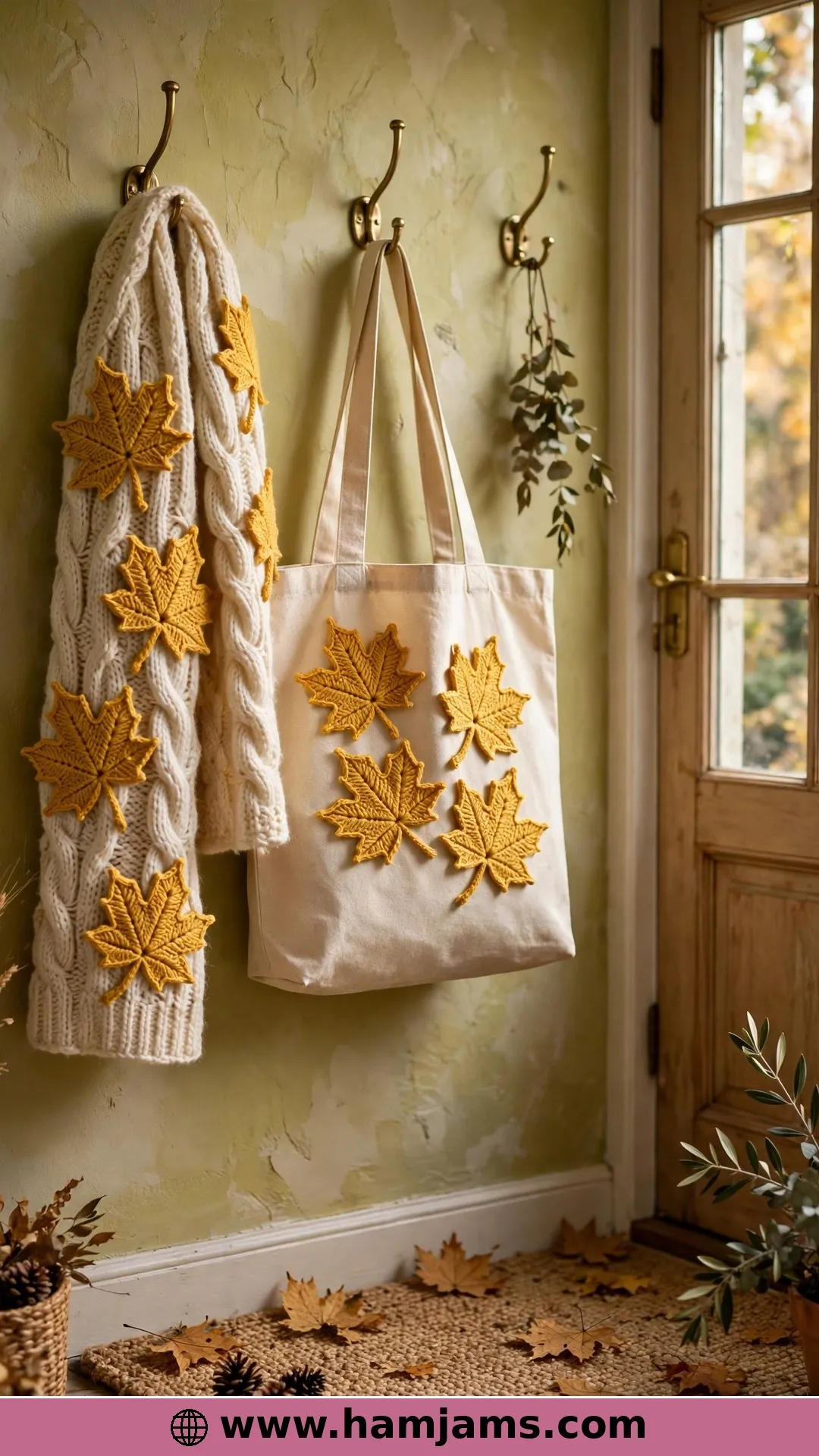
Melissa Hassler's maple leaf appliqué is the friendly all-rounder every crocheter should have in their back pocket. Five gentle rounds of single crochet build the round centre, then one clever shaping round forms the stem and all five points in a single pass — no sewing, no separate pieces. In worsted yarn on a 4 mm hook it finishes at about four inches square, which is the perfect appliqué size: big enough to show on a hat, scarf or cushion, small enough to string into a garland or slip under a mug as a coaster. The pattern is written in US terms, clearly laid out for advanced beginners, and there is a video on the page too if you like to watch a shaping round once before you try it. Make a rainbow of autumn shades and keep them in a jar, ready for any project that needs a fall flourish.
Pattern: Maple Leaf Appliqué by Melissa Hassler at Lovable Loops — Get the free pattern
5. Soft Leaves on a Never-Ending Vine
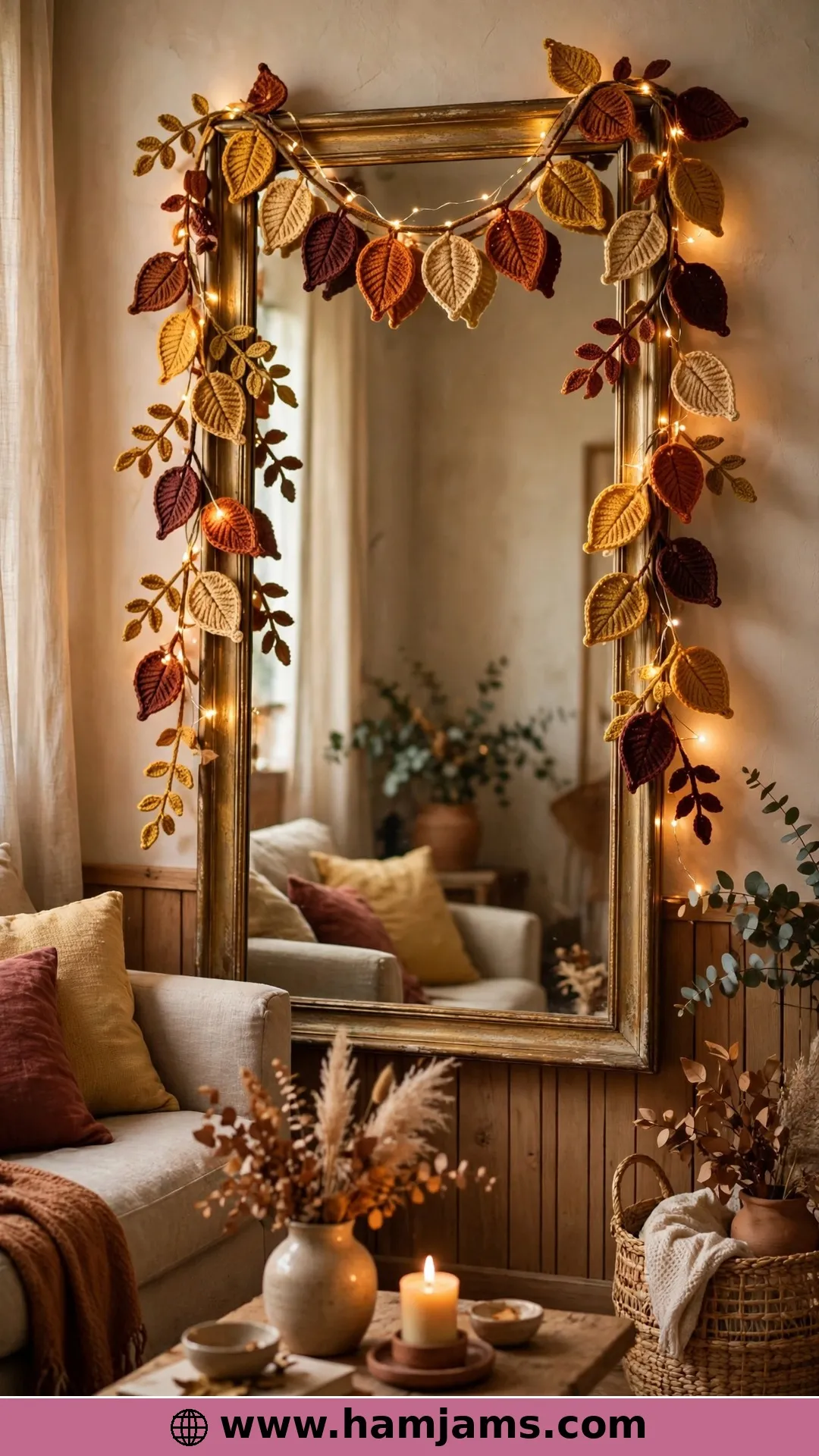
Puqqu's Autumn Leaf Garland does something clever: the leaves are never sewn on, because each one grows straight out of a continuous vine. Every leaf is worked flat in rows of plain single crochet — increases up one side, decreases down to the tip — then a short chained stem flows directly into the next stretch of vine, so the garland builds itself as you go. The leaves come out around three inches long with a soft natural curve, and the designer is firm that you should not stiffen them; the relaxed drape is the whole point. Work it in DK or worsted scraps with a small hook, mixing mustard, rust, burgundy and taupe as randomly as you can manage. Drape it over a mirror or mantel and it genuinely looks like something the wind arranged.
Pattern: Autumn Leaf Garland by Puqqu — Get the free pattern
6. The Ten-Minute Leaf Appliqué
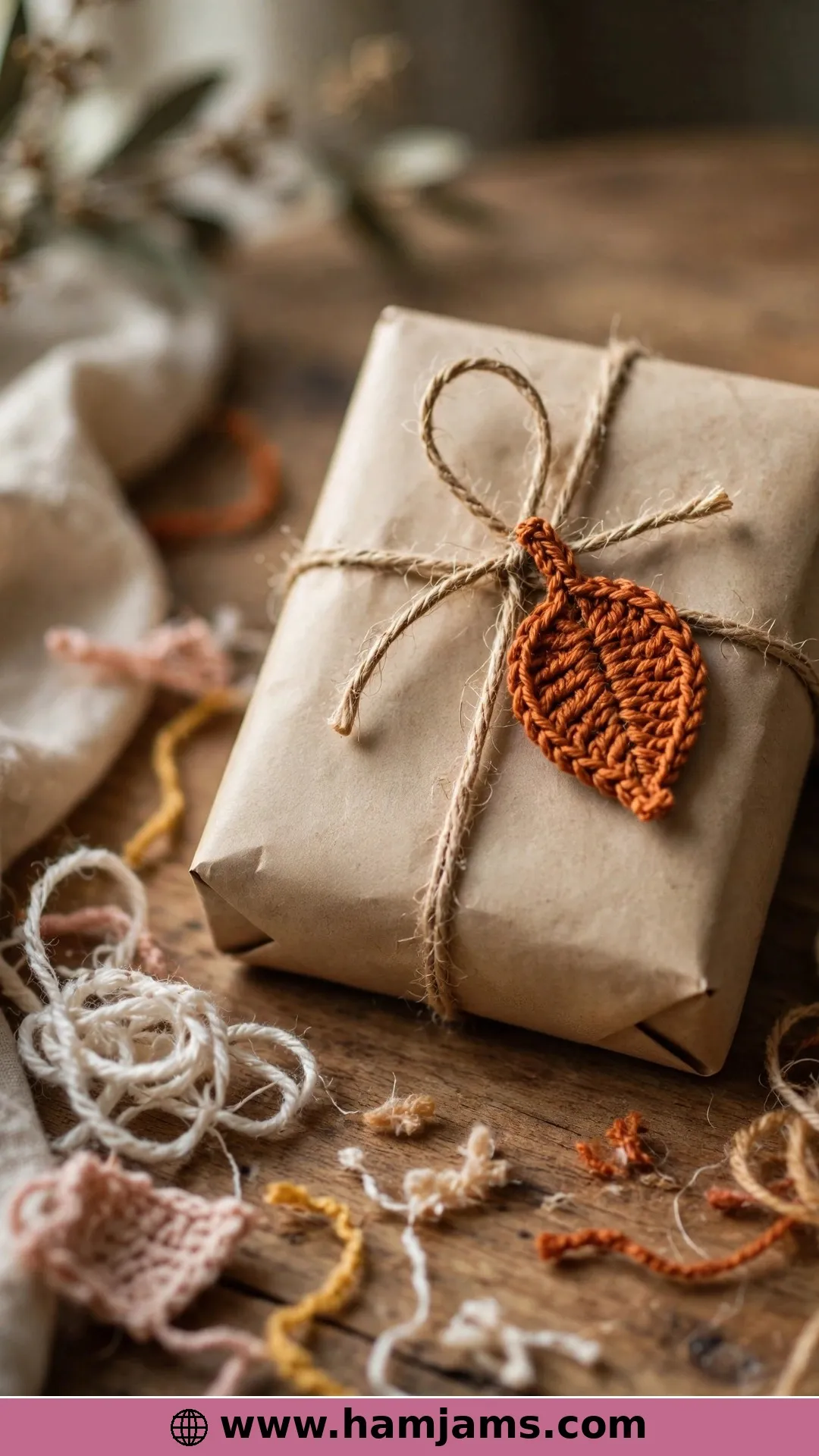
Sometimes you just need one small leaf, quickly, and Jess Crafting's appliqué is exactly that: a single chain of sixteen stitches worked up one side and down the other with a staircase of stitch heights — single crochet rising through doubles and trebles to dramatic triple trebles at the widest point. That clever height gradient is what gives this simple leaf its elegant pointed-oval shape, and in DK yarn on a 3 mm hook it takes minutes and a few grams of yarn. Jess designed it as the finishing piece of an autumn garland alongside acorn, pumpkin and toadstool appliqués, but it stands alone beautifully on cards, gift wrap and hair clips. One honest note: the pattern is for personal use only, although you are welcome to sell the finished leaves themselves. There is a video tutorial on the page as well, but the written pattern is complete on its own.
Pattern: Leaf Appliqué by Jess Crafting — Get the free pattern
7. Tunisian Leaves With Real Texture
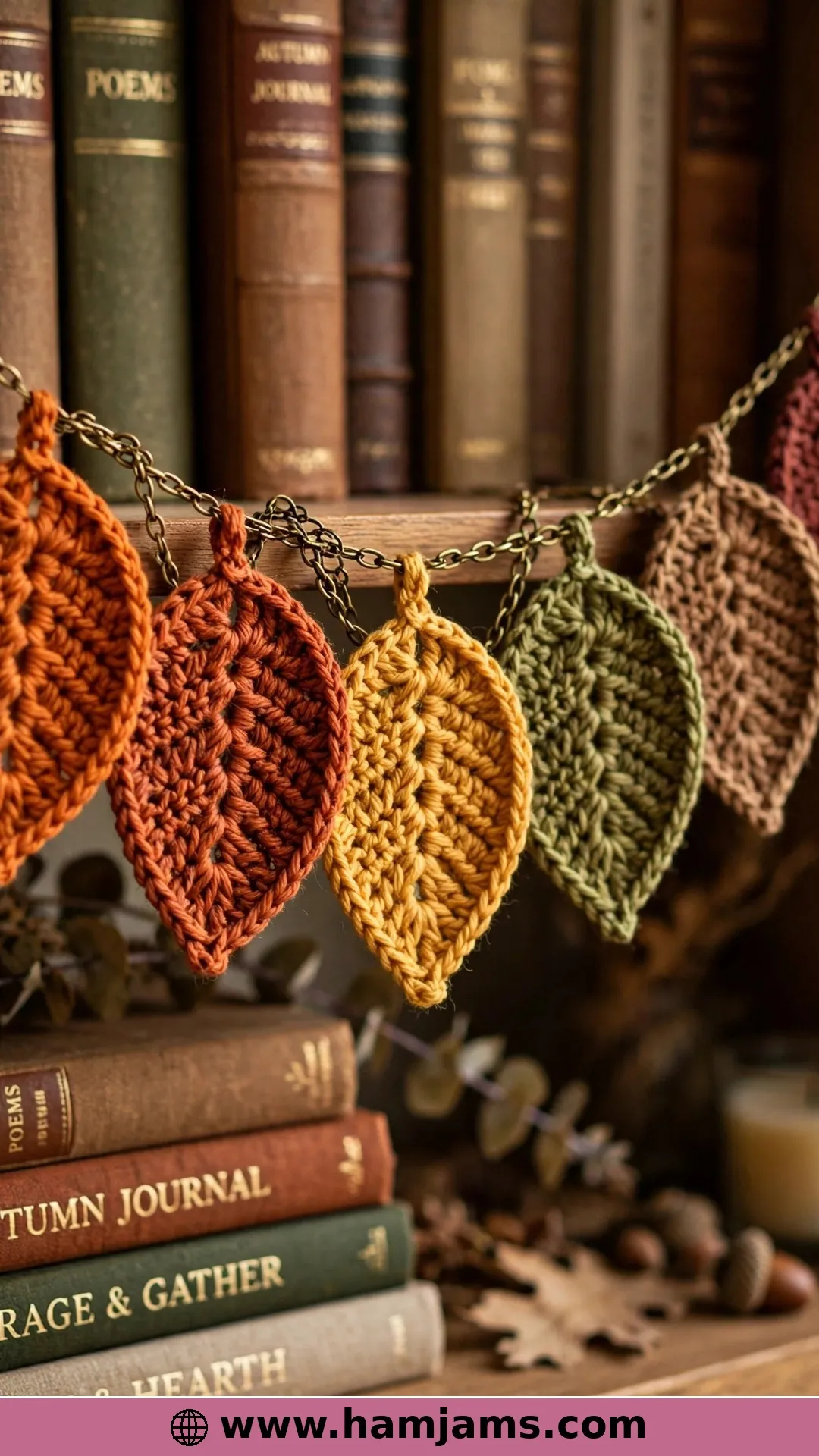
Tunisian crocheters, this one is yours. Andrea Crețu's Fall Leaf Garland uses Tunisian simple stitch worked in short rows from a magic-ring centre, casting stitches off in stages to carve out a broad plane-tree leaf shape with wonderfully woven, almost knitted texture. Each leaf finishes at about nine centimetres before its stem, and because the pattern works in any yarn weight, you can make a whole family of sizes from the same instructions simply by changing your hook. The leaves are blocked, then strung on a simple chain with neat hanging loops at both ends. It is rated intermediate — the short rows and cast-offs reward a little concentration — and the full written pattern is free on her blog, with an optional printable PDF in her shop and right- and left-handed videos if you want company. If regular crochet leaves feel too flat for you, this texture will spoil you.
Pattern: Tunisian Fall Leaf Garland by Andrea Crețu at Yarn Andy — Get the free pattern
8. Maple Coasters for Cider Season
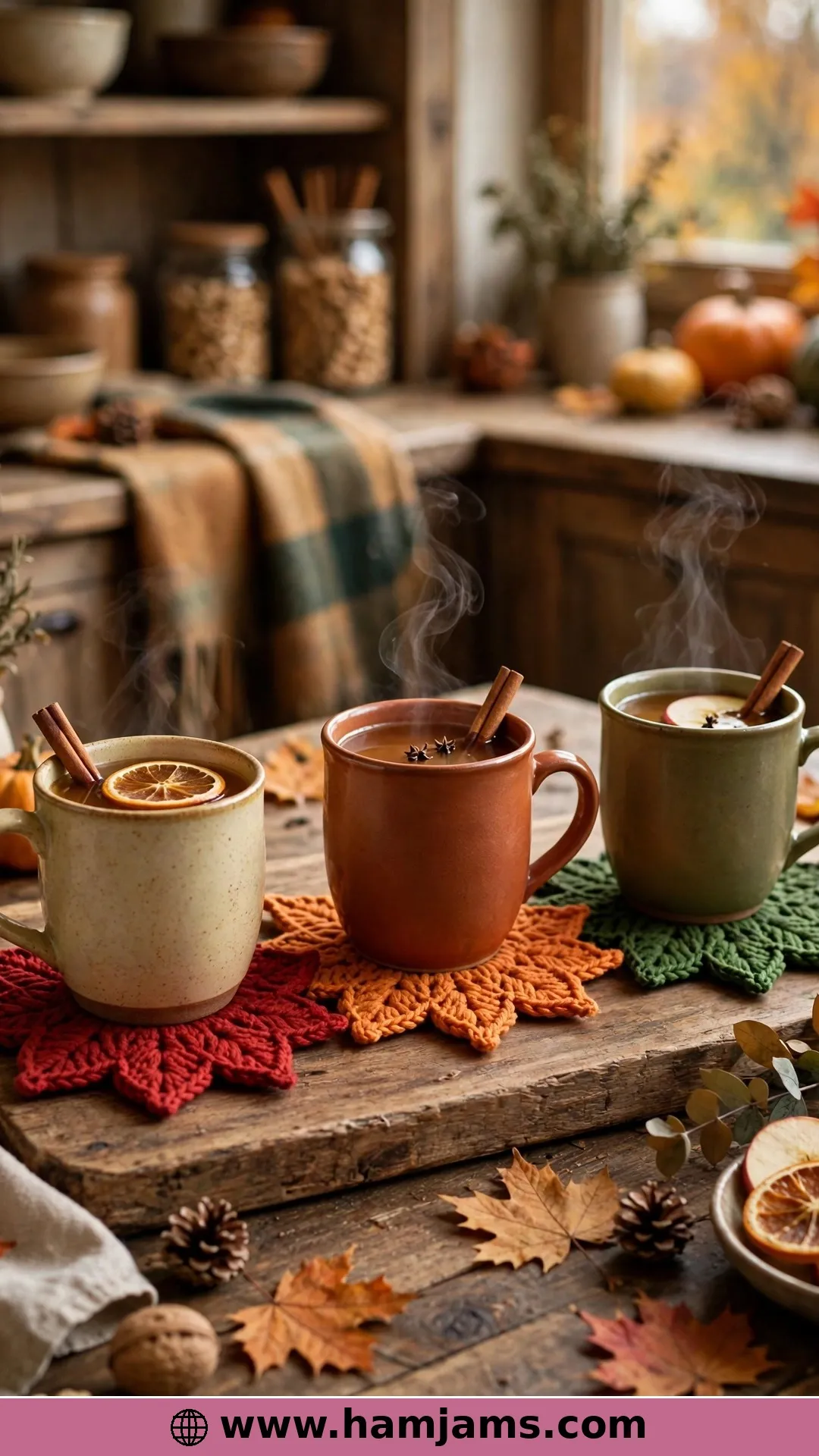
Debbie Chapman's maple leaf coaster is the most engineered design in this collection: first you build a five-pointed leaf base, then you go back and work extra stitches up and down every point to give the leaf its full, plump silhouette. The finished coaster is about five inches wide — properly mug-sized — with step-by-step photos throughout. Cotton yarn is the right choice here, as it is absorbent, washable and copes with warm mugs far better than acrylic, and Debbie recommends blocking so the points lie flat instead of curling. Make a matched set in one shade for a calm look, or one in every colour of the turning woods for a table that celebrates the season. The complete pattern is free on the page; there is also an optional paid PDF in her Etsy shop that adds a one-page quick guide.
Pattern: Maple Leaf Coaster by Debbie Chapman at One Little Project — Get the free pattern
9. A Monstera Leaf With Its Own Little Pot

And now for something completely different: a leaf for those of us who cannot keep a houseplant alive. Jenny and Teddy's monstera coaster builds the famous split-leaf shape branch by branch along a central stem — five little branches of chains and stitches on each side — until the unmistakable monstera silhouette appears. Then, because the designer has a sense of humour, there is a second mini pattern for a tiny crochet pot worked in simple rounds, and the leaf tucks inside it to become the world's lowest-maintenance plant. Flat, it works as a four-inch coaster; potted, it is pure desk joy. It uses scrap amounts of medium-weight yarn and a 4 mm hook, and the written instructions are free on the page, with an optional PDF in her shop if you want one.
Pattern: Monstera Leaf Coaster by Jenny and Teddy — Get the free pattern
10. The Wavy-Edged Oak Leaf
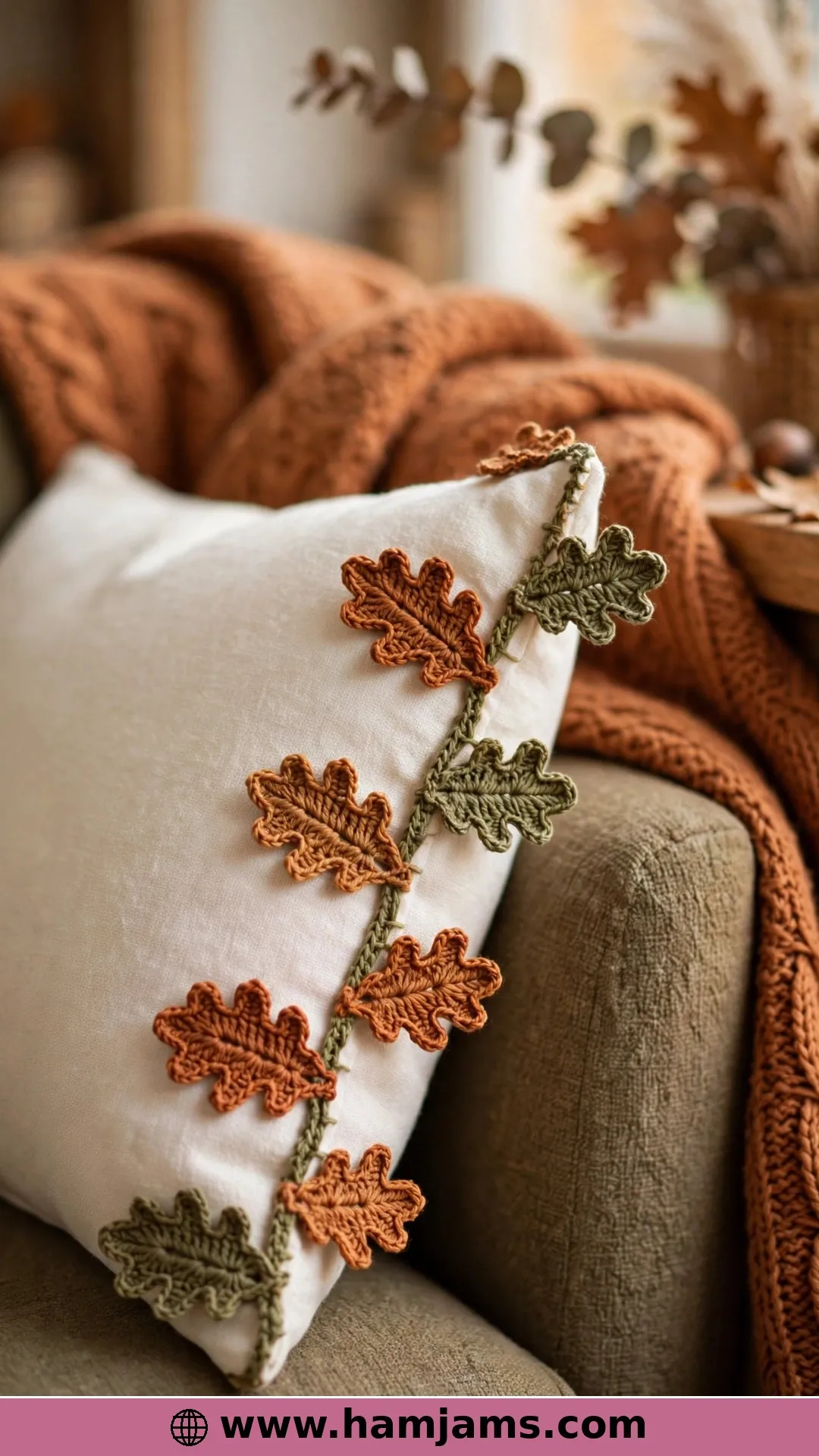
Raffamusa's oak leaf gets its gorgeous scalloped edge from a second round of cleverly mixed stitches — half doubles, doubles, chains and slip stitches rising and falling around the leaf like little waves. The first round is a simple oval worked around a foundation chain, so the whole appliqué is just two rounds and a few minutes of your life, finishing at just under three inches long in DK yarn. It is part of her Autumn Leaves Collection alongside willow, birch and maple designs, so you can mix species in one garland exactly as a real woodland floor would. Keep a few in your craft box for woodland blankets, cushion corners and autumn cards. The written pattern is free on her blog; the printable version is sold as part of the collection in her shops, which is entirely optional.
Pattern: Oak Leaf Appliqué by Raffamusa Designs — Get the free pattern
11. Two Rounds to a Rustic Oak Leaf
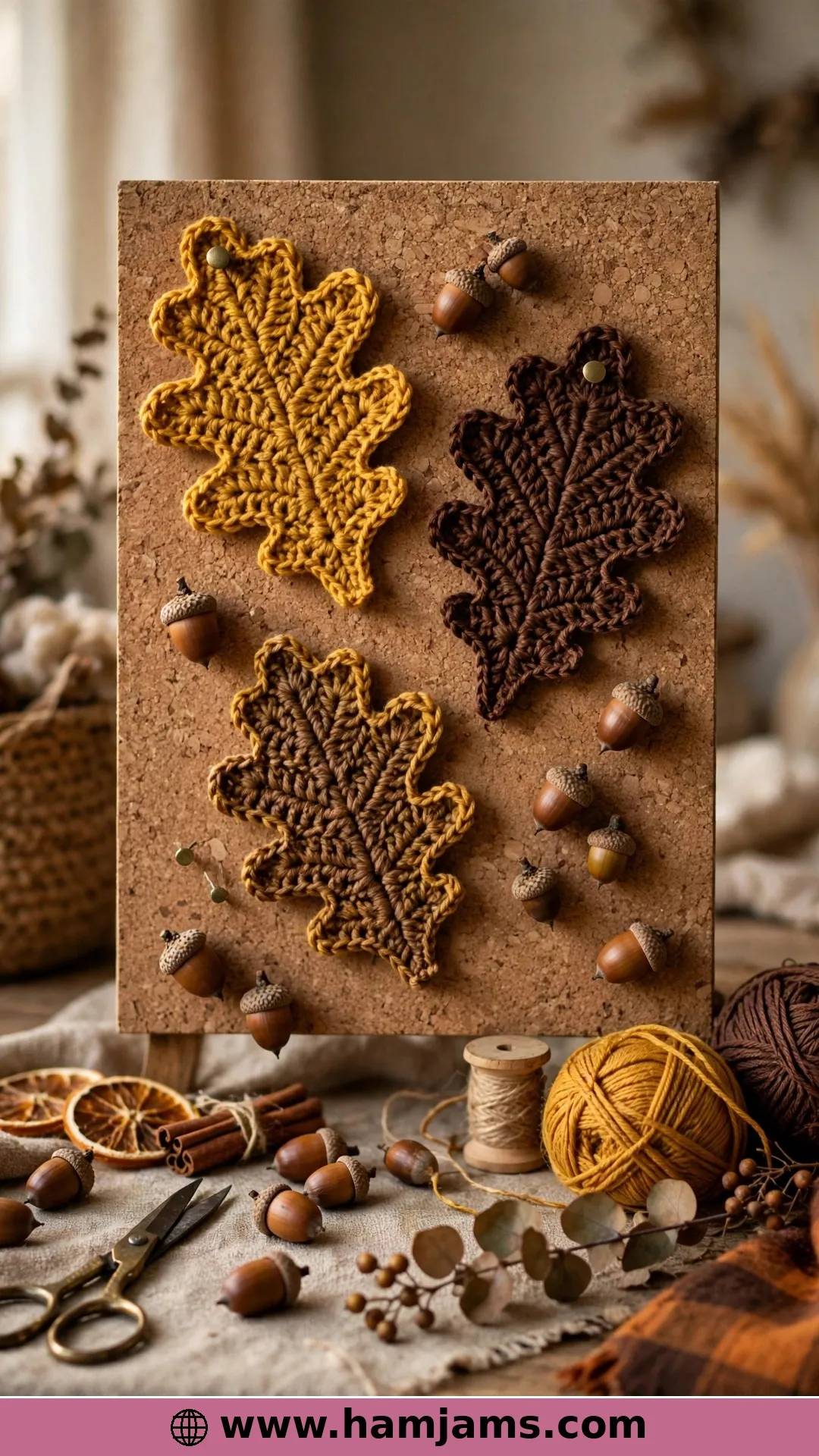
Lynne Rowe's oak leaf is the connoisseur's oak: a longer, more rustic shape built in just two rounds, where the second round swings between short and very tall stitches — right up to double trebles — to carve those deep oak lobes. She rates it experienced, not because any stitch is hard, but because the placement matters and every one of the thirty-eight foundation stitches has a job to do. The reward is a beautifully realistic leaf of about eleven and a half centimetres, stem included, and the pattern is written out in full in both US and UK terms, one after the other, so nobody has to translate. She suggests spray starch for a crisp finish and notes that the pattern is for personal use — gifting and charity makes are welcome, and small-scale selling simply needs her permission first. Rustic, refined and very, very autumnal.
Pattern: Oak Leaf by Lynne Rowe at Knit Crochet Create — Get the free pattern
12. The Tiny Leaf With a Crocheted Vein
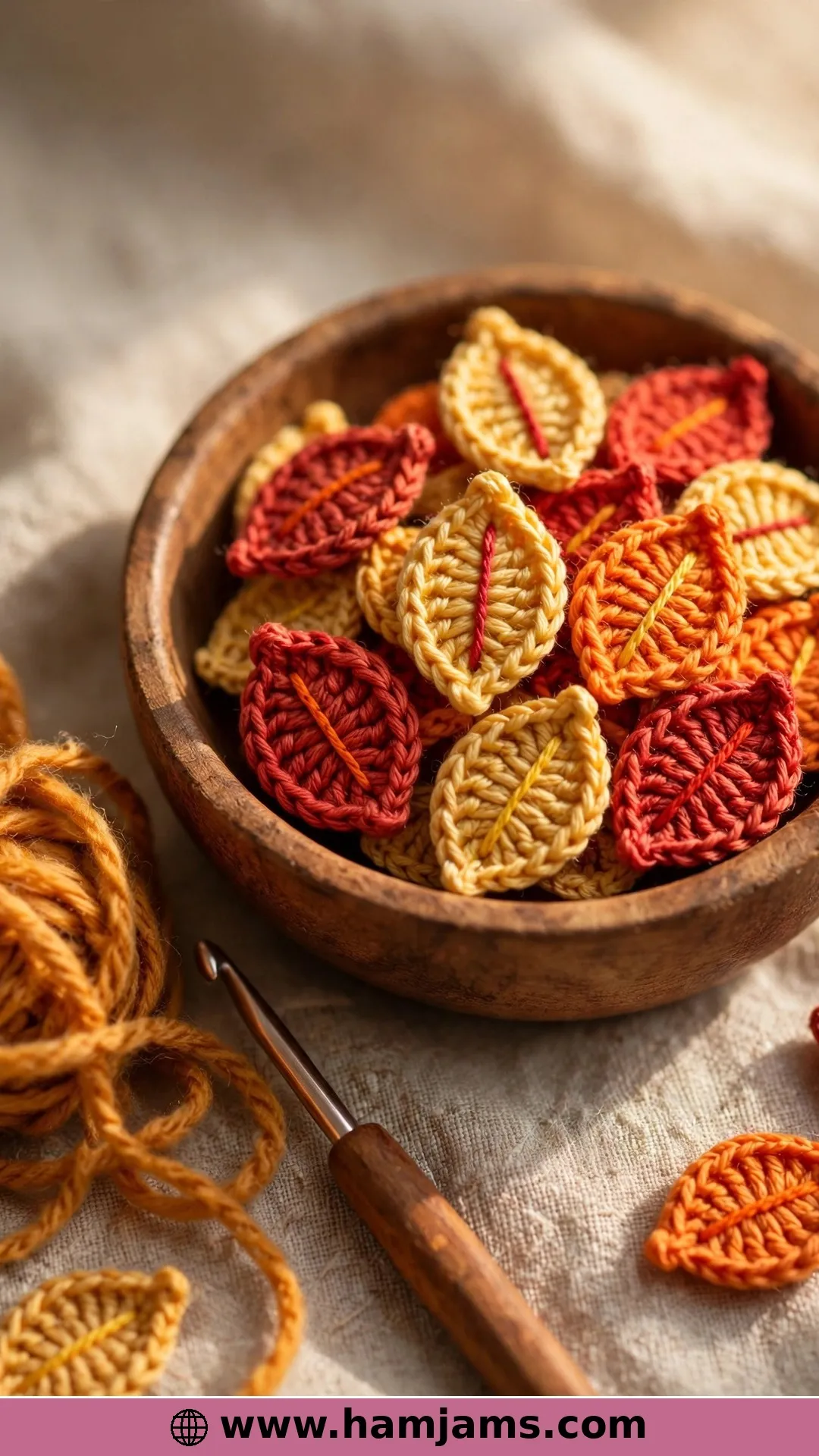
Golden Lucy Crafts' easy leaf is proof that the simplest shape can be the most useful. You work two gentle rounds around a foundation chain — singles, half doubles and doubles swelling out and tapering back — then add the detail that makes it special: a centre ridge worked in surface slip stitch right up the middle of the leaf, exactly like a real leaf's vein. Her samples are made in fine crochet thread at just an inch and a half, perfect for jewellery and delicate appliqué, but the same pattern in DK or worsted gives you a leaf for garlands, wreaths and table scatter. There are instructions for making it with or without a stem, so it adapts to whatever you are decorating. When a project needs "just a leaf", this is the one you will reach for again and again.
Pattern: Easy Leaf by Golden Lucy Crafts — Get the free pattern
13. A Mosaic Leaf You Read Like a Picture
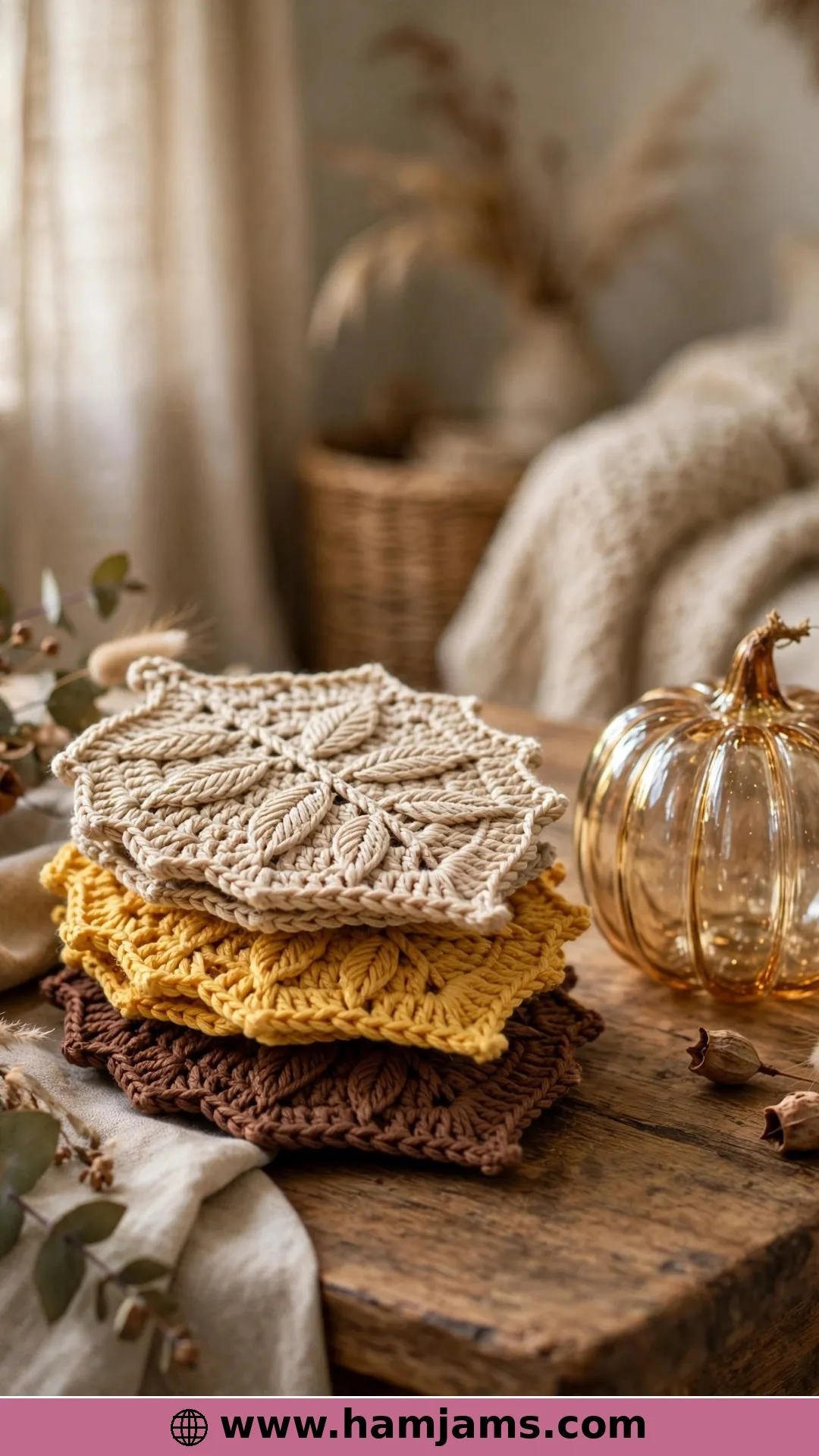
Hannah Cross's fall leaf is made with overlay mosaic crochet, a technique that feels like painting with stitches: you work simple single crochets in the back loop and drop mosaic double crochets down into earlier rows, and a crisp leaf picture emerges row by row. The finished square is about five and a half inches with its neat envelope border, which makes it a proper coaster — or make several and join them into a runner, or work it as the leaf section of her Fall Into Place autumn blanket. It is rated intermediate, but the stitches themselves are beginner ones, and a small coaster is the friendliest way to learn mosaic crochet. The written row-by-row instructions are free on her blog; just know that the mosaic charts live in the premium PDF version, so this one is for crocheters happy to follow written rows.
Pattern: Fall Leaf by Hannah Cross at HanJan Crochet — Get the free pattern
14. Floral-Centred Leaves on Jute Twine
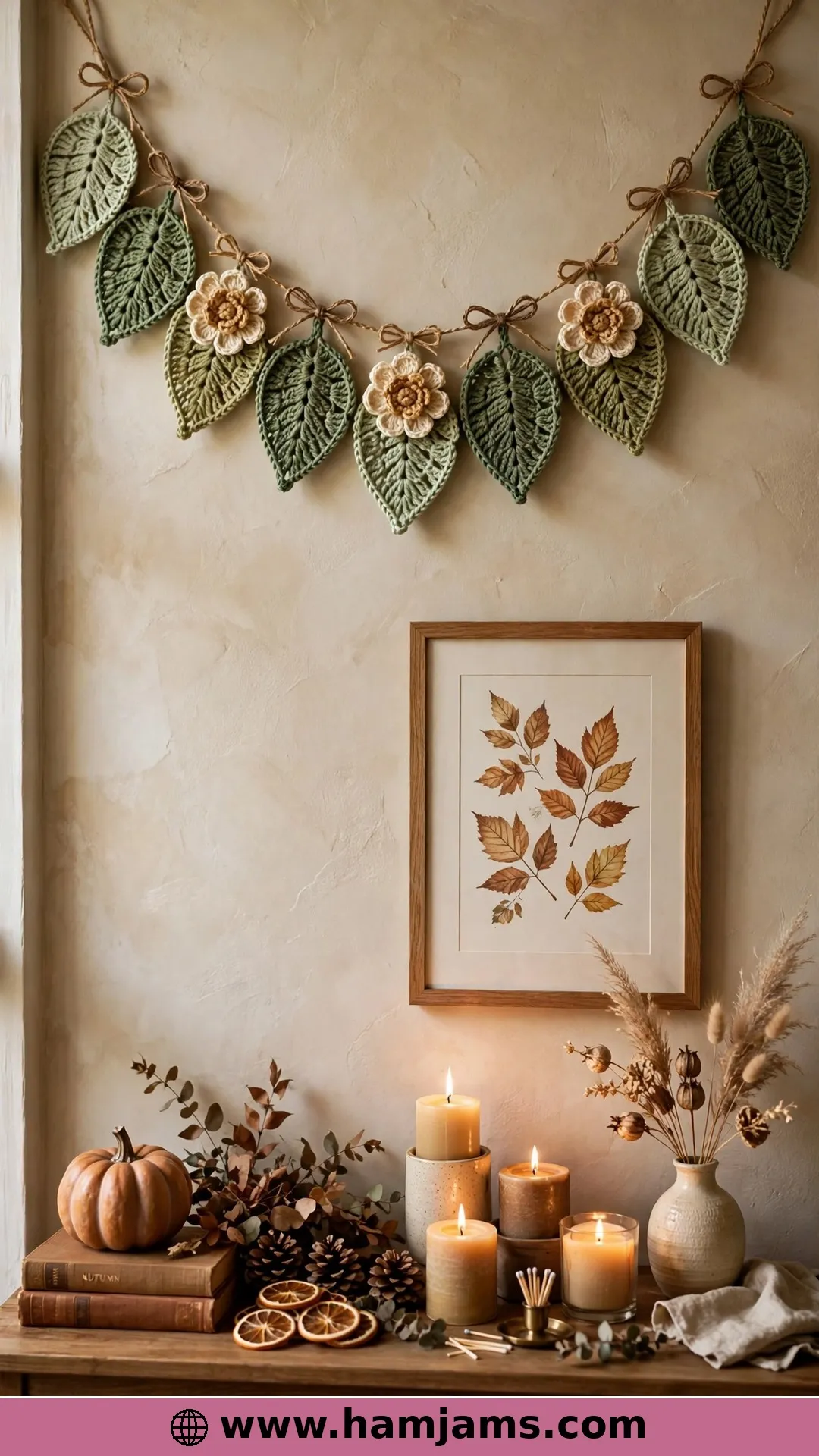
Kirsten Holloway's garland leaves have a secret in the middle: every leaf begins as a little flower. A ring of puff stitches forms the floral centre, and then the leaf is shaped around it with clusters, Elizabeth stitches and tiny picots, in two sizes — a small leaf of just under three inches and a large one of five and a half. The finishing touch is pure Kirsten: each leaf is tied to the garland twine with a tiny hand-twisted jute bow, ends frayed, optionally threaded with a wooden bead. I will be honest that she rates this one expert level, and the shaping rounds do ask for concentration and comma-by-comma counting. But as a mantel showpiece it is unrivalled — muted Heartland shades, handmade bows, real heirloom energy. The full pattern is free on her page; an optional ad-free PDF is on Ravelry.
Pattern: Fancy Floral Fall Leaf Garland by Kirsten Holloway Designs — Get the free pattern
15. A Six-Centimetre Leaf From a Diagram
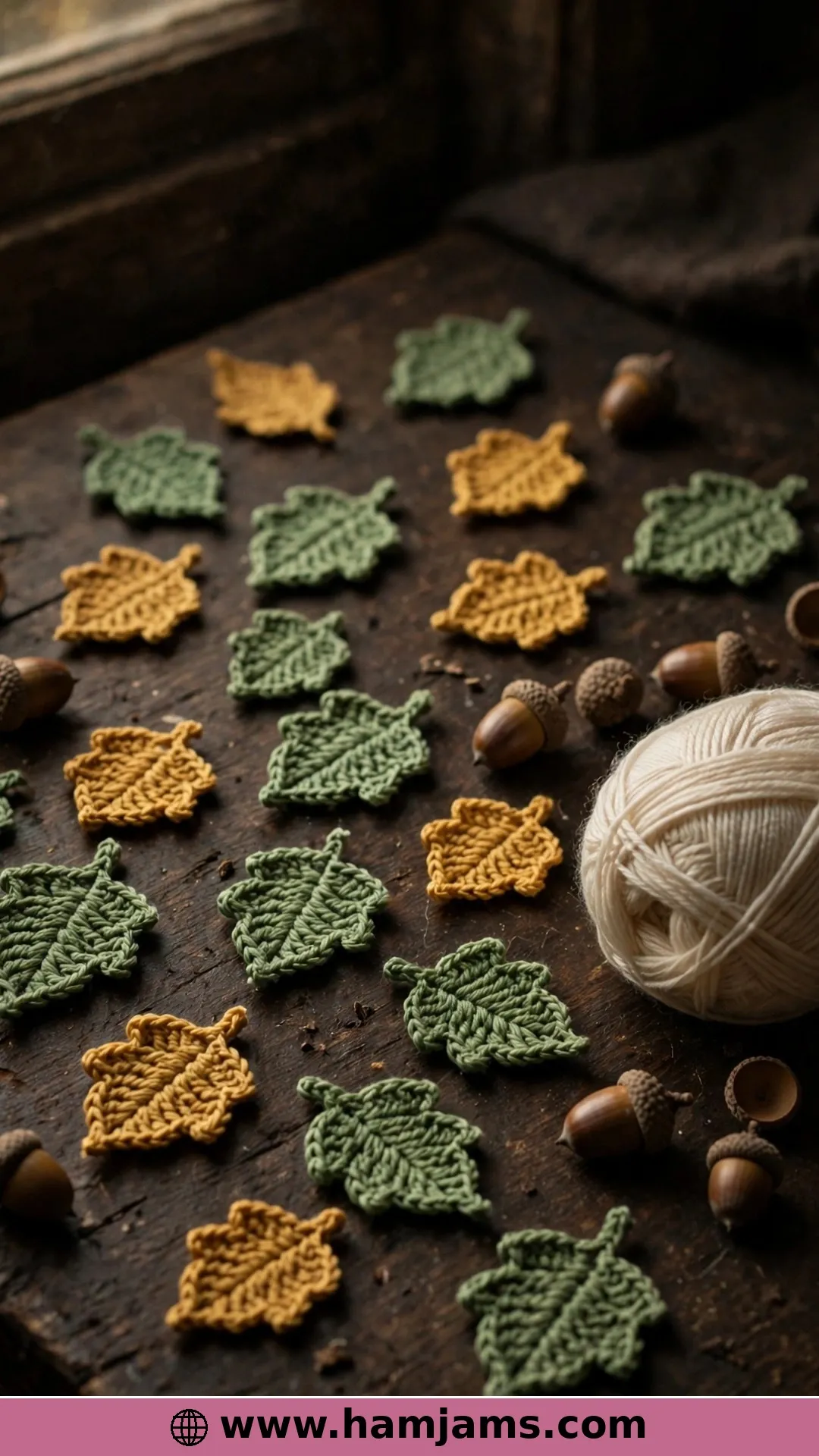
This tiny DROPS leaf comes with a different kind of honesty warning: Signs of Autumn is worked entirely from a crochet diagram rather than written-out rows, as many DROPS designs are. You chain thirteen stitches to form the leaf's spine, then follow chart A.1 around both sides of the chain, letting the symbols — all explained on the page — tell you where the trebles and double trebles go. The finished leaf is a neat six centimetres and weighs about five grams, so a single ball of the suggested merino makes a whole tree's worth. DROPS even suggests dipping finished leaves in sugar water and drying them flat if you want them stiff for a wreath or table scatter. If you have always meant to learn reading charts, this five-gram leaf is the gentlest possible teacher.
Pattern: Signs of Autumn (DROPS Extra 0-1570) by DROPS Design — Get the free pattern
16. Oak Leaves and Acorns on One Long Chain
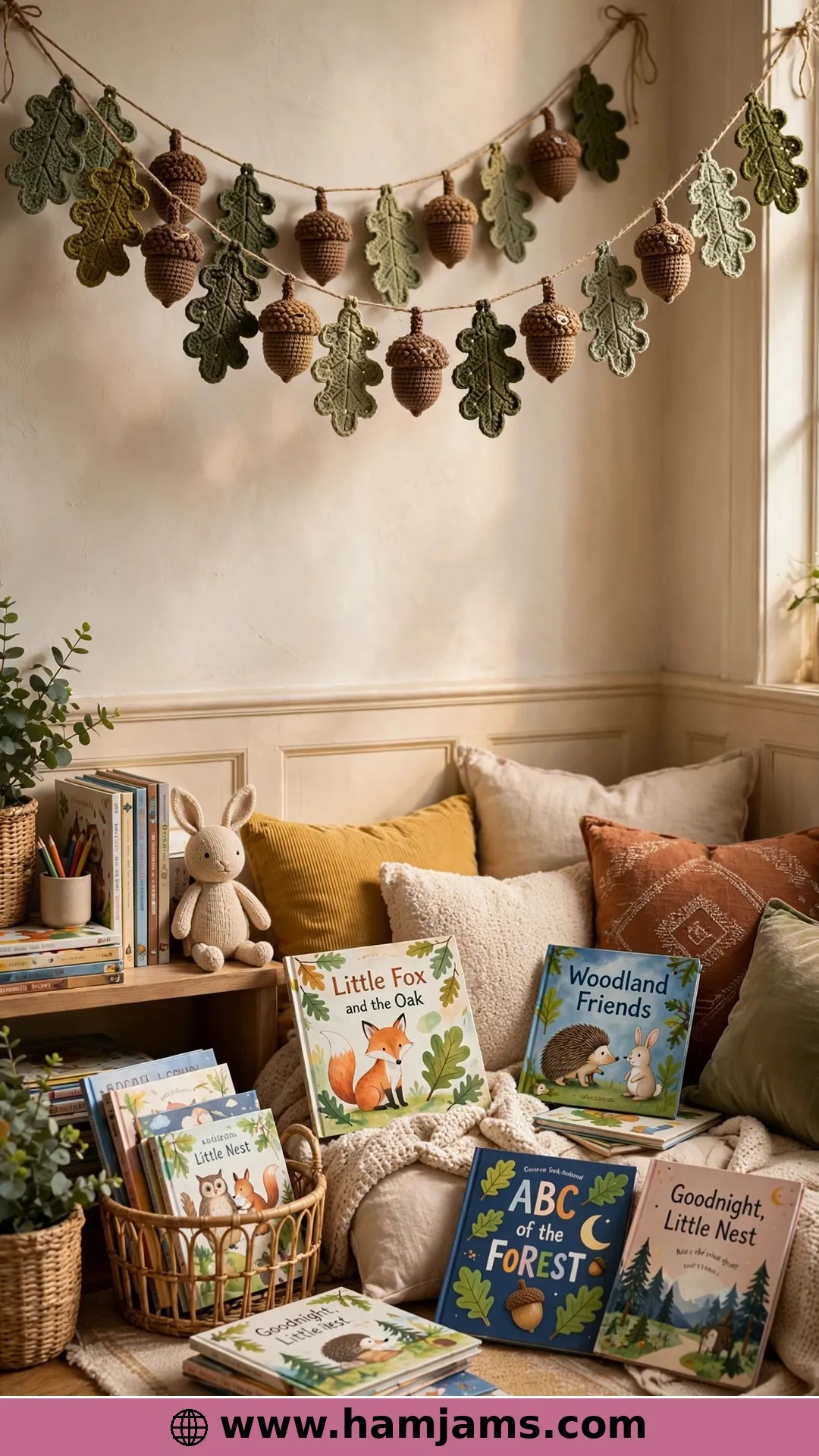
Crochet 'n' Play's autumn garland is a proper vintage blog treasure from 2011, and its construction is delightfully practical: you chain one very long foundation strand — hers is 315 chains — and sew your leaves and acorns along it at even intervals. The page gives you full written patterns for everything you need: a wavy oak leaf built in sixteen shaped rows, a smaller pointed leaf worked around a chain, and plump little acorns with brown caps, stuffed with a pinch of filling. In worsted acrylic on a 4 mm hook these are sturdy, child-friendly decorations, designed originally for a playroom, and the spacing system means your garland always looks balanced. In the spirit of honesty, her maple leaf is borrowed from another designer with a link out, so consider this credit the oak-leaf-and-acorn garland — which is exactly what makes it charming.
Pattern: Autumn Garland by Crochet ‘n’ Play — Get the free pattern
17. The Corner-Pocket Leaf Bookmark
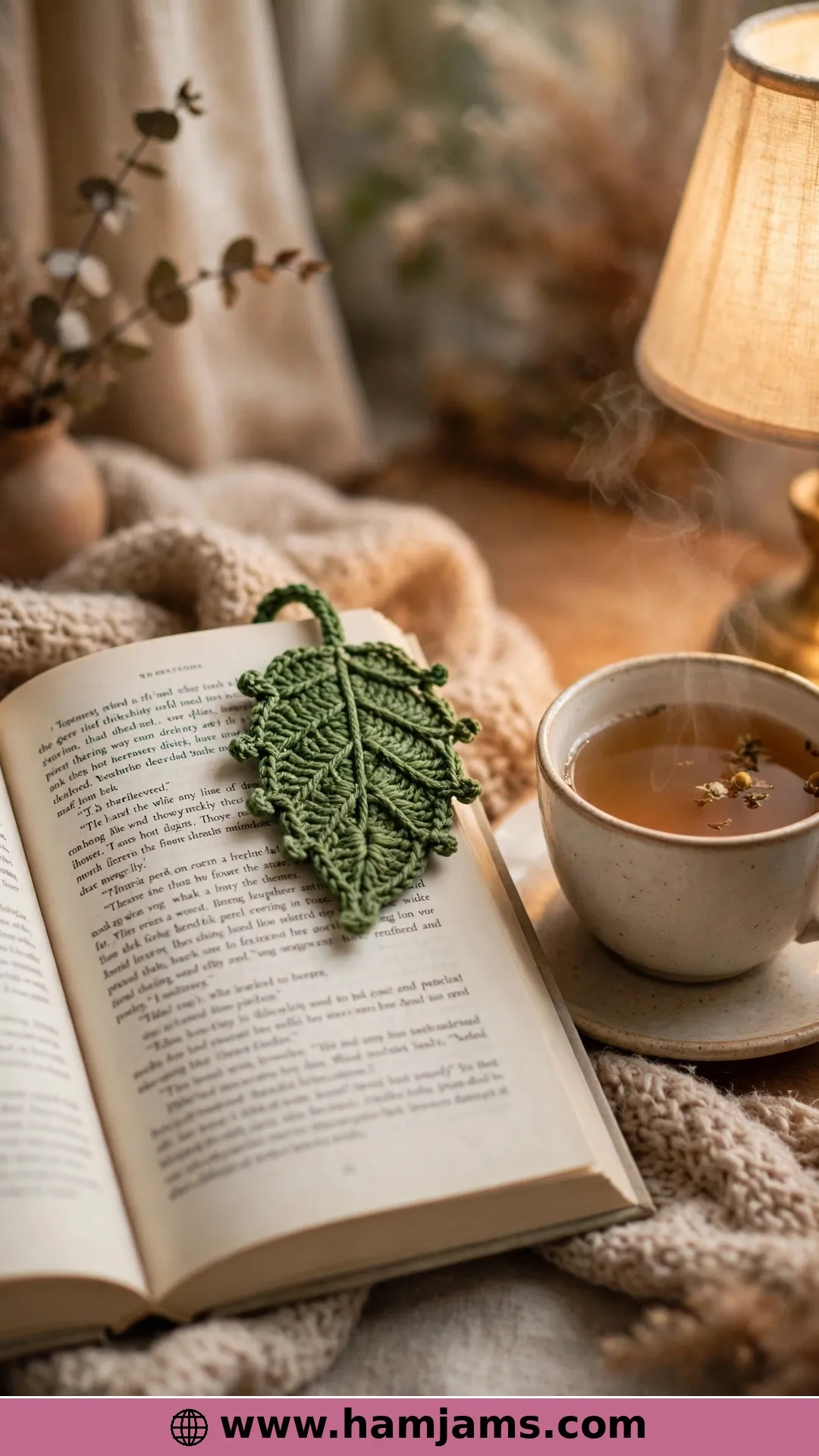
Nicki's second appearance in this list is her cleverest small design: a leaf bookmark with a secret. You crochet two identical pointed leaves in just three rounds each, then sew them together at three points so they form a little triangular pocket that slips neatly over the corner of your page — no more flattened paper bookmarks sliding out of novels. Used flat with the optional chained tail, it also works as a perfectly ordinary bookmark, so you get two designs in one pattern. DK yarn and a 3.25 mm hook keep it slim enough for a paperback, and at four and a half inches it makes a genuinely useful gift for the readers in your life; Nicki suggests making batches to donate to library reading programmes. The written pattern is free on her site, with an optional ad-free PDF if you want one.
Pattern: Leaf Corner Bookmark by Nicki’s Homemade Crafts — Get the free pattern
18. A Leaf Bookmark in Any Yarn You Own
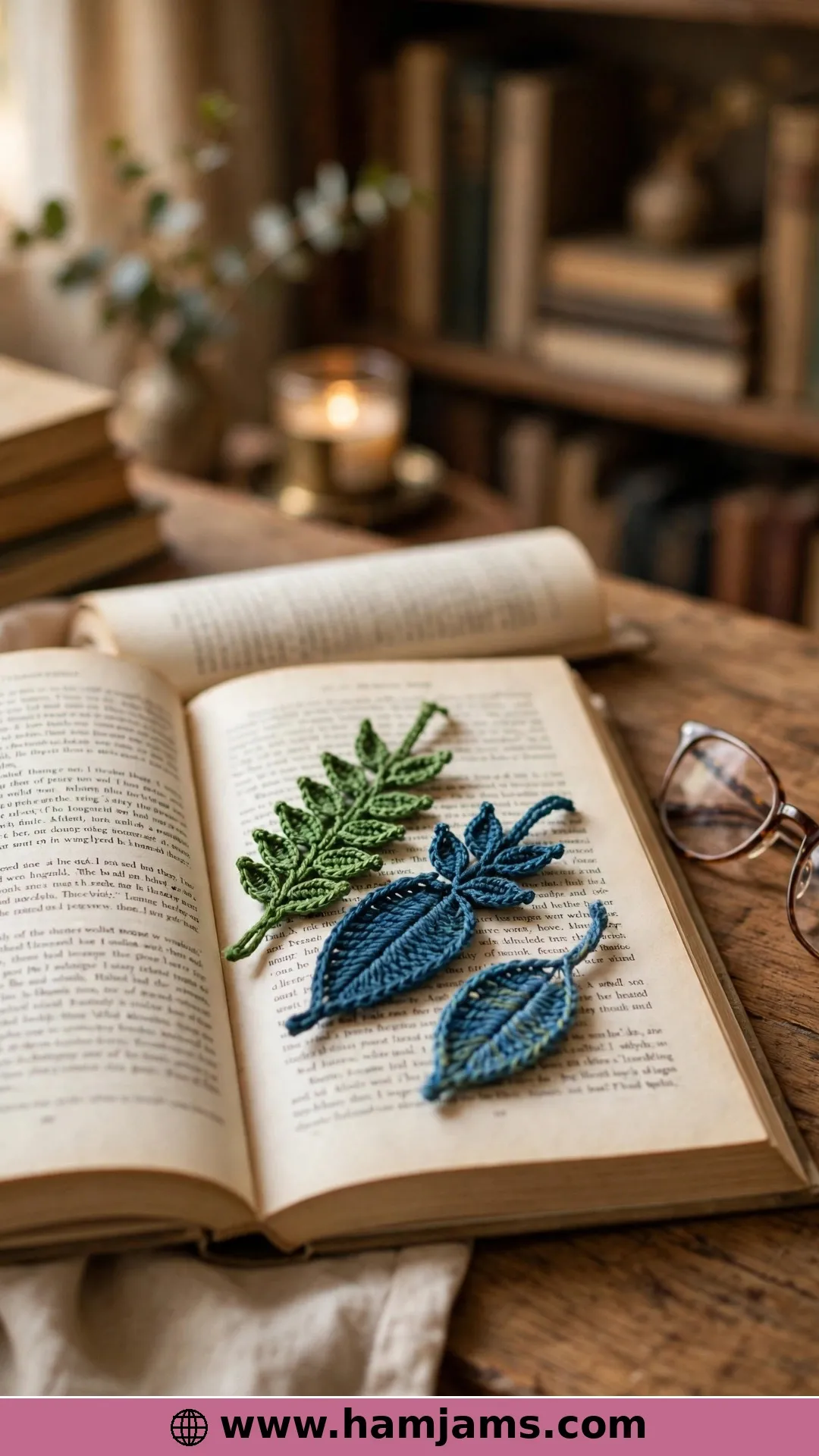
If the corner bookmark feels like a project and you want a five-minute make instead, Our Daily Craft's leaf bookmark is the most adaptable little pattern imaginable. The idea is beautifully simple: the leaf is a single row of stitches in rising and falling heights — single, half double, double, three trebles, then back down — worked along a chain and mirrored on the other side, and the bookmark itself is just a chain as long as you want it. The designer shows it in worsted wool for a two-inch leaf, and in embroidery floss on a tiny 2.5 mm hook for a dainty version under an inch long, and honestly everything in between will work too. It is written in American terms with step-by-step photos for every stitch. Keep one in your current read and make spares, because friends will claim them.
Pattern: Easy Leaf Bookmark by Our Daily Craft — Get the free pattern
19. Holly Leaves With Three Little Berries
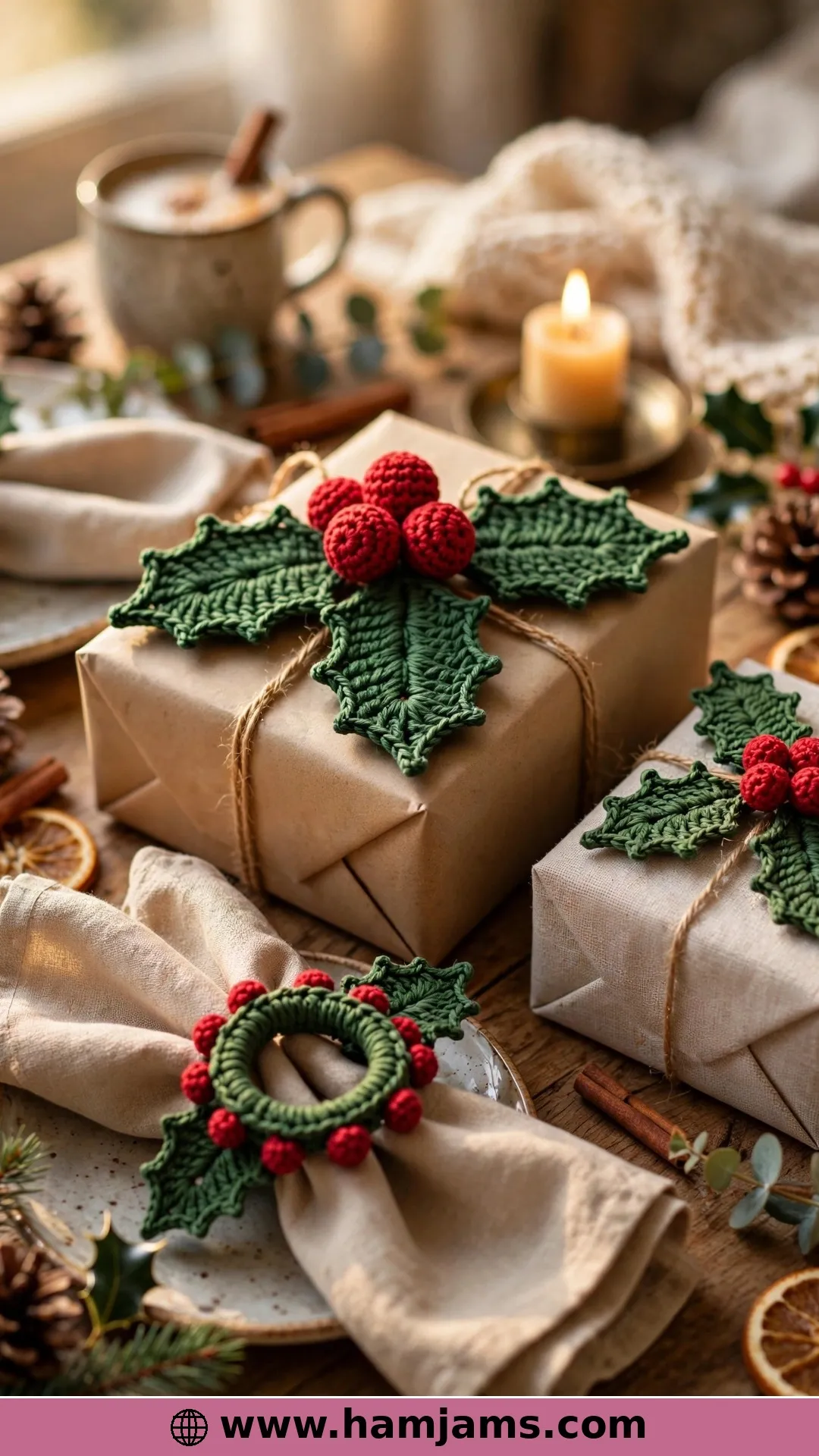
Autumn leaves carry us gracefully into winter with Kara Gunza's holly sprig, the festive finale every leaf collection deserves. The leaf is worked around both sides of a foundation chain in two rounds, and the second round adds six neat chain-three points that give holly its unmistakable spiky outline without a single sharp edge. Three tiny berries are made separately — each one is a clever two-double-crochet cluster pulled tight into a bead — and sewn to the leaf's base with their long tails. In worsted yarn on a 4 mm hook the leaf finishes at about four inches, and the suggestions for using it run from gift-wrap toppers and napkin rings to wreaths and garlands; add a pin back and it becomes a brooch. Make your autumn garland in October, then quietly start a holly production line for December.
Pattern: Holly Leaf and Berries by Kara Gunza at Petals to Picots — Get the free pattern
20. Two-Tone Beech and Oak Leaves
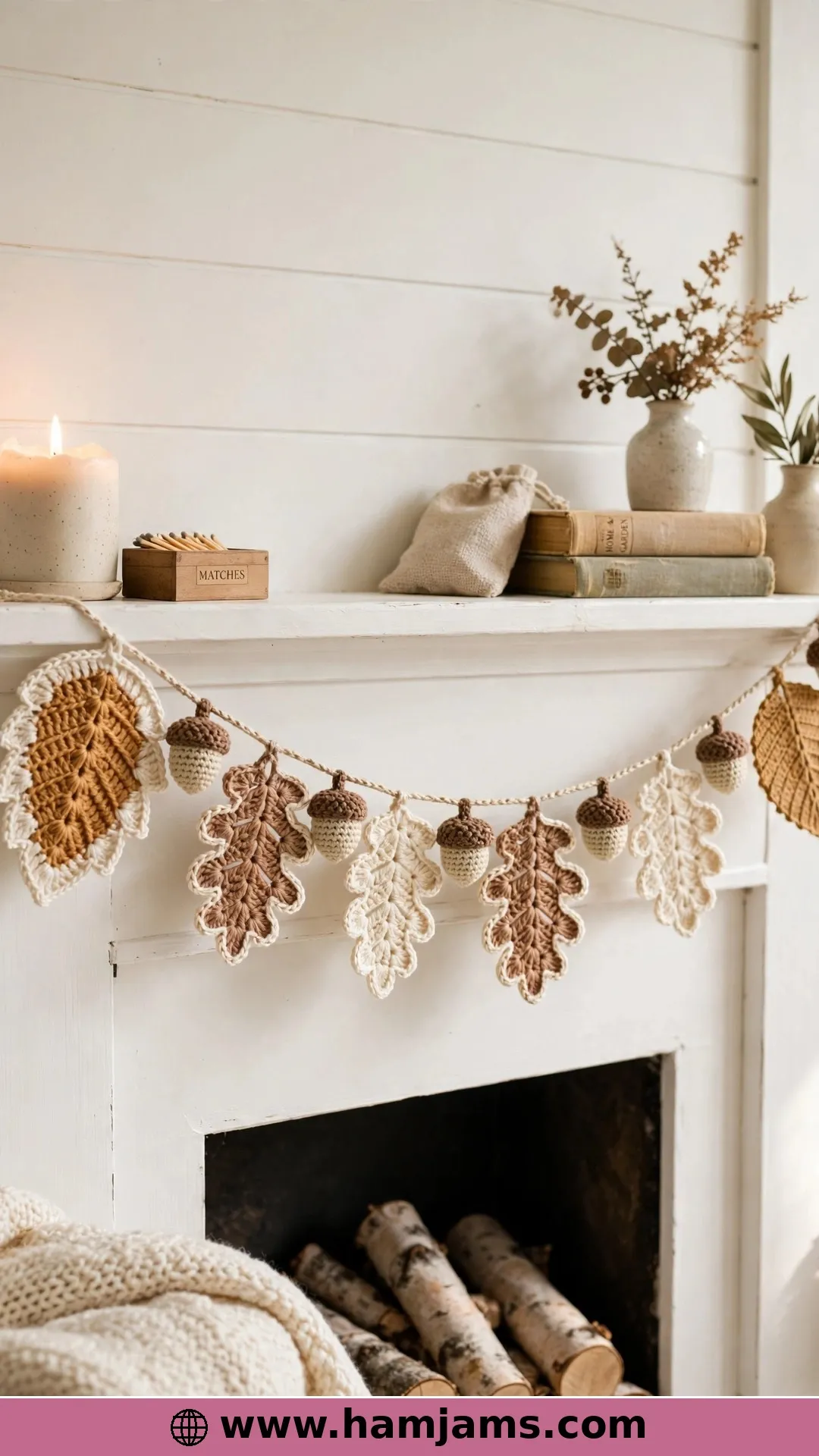
We finish in Lucy's Yorkshire studio, with the leaves that started so many of us on autumn garlands. Attic24's Autumn Leaves and Acorns gives you two different two-tone leaves — a smooth beech leaf of about six centimetres and a lobed oak leaf of nine — plus the sweetest little stuffed acorns, all designed to be strung into a garland (Lucy's own measures 160 centimetres). The two-tone magic comes from working the second round in a closely matched shade, and the beech leaf is finished with a line of surface-crochet chain down its centre to make the vein, a small detail that changes everything. The patterns are written in UK terms, but Lucy explains every stitch at the top of the page with its US equivalent, so nobody is left translating. In Stylecraft Special DK oddments with a 4 mm hook, this is autumn crochet at its cosiest.
Pattern: Autumn Leaves and Acorns by Lucy at Attic24 — Get the free pattern
Conclusion
And that is twenty leaves, my friend — chunky maples and delicate Japanese lobes, oak leaves plain and wavy, a monstera for the plant-challenged, bookmarks for the bookish, and a sprig of holly waiting in the wings for December. Almost every one runs on scraps you already own, so starting right now costs you nothing at all. My best tip: pick one leaf shape, make it in every autumn colour in your stash, and string the whole family together — a mixed garland always looks more like real woodland than a matched set ever will.
Now tell me — which leaf is going on your hook first, and are you team garland, team coasters or team bookmarks? I read every comment, and I cannot wait to see your makes!