Juicy Fruit Skin Nails 2027 to Try

Fruit skin nails are the summer trend that takes the most recognizable textures in nature and shrinks them to manicure scale. Not painted fruit, but the skin of fruit: the soft gradient of a peach, the stripes of a watermelon rind, the dimpled blush of a strawberry, the speckled green of a kiwi.
The appeal is realism. A good fruit skin nail looks like you shrunk a piece of fruit and wore it, and that tactile quality is what makes the trend feel fresh instead of cartoonish. If you love the fruit angle generally, these bright fruit nail designs cover the same summer palette in more literal fruit art.
Peach Skin
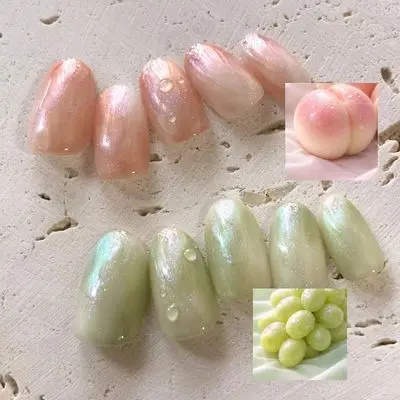
Photo via nailie.jp
Peach skin nails capture the fruit’s soft gradient: pink blushing into cream, with a faint fuzz texture suggested by a matte finish. It is the most delicate fruit skin design, and the most wearable.
The peach gradient is easiest with a sponge, blending pink into cream. A matte top coat sells the fuzzy texture, while a glossy top coat makes it read more like a peach slice. The same soft gradient technique powers ombre nail designs when you want the fade without the fruit.
Strawberry Skin

Image via baburka.zp.ua
Strawberry skin nails use a red-to-pink gradient with tiny seed dots pressed into the surface. The dimpled texture is the detail that makes it read as strawberry skin rather than just red nails.
The seeds are easiest as tiny dots with a dotting tool, placed in neat rows. Keep them small and pale, or they will look like polka dots instead of seeds.
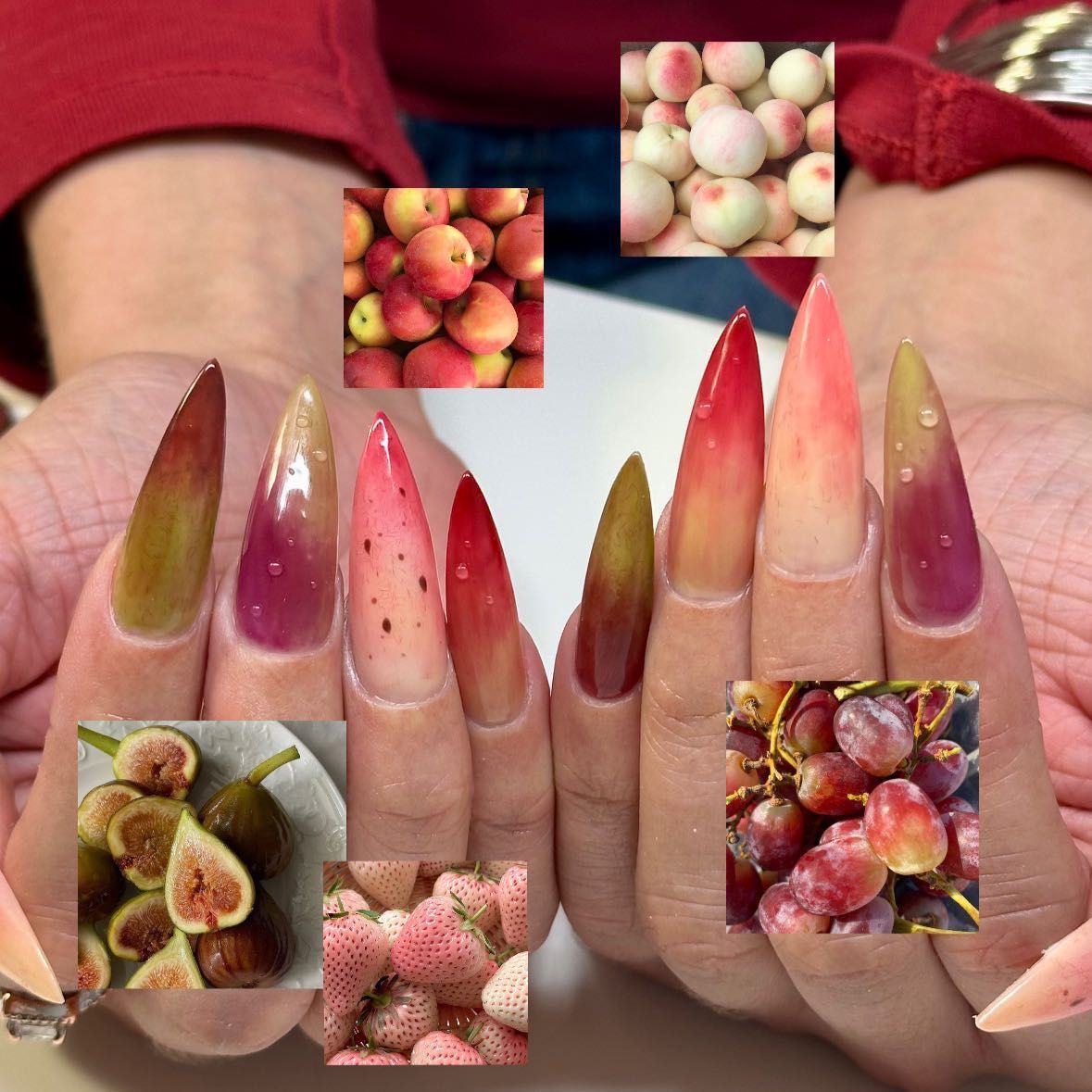
Watermelon Rind
Picture via booksy.com
Watermelon rind nails use dark green stripes over a pale green base, mimicking the fruit’s outer skin. It is the most graphic fruit skin design, and the stripes make it instantly recognizable.
The stripes need a thin brush and a steady hand, or tape guides for crisp lines. The contrast between dark and pale green is what sells the rind. The graphic stripe idea also appears in easy summer nail ideas when you want bold lines without the fruit theme.
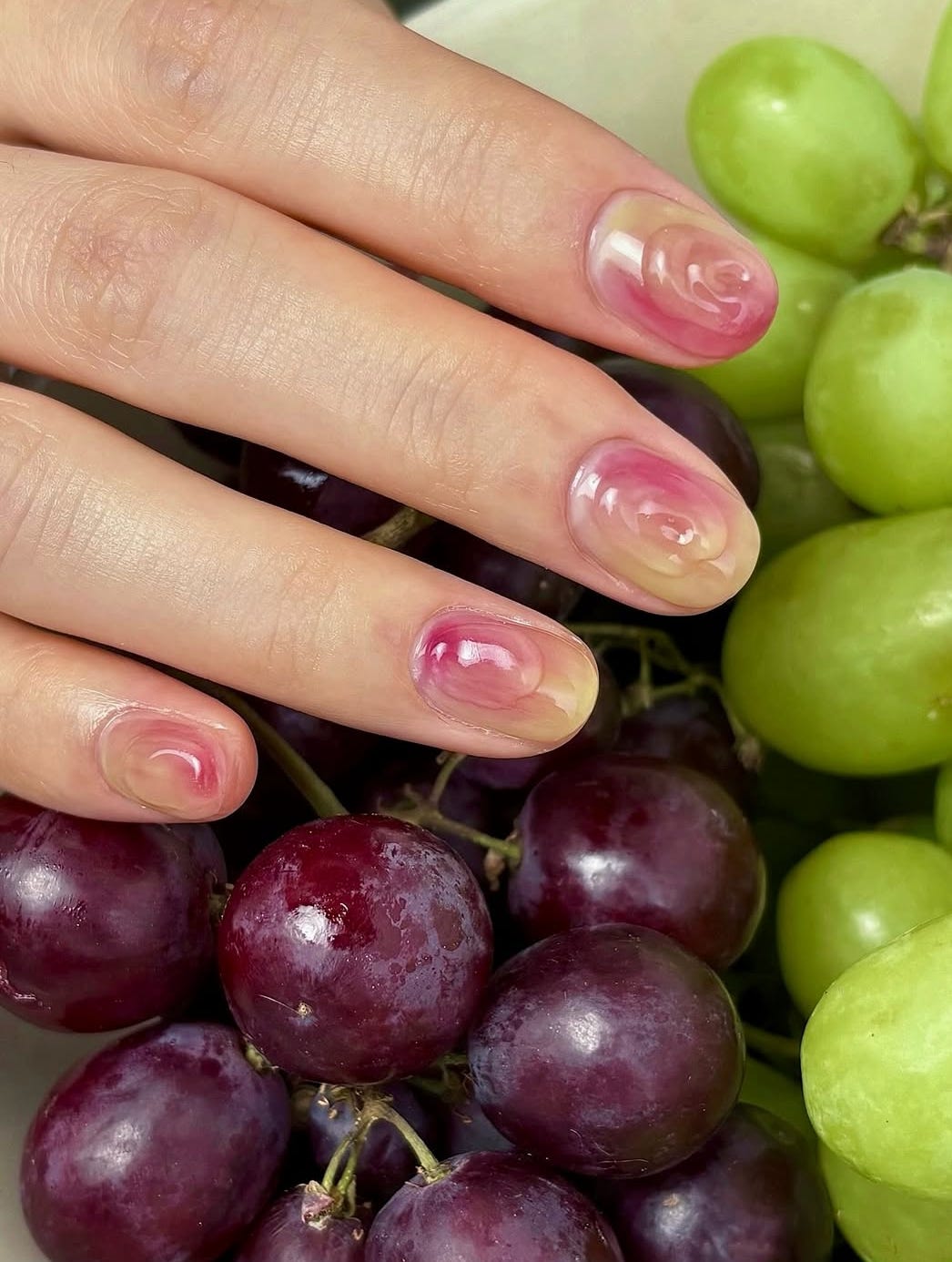
Banana Peel
Inspiration via thetastecurators.substack.com
Banana peel nails use a yellow gradient with faint brown speckles, mimicking a ripe banana’s skin. It is the most playful fruit skin design, and the speckles are the detail that makes it read as real.
The speckles should be tiny and sparse, like a real banana’s freckles. Too many and the nail looks dirty rather than ripe.
Mango Skin
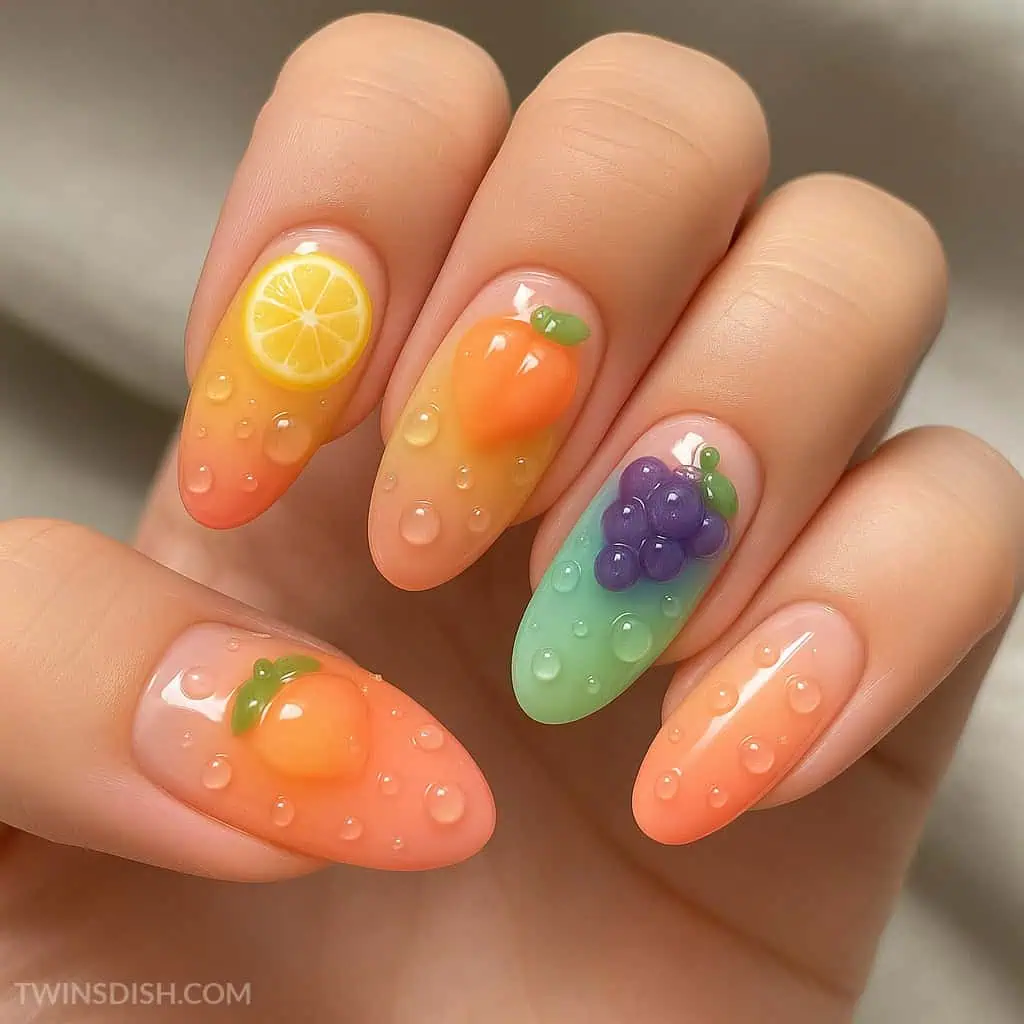
Photo via www.twinsdish.com
Mango skin nails capture the fruit’s sunset gradient: orange fading into pink, with a hint of yellow. It is the warmest fruit skin design, and it looks stunning against a tan.
The mango gradient is easiest with a sponge, blending three warm colors. These bright orange nail designs show how the same warm palette works as a solid.
Kiwi Skin
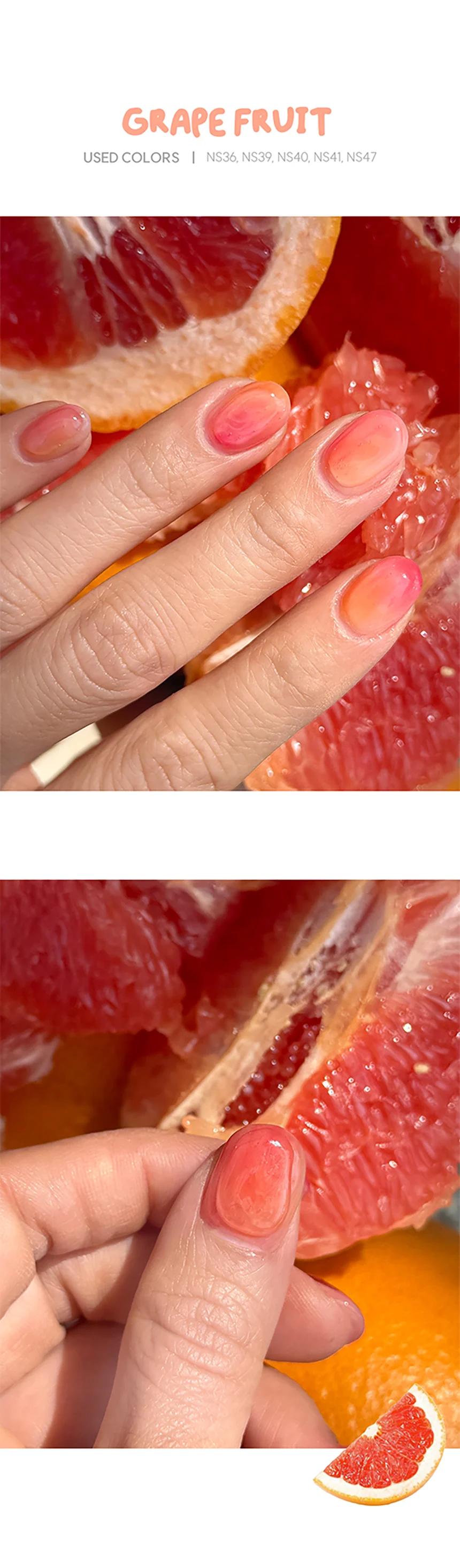
Image via 100uksister.com
Kiwi skin nails use a fuzzy brown base with a bright green accent, mimicking the fruit’s inside and outside at once. It is the most textural fruit skin design, and the contrast is striking.
The kiwi texture is easiest with a matte brown base and a glossy green accent. The two finishes together suggest the fruit’s fuzzy skin and juicy flesh.
Citrus Zest
Picture via minimodel.jp
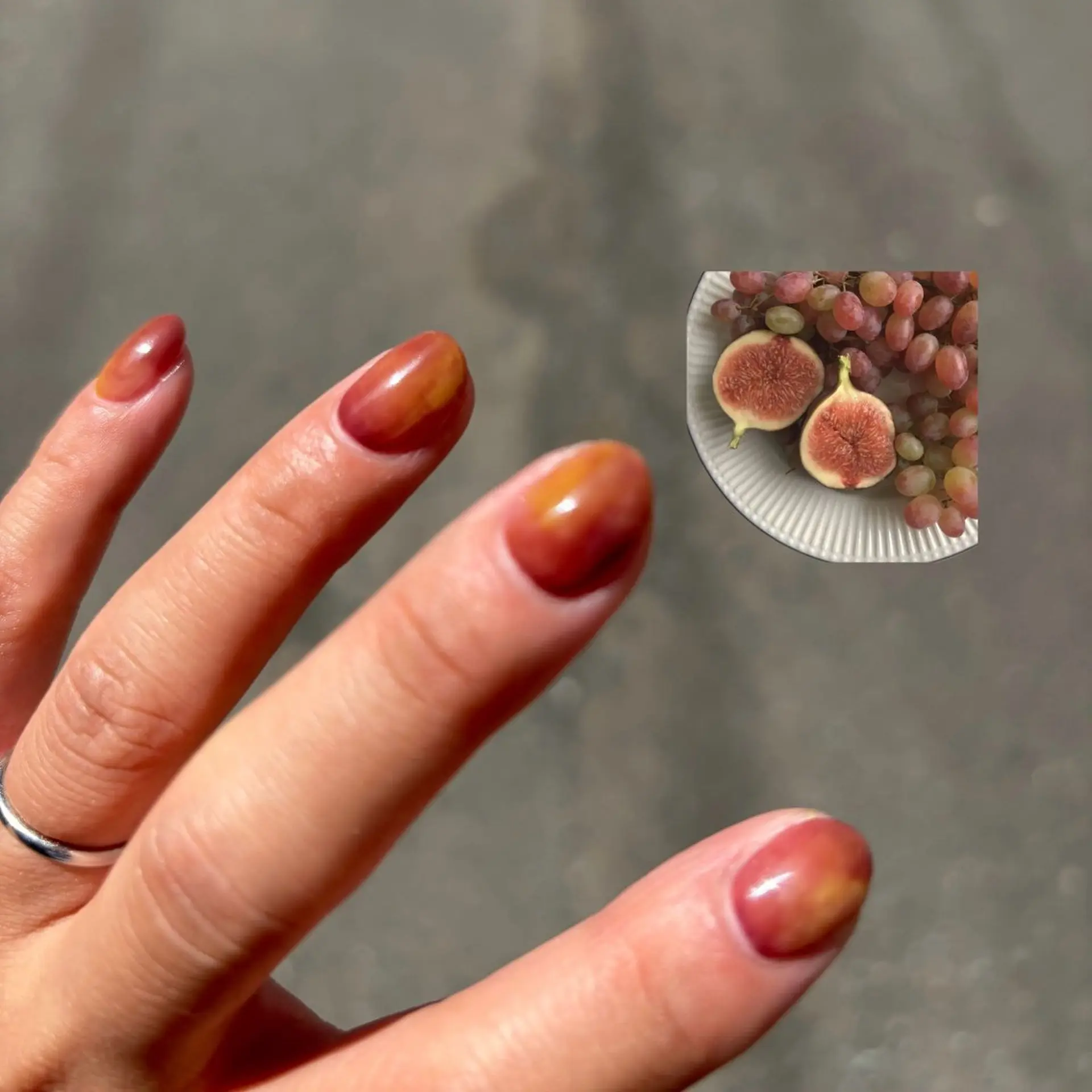
Citrus zest nails use an orange base with tiny white pores, mimicking the dimpled skin of an orange. It is the most subtle fruit skin design, and the pores are the detail that makes it read as real.
The pores are easiest as tiny white dots with a dotting tool, placed randomly rather than in rows. The randomness is what makes it look like real zest. The bright citrus palette also shines in yellow nail designs when you want the sunny color on its own.
Dragon Fruit Skin
Inspiration via www.marieclaire.ru
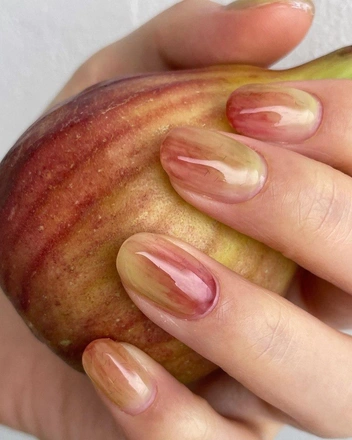
Dragon fruit skin nails use a hot pink base with green-tipped scales, mimicking the fruit’s dramatic exterior. It is the most colorful fruit skin design, and the scales make it unmistakable.
The scales are easiest as small green triangles layered over the pink base. Keep them neat and evenly spaced, or the pattern looks messy.
Orange Peel

Photo via lunabeauty-store.com
Orange peel nails use a textured orange finish with tiny dimples, mimicking the fruit’s pitted skin. It is the most tactile fruit skin design, and the texture is the whole point.
The dimples are easiest with a matte top coat and a dotting tool, pressing tiny dots into the surface before it cures. The texture should be subtle, not deep. The warm orange base also suits beachy nail designs for a full summer look.
Cherry Skin
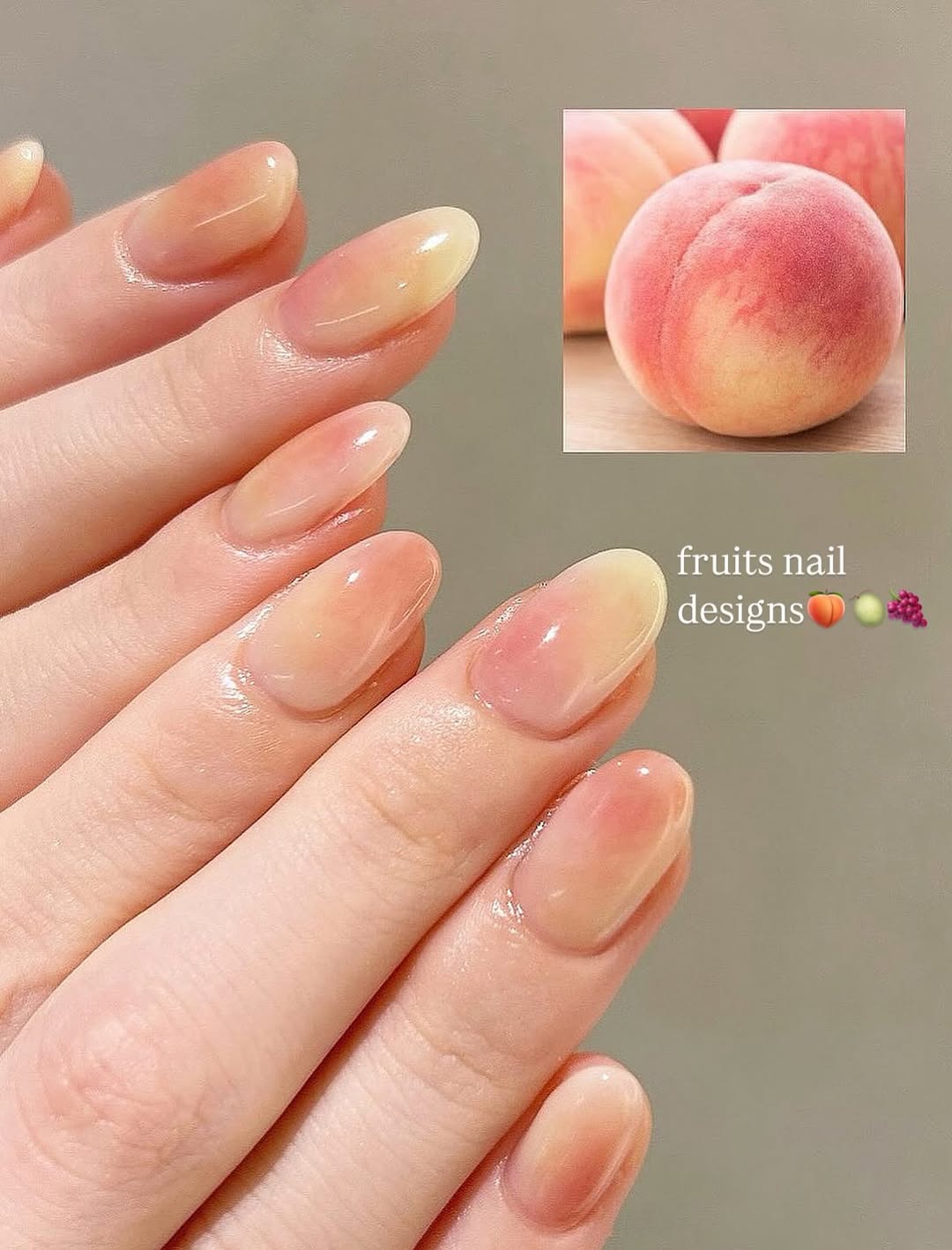
Image via www.japaholic.com
Cherry skin nails use a deep red gloss with a highlight that mimics the fruit’s shiny, taut skin. It is the simplest fruit skin design, and the gloss is what makes it read as cherry rather than just red.
The cherry effect is all about the top coat: a high-gloss finish over a deep red creates the shiny skin look. A single white highlight dot sells the realism.
Avocado Skin
Picture via www.etsy.com
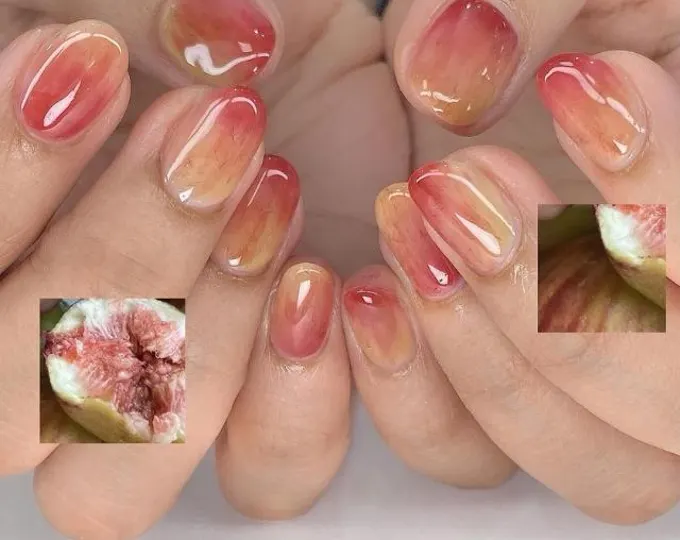
Avocado skin nails use a bumpy dark green base with a lighter green accent, mimicking the fruit’s pebbled exterior. It is the most earthy fruit skin design, and the texture is the key.
The avocado texture is easiest with a matte dark green base and a dotting tool to suggest the bumps. The lighter green accent should be small, or it will overpower the dark base. The earthy green palette also works in pastel nail designs when you want the green in a softer form.
Grape Skin
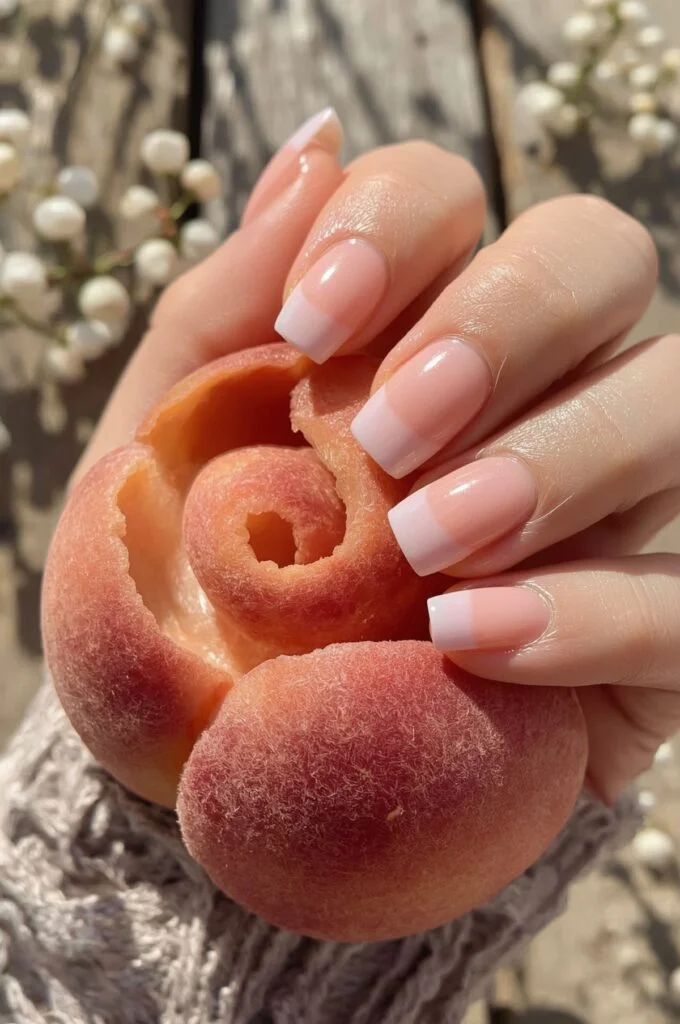
Inspiration via nailartistory.com
Grape skin nails use a purple gradient with a soft bloom, mimicking the dusty coating on a real grape. It is the most elegant fruit skin design, and the bloom is the detail that makes it read as real.
The bloom is easiest with a matte top coat over a purple gradient. The matte finish creates the dusty look, while the gradient underneath provides the color depth.
Pineapple Skin
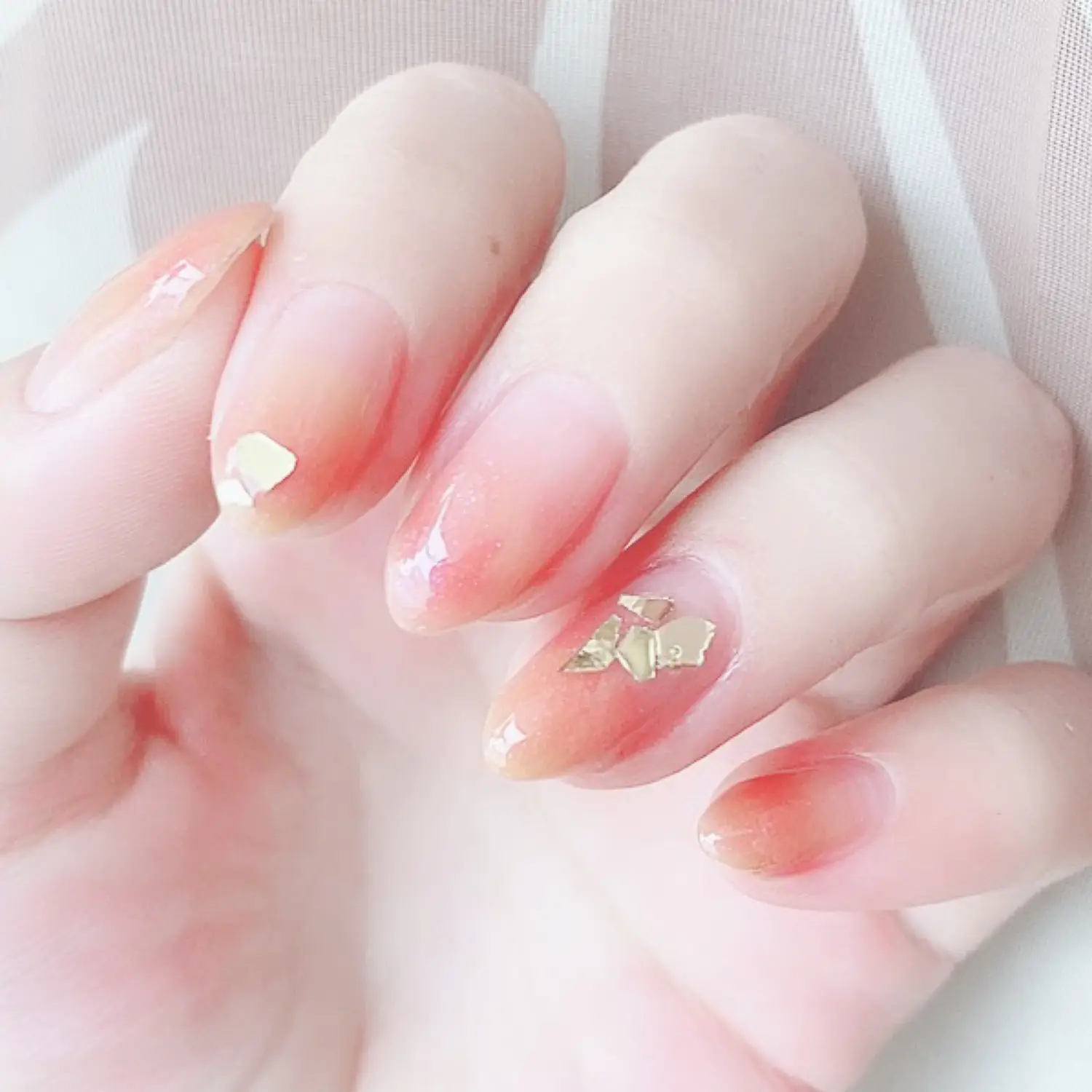
Photo via www.lemon8-app.com
Pineapple skin nails use a yellow base with a green diamond pattern, mimicking the fruit’s scaly exterior. It is the most geometric fruit skin design, and the pattern is instantly recognizable.
The diamond pattern needs a thin brush and patience, or a stamp for precision. The green should be a single shade, or the pattern gets busy. The same tropical energy appears in summer acrylic nails when you want the fruit look with extra length.
Plum Skin

Image via www.fashionandstyle.com
Plum skin nails use a deep purple gloss with a soft highlight, mimicking the fruit’s smooth, shiny skin. It is the most sophisticated fruit skin design, and the gloss is essential.
The plum effect is all about depth: a dark purple base, a lighter purple highlight, and a high-gloss top coat. The result looks like a polished fruit.
Apple Skin

Picture via kostopilnews.com
Apple skin nails use a red-to-yellow gradient with a glossy finish, mimicking the fruit’s blushed skin. It is the most classic fruit skin design, and the gradient is what makes it read as apple rather than just red.
The apple gradient is easiest with a sponge, blending red into yellow. A glossy top coat is essential, since apple skin is naturally shiny. The classic red-to-yellow fade also appears in summer French tip designs when you want the warm colors in a tip format.
Final Thoughts
Fruit skin nails work because they take the most recognizable textures in nature and shrink them to a manicure scale. The trend is not about painting fruit, it is about painting the skin of fruit: the gradient of a peach, the stripes of a watermelon, the dimples of a strawberry. That realism is what makes the designs feel fresh instead of cartoonish.
- Match the fruit’s real colors: a peach is pink-to-cream, never pink-to-purple.
- Keep the texture subtle: a hint of dimpling reads more realistic than heavy 3D.
- Use a glossy top coat: fruit skin is naturally shiny, and matte kills the effect.
- One or two fruit nails per hand is enough; a full set of fruit skin gets busy fast.
Pick your fruit, keep the skin realistic, and let the color do the talking.