
6 Habits of Happy People You Can Steal for a Calmer, Happier Life

Some people seem to carry a quiet steadiness with them wherever they go. It is not that their lives are free of stress, bad news or ordinary mess — it is that they have a handful of small habits that pull them back to centre faster. The good news is that none of those habits require a personality transplant, a huge budget or a perfectly organised life. They are small, repeatable things that fit around work, family and the rest of a normal week.
This guide gathers six of them, drawn from what researchers in positive psychology keep finding again and again: happiness leans less on big peak moments and more on the little things done daily. Each habit below is something you can start this week, in ten minutes or less, and each one compounds quietly over time. Pick the one that feels easiest and let it settle in before adding another.
1. Put Real Connection First

Photo via Branfords
Study after study points to the same conclusion: the quality of our close relationships predicts life satisfaction more reliably than almost anything else. The people who seem happiest treat friendship and family as essentials, not as extras to squeeze in once life calms down. And the habits behind that are rarely grand gestures. They are the quick check-in text, the standing weekly coffee, the ten-minute phone call on the walk home — small deposits that keep a relationship warm.
The trick is to make connection a fixture rather than a leftover. One fixed ritual works better than good intentions: a Sunday call with a parent, a Wednesday walk with a friend, a monthly lunch that lives in the calendar like any other appointment. It also helps to widen the net a little. A friendly word with the neighbour, the barista or a colleague counts too — those brief, warm exchanges with familiar strangers quietly lift a day in a way scrolling never does.
2. Move Your Body for the Mood, Not the Mirror

Photo via Re-Store
Movement is one of the most reliable mood tools there is, and the dose needed is smaller than most people assume. A brisk walk in daylight, a ten-minute stretch on the living room floor, dancing in the kitchen while dinner cooks — all of it nudges stress down and energy up. The happiest people rarely frame exercise as punishment for what they ate. They treat it as a reset button they can press whenever the day starts to feel heavy.
It helps to attach movement to something that already happens. Walk after lunch instead of scrolling at the desk. Stretch while the kettle boils or during the first minutes of a show. Keep the bar low on purpose: a short walk taken most days beats an ambitious workout plan abandoned by February. And notice what it does to posture and breathing — shoulders drop, breath deepens, and that relaxed, open way of carrying yourself is visible to everyone around you.
3. Notice the Good That Is Already There
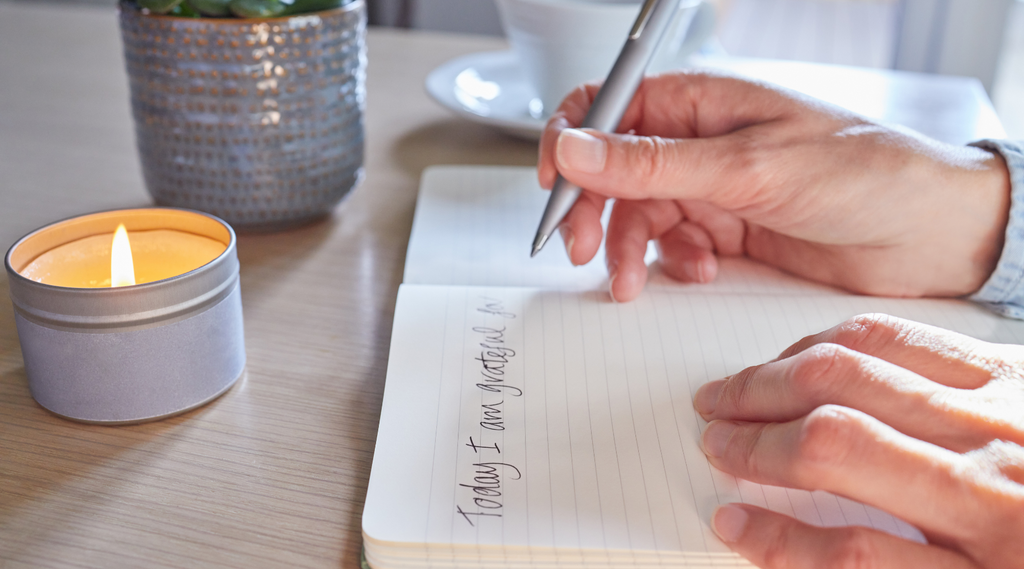
Photo via Ellanu
Gratitude has a reputation for sounding saccharine, but the practice behind it is refreshingly practical. It is simply the habit of noticing what is working, even on a difficult day: the hot shower, the friend who replied, the meal that came together. People who do this regularly — a few lines in a notebook at night, or a mental list on the commute — tend to report lower stress and better sleep. It is not about pretending everything is fine. It is about training the eye to catch the good alongside the bad.
The same skill extends to the small sensory moments most days are full of. The first sip of morning coffee, sunlight on a kitchen table, the smell of rain on warm pavement — happy people pause inside these moments instead of rushing past them. Try choosing one routine activity a day and doing it without a phone: really taste the coffee, really feel the warm water, really listen to the song. Ten unhurried seconds of attention can turn an ordinary moment into one that actually registers.
You may also like: 20 Trendy Ruffle Shorts Outfit Inspirations for a Playful Summer
4. Guard Your Energy Like It Is Finite

Photo via Liveheim
Content people are rarely available to everyone at all hours. They protect their time and attention with the same care they give their relationships, because they understand that an exhausted, overcommitted person has very little to offer anyone. That protection can look like declining a social plan without guilt, closing the laptop at a set hour, or simply leaving the phone in another room for the first hour of the morning. Boundaries are not walls. They are the fences that keep the good things inside the day intact.
A useful place to start is one protected block of time each day — even thirty minutes — where nothing is demanded of you. No work messages, no scrolling, no errands. Spend it however restores you: a bath, a chapter of a book, a walk with no destination, or simply sitting with a cup of tea and doing nothing at all. It also helps to have one ready-made sentence for saying no, so the decision does not need to be reinvented every time: “I would love to, but I do not have the room this week” is complete, kind and final.
5. Talk to Yourself Like Someone You Like

Photo via Positive Life Changes
Everyone has an inner critic. The difference with genuinely happy people is not that the critical voice disappears, but that it stops getting the final word. They notice the harsh thought — “I made a mess of that,” “I always do this” — and answer it the way they would answer a friend in the same spot: with a fairer, kinder version of events. Self-compassion is strongly linked to resilience and lower anxiety, and it shows up physically too: less tension held in the jaw and shoulders, a softer expression, an easier presence in a room.
A small daily pause helps this habit take root. Two or three quiet minutes — eyes closed, breathing slow, no phone — works like a reset for a busy mind, and it is the easiest possible form of meditation: sit, notice the breath, and gently return attention each time it wanders. The goal is not a blank mind but a kinder one. Pair that pause with one deliberate act of self-kindness a day, whether that is a proper lunch instead of a skipped one, or simply letting a small mistake go without a replay.
6. Let Small Rituals Give the Day Meaning
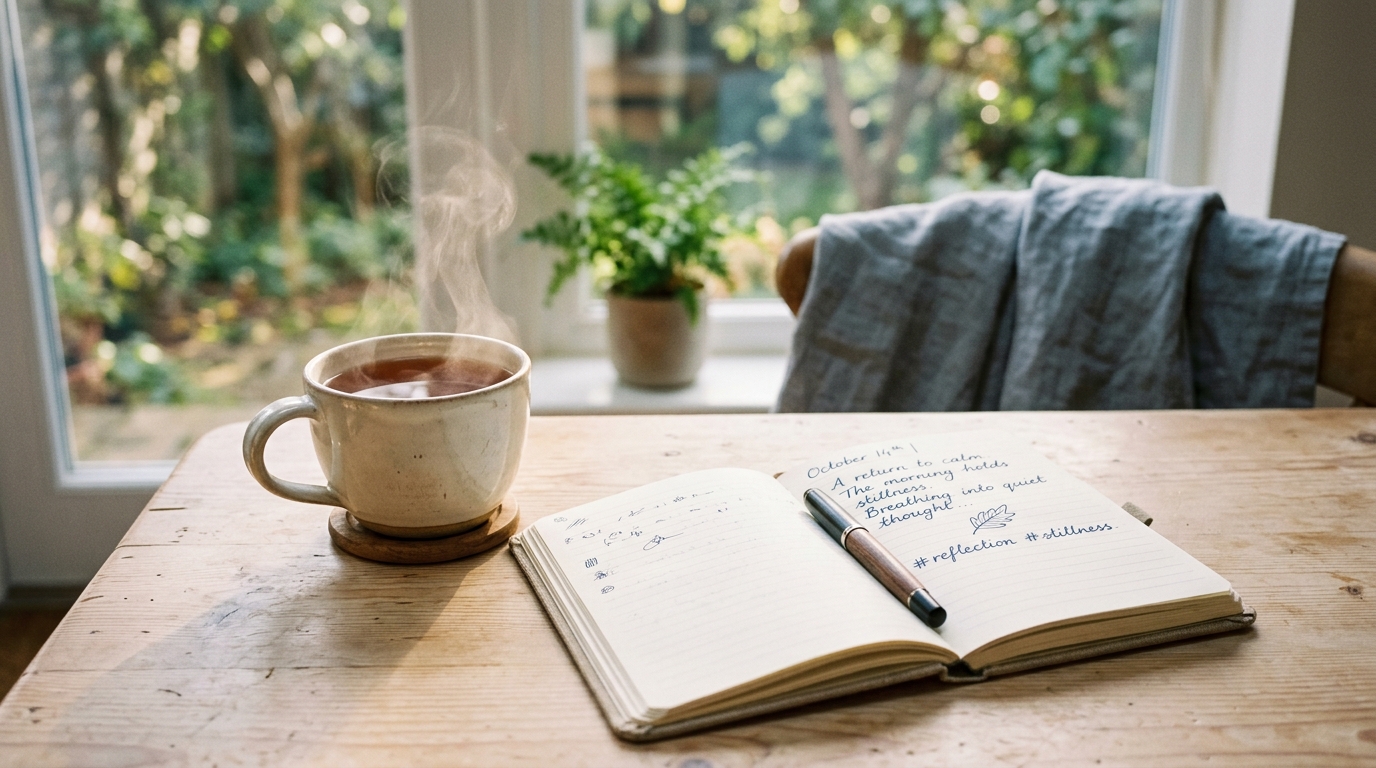
Photo via La Nature
Happy people tend to have small rituals that anchor their days: a slow morning cup of tea, a short journal entry before bed, a stretch, a skincare routine done unhurriedly. These are not rigid schedules to be obeyed or failed. They are gentle markers that tell the nervous system the day has a shape — a beginning, a middle and a soft landing at the end. If one is missed, nothing is ruined; it is simply picked up again tomorrow. That flexibility is what makes rituals last where strict routines collapse.
The deeper layer is meaning. A life that feels connected to something beyond the to-do list — helping someone, making something, looking after people, growing in a chosen direction — sustains happiness far longer than pleasure alone. Rituals are a good place to keep that connection alive. A few lines in a journal about what mattered today, a weekly act of help for someone else, or a quiet moment naming one value to live by this week — these small acts turn ordinary days into ones that feel like they belong to a life going somewhere on purpose.
Final Thoughts
None of these habits asks for a dramatic overhaul. A message to a friend, a short walk, a grateful thought before sleep, a protected half hour, a kinder word to yourself, a small ritual that marks the day — each one is modest on its own, and that is exactly the point. Happiness, for most people, is not built in grand gestures but in the steady accumulation of small, repeatable choices that leave the mind a little calmer and the days a little warmer.
Start with the habit that feels easiest, not the one that sounds most impressive. Give it a week or two to settle into the shape of your ordinary days, then add another when it feels natural. Over time, the shift is rarely dramatic — it is subtler and better than that. Bad days pass a little faster, good moments land a little deeper, and the person in the mirror starts to look like someone who is genuinely at ease with her life.