How to Dress a Short and Curvy Body: Proportions That Flatter
Dressing a short and curvy body comes down to one thing most style advice skips: scale. Regular sizes are cut for a taller frame, so the waist lands too low, the sleeves slide past the wrist, and hems pool where they should stop. Add curves to that shorter frame and the mismatch doubles — a dress that fits the hips may gape at the waist, and a top that fits the bust may hang past the hip. None of that is a problem with the body. It is a problem with clothes that were never cut for it.
The fix is not buying smaller clothes or hiding under oversized layers. It is choosing pieces scaled to a shorter frame and placing the waist, the hem and the neckline exactly where they belong. This guide breaks that down into six principles — proportion, rise, neckline, hem length, colour and tailoring — so an outfit works with a petite curvy shape instead of fighting it.
1. Start With Thirds, Not Halves
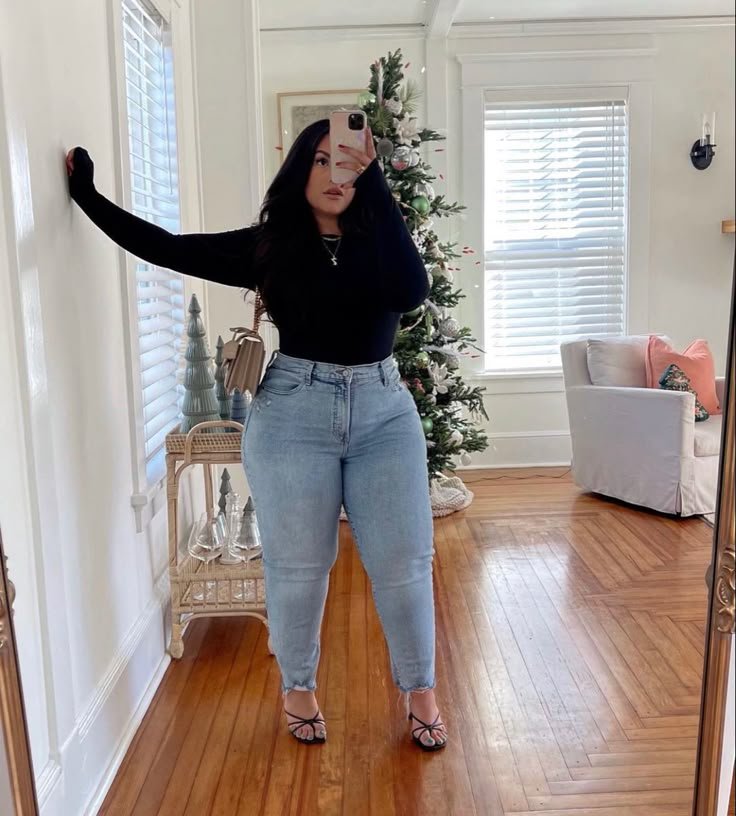
Photo via Kinda Obsessed HQ
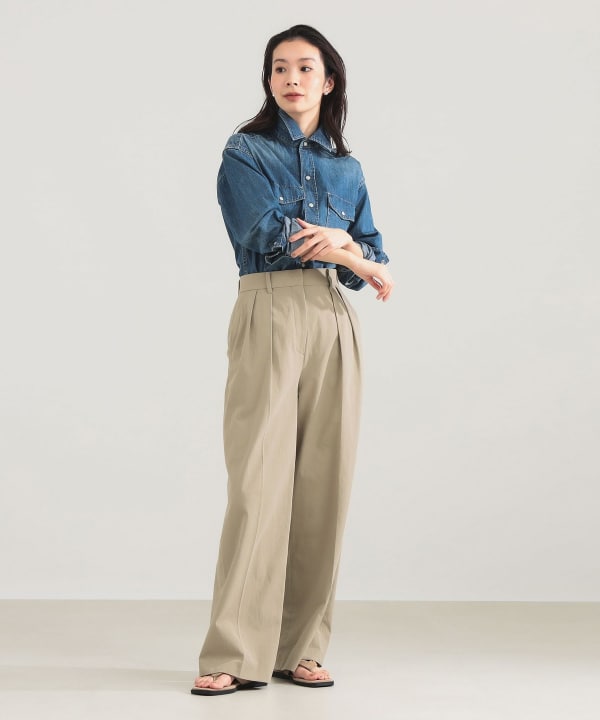
The fastest way to make a short frame look balanced is to stop splitting it in half. When a top and a bottom meet at the middle, the eye reads two short blocks stacked on top of each other. Shift the break point up instead: roughly one-third of the outfit on top and two-thirds below, with the waist clearly marked in between. A tucked-in fitted top with light-wash cropped jeans does exactly that — the short top half lets the legs take up most of the picture, and the visible waistband keeps the shape defined rather than boxy.
Tucking is the simplest tool here, but it is not the only one. A top that ends at the natural waist, a cropped knit, or a French tuck — just the front tucked in — all create the same one-third line without needing a full tuck. What matters is that the eye can find the waist quickly. An untucked tunic over wide trousers hides it entirely, and on a short curvy frame that usually reads as shapeless rather than relaxed.
2. Raise the Waistline With High-Rise Bottoms
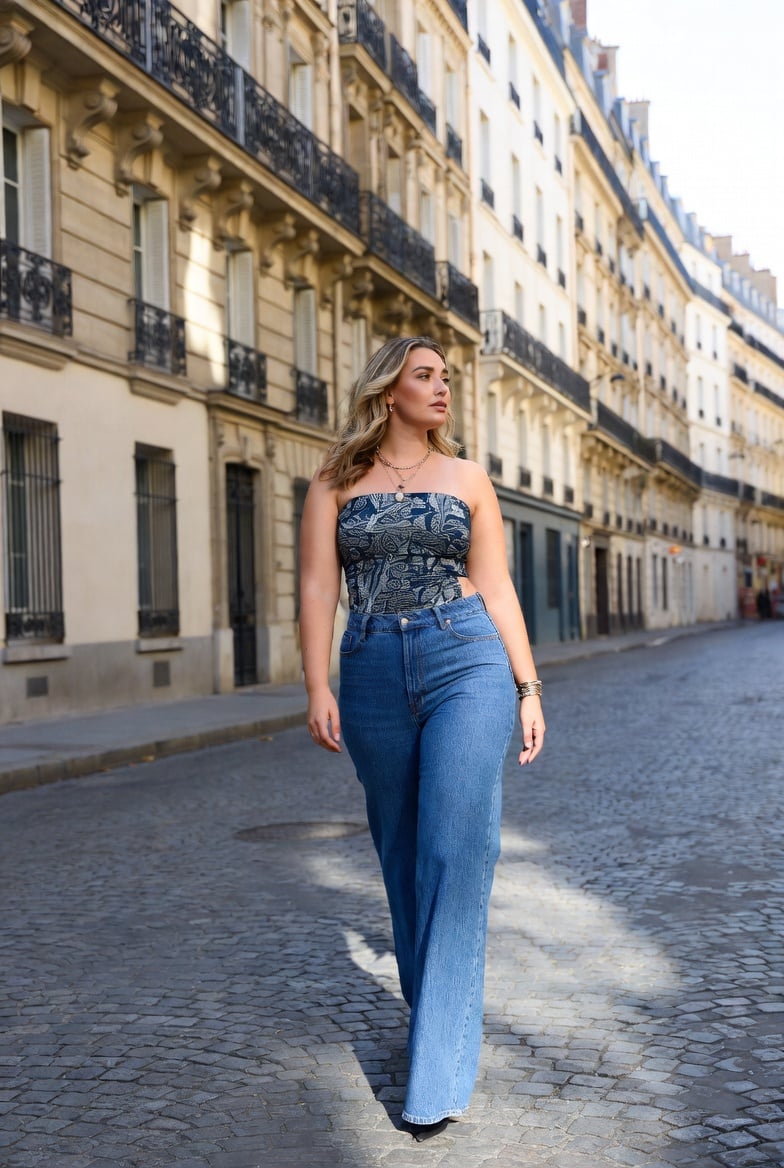
Photo via Marid Fashion
High-rise bottoms do more for a short curvy body than almost any other single choice. A waistband that sits at the true waist — the narrowest point of the torso — makes the legs look longer before a single other styling trick is applied, and it holds the midsection smoothly instead of cutting across it. Wide-leg jeans in a high rise work especially well: the long, clean line from waist to floor balances fuller hips, and the width of the leg keeps the silhouette from looking top-heavy.
The detail to watch is where the rise actually lands on a short torso. A regular high rise can sit higher than expected when the torso is short, so check that the waistband rests at the narrowest point rather than up at the ribs. Stretch matters too — a rigid denim with no give will gap at the back waist on a curvy frame, while a small amount of stretch lets the waistband follow the body. When the rise is right, everything above it gets easier: tops tuck cleanly, belts sit flat, and jackets end where they should.
3. Let Necklines and Wraps Do the Shaping
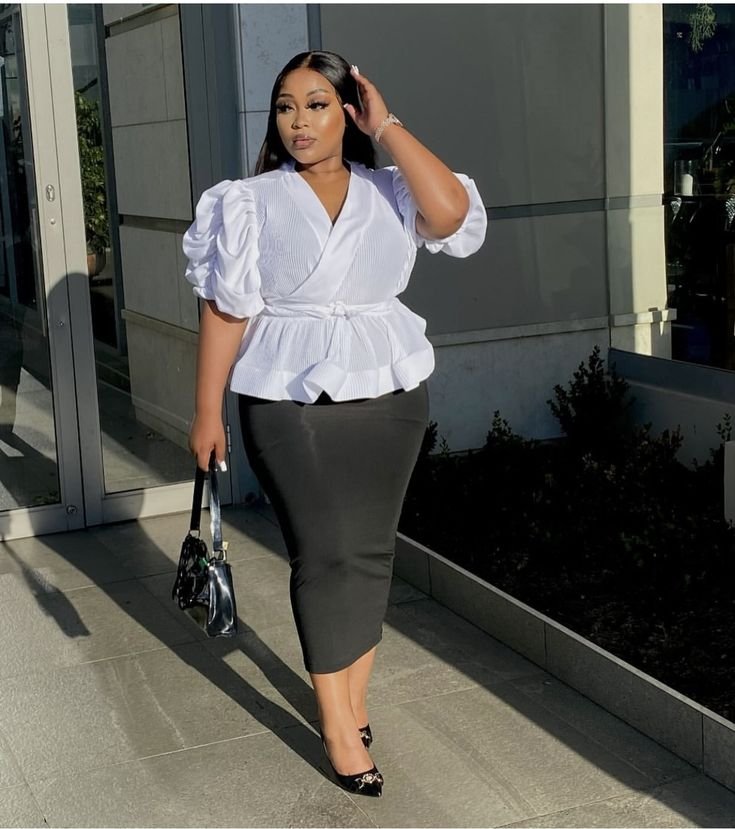
Photo via Kinda Obsessed HQ
On a short frame, the neckline sets the tone for the whole outfit. A V-neck or wrap opening draws a vertical line down the chest, which lengthens the neck and gives the upper body room to breathe — the opposite of a high crew neck, which can make a curvy bust and a short torso read as one solid block. A wrap top is doubly useful because the tie lets the waist be placed exactly where it actually is, rather than where a pattern maker guessed it would be. Paired with a pencil skirt, the wrap waist and the V-neck work together to shape the top half without a single tight waistband.
Wrap styles also solve the fit problem that trips up so many curvy petites: the bust and the waist rarely match one size. A wrap adjusts to both independently, so there is no gaping at the buttons and no pulling across the chest. The same logic applies to dresses — a wrap dress or a fit-and-flare with a defined waist follows the body instead of fighting it. Look for fabrics with some drape, like a soft crepe or a fluid jersey, so the wrap falls cleanly rather than standing stiff.
You may also like: 20 Black Leggings Outfits for Every Day and Every Occasion
4. Mind Where Every Hem Lands
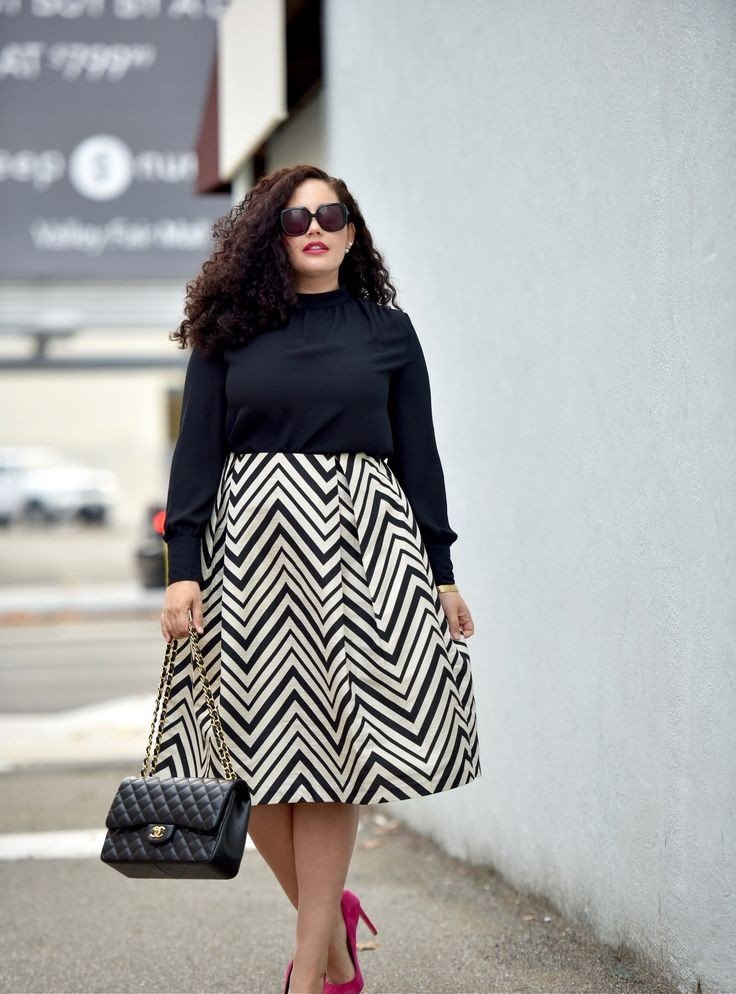
Photo via Kinda Obsessed HQ
Hem length is where petite dressing is won or lost, and the labels on the rail mean very little. A midi skirt that ends mid-calf on a tall woman can land at the widest part of the calf on a short one, cutting the leg line in the worst place. The reliable rule is to let hems land at a narrow point: just above the knee, just below it, or a few inches above the ankle so the ankle bone still shows. A knee-length A-line skirt with a fitted top shows why — the flare skims the hips, the hem stops where the leg is slim, and the whole outfit looks deliberate rather than borrowed.
The same thinking applies to trousers and jackets. Trousers should stop at the ankle or just above the shoe, never pooling over it, and cropped lengths are often the honest answer rather than a compromise. Jackets and blazers should end at the waist or the hip bone; a regular-length jacket that ends mid-thigh adds bulk exactly where a curvy frame least needs it. When a hem is almost right, a tailor can fix it for far less than the cost of a replacement — and a hem that lands in the right place changes how the entire outfit reads.
5. Dress in One Colour, Top to Toe
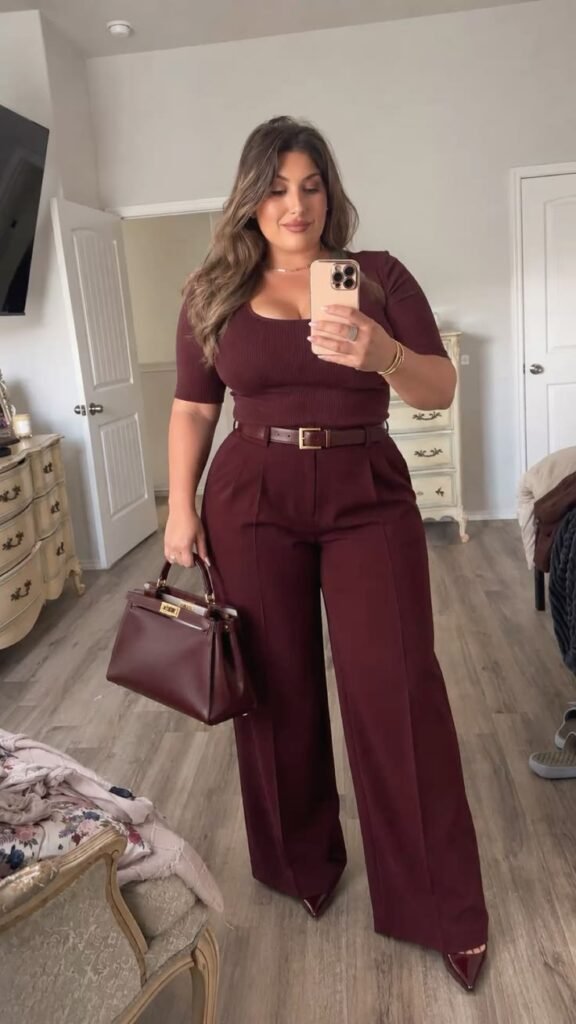
Photo via Kinda Obsessed HQ
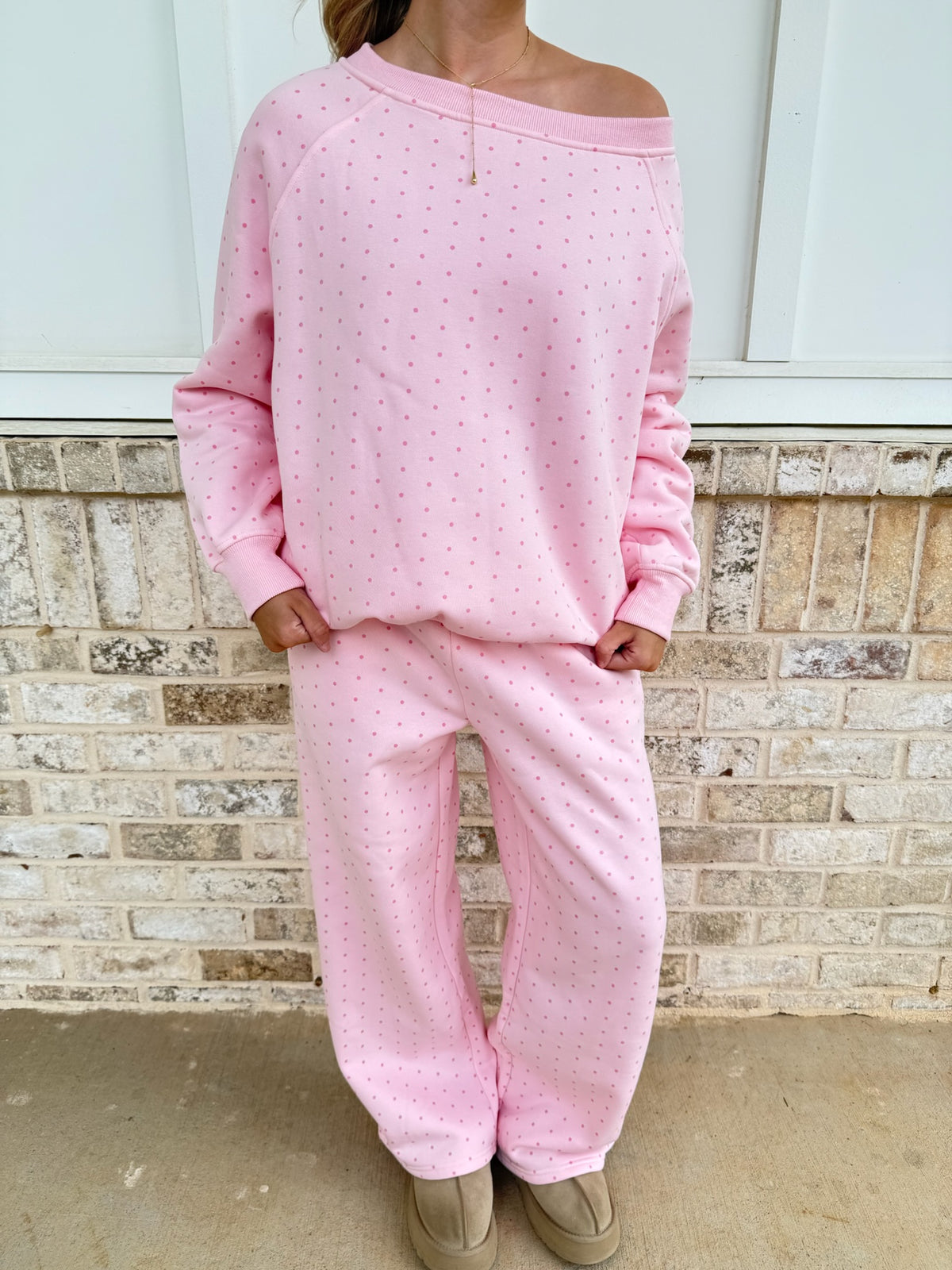
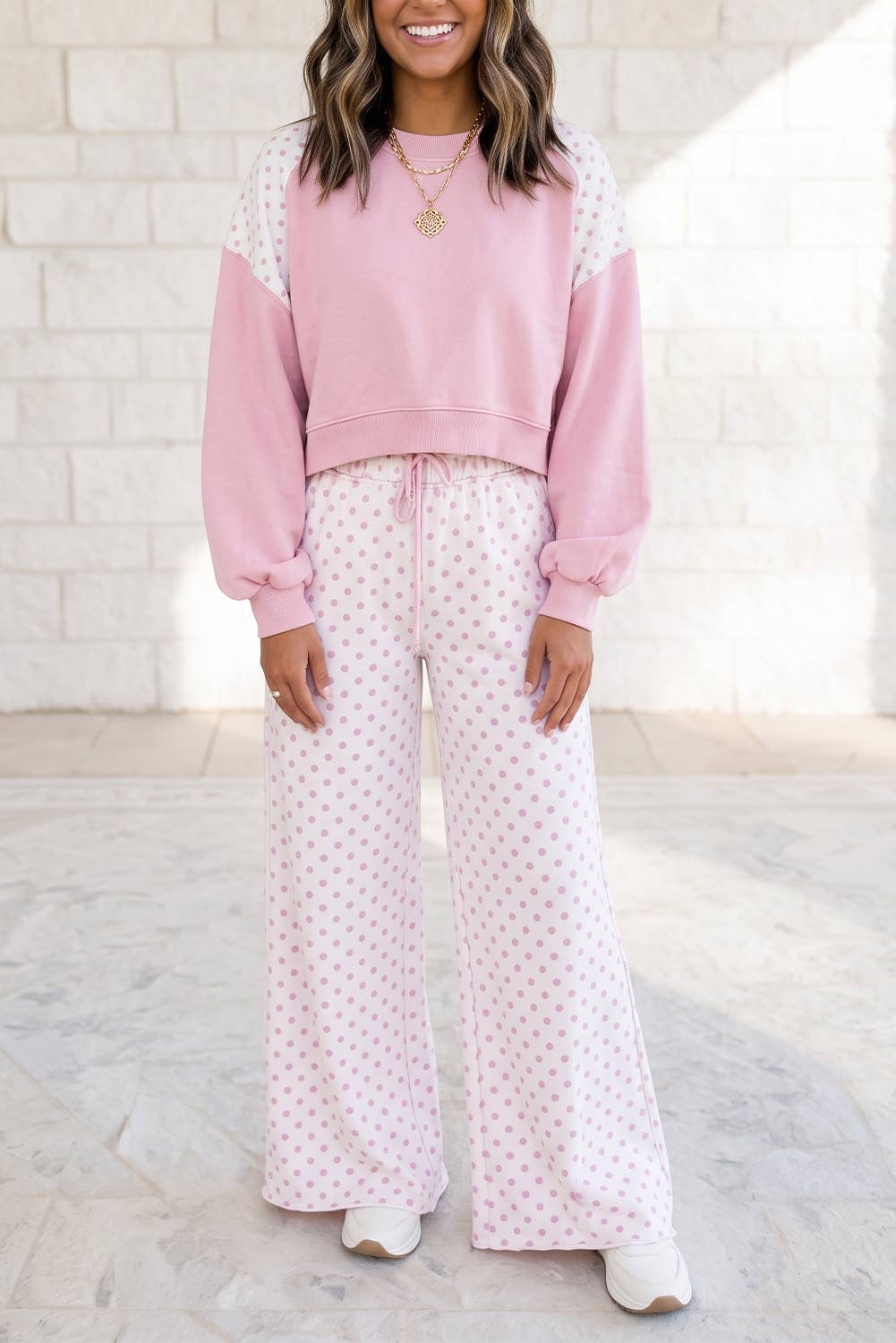
Monochrome dressing is the simplest lengthening trick a short curvy woman has, and it asks for no new skills at all. When the top and bottom sit in the same colour family, there is no hard break for the eye to stop at, so the body reads as one long continuous line. A burgundy knit with matching wide-leg trousers and a belt in the same tone shows the effect clearly — the waist is still marked by the belt, but the colour never interrupts the line from shoulder to shoe. Shoes in the same tone family extend it right down to the floor.
The pieces do not need to match exactly; slightly different shades of one colour often look richer than a perfect match. Camel with tan, navy with ink blue, charcoal with soft grey all work the same way. Vertical details add to the effect — an open cardigan or blazer worn over the column creates two long lines down the body, and a long necklace or a centre seam does the same job quietly. Keep prints small if they appear at all: a ditsy floral or a narrow stripe stays in scale with a petite frame, while a large bold print can wear the wearer instead of the other way around.
6. Treat Tailoring as Part of the Purchase
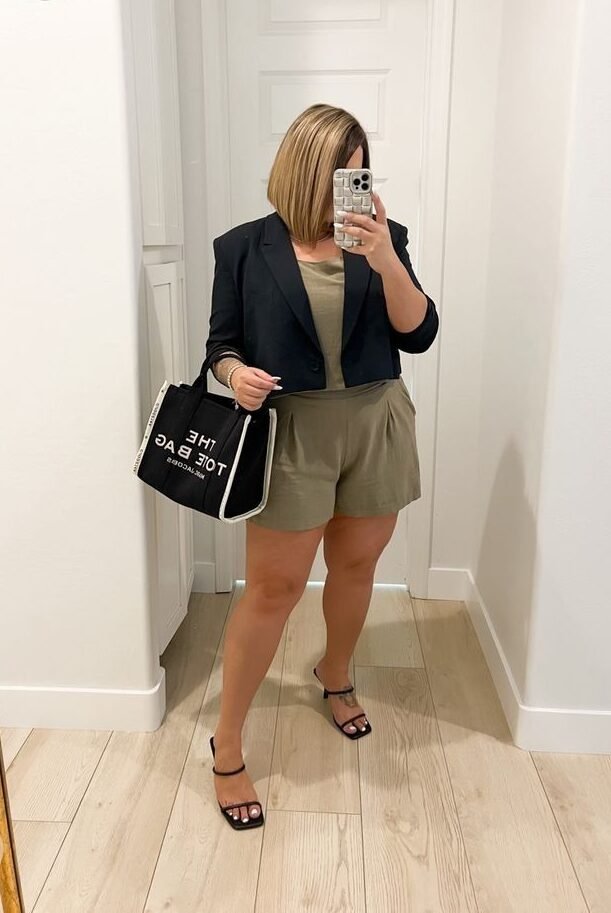
Photo via Kinda Obsessed HQ
Off-the-rack clothes are cut for an average that a short curvy body rarely matches, so the last principle is also the most practical: budget for alterations the way you budget for the clothes themselves. A blazer shortened to waist length, sleeves taken up to the wrist, a trouser hem lifted to the ankle — each of these is a small job, and each one turns an almost-right piece into the one that gets worn constantly. A cropped blazer over a simple top shows what the right length does: the jacket ends at the waist instead of the thigh, the proportions stay compact, and the outfit looks tailored because it actually is.
Start with the pieces that get worn most. A hem on the favourite jeans, a waist suppression on the work blazer, sleeves shortened on the coat — these three alterations alone fix most of the fit complaints petite curvy women have. And when a piece fits beautifully everywhere except the length, buy it anyway and get it altered rather than passing it up. The best-dressed short curvy women are not the ones who found a magic brand; they are the ones who stopped expecting the rail to fit and started finishing the job themselves.