
32 Radiant Pink Hair Colors to Brighten Your Look
Pink hair has moved well past its rebellious phase. These days it shows up everywhere, from soft pastel washes that barely whisper colour to electric neons that stop traffic, and the shade range is wide enough that there is genuinely a pink for every skin tone, hair texture and comfort level. The secret is matching the undertone to the complexion: cool pinks like magenta and fuchsia flatter cool skin, while warm pinks like coral, rose gold and blorange glow against warm and golden undertones.
This roundup gathers thirty-two radiant pink hair colours, from barely-there blush and champagne pink to bold hot pink, deep magenta and playful watermelon. Each shade comes with a real photo and honest notes on the base colour it needs, how it wears day to day and what the upkeep actually looks like, so it is easy to pick one to show a colourist or try at home.
1. Soft Pastel Pink Hair
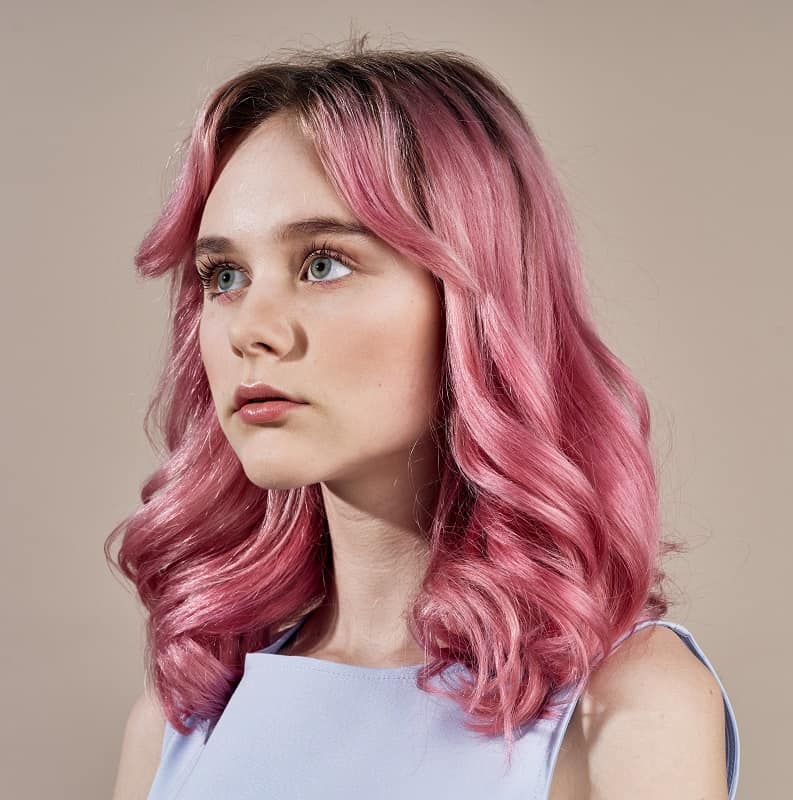
Photo via Hairstyle Camp
Soft pastel pink is the gentlest way into the pink family, a washed-out, powdery shade that reads almost like a tint rather than a full colour. It needs a very light blonde base to show up true, which means pre-lightening for most hair, but the payoff is a dreamy, ethereal finish that flatters fair and light skin tones beautifully. On longer hair it looks especially soft in loose waves, where the light catches each strand differently.
The trade-off is maintenance. Pastel pink is one of the fastest-fading shades out there, often softening noticeably within a couple of weeks of regular washing. Cool water, sulphate-free shampoo and a colour-depositing conditioner once a week stretch the colour considerably, and the faded version is usually a pretty blush blonde rather than anything patchy, which makes the grow-out forgiving.
2. Bubblegum Pink Hair
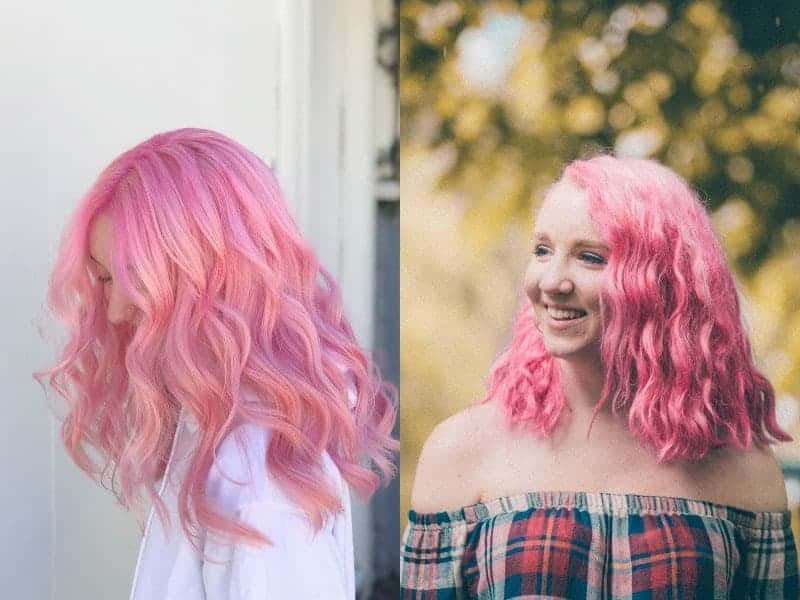
Photo via Hairstyle Camp
Bubblegum pink is bright, sweet and unapologetically cheerful, the candy shade that most people picture when they think of pink hair. It sits between pastel and hot pink in intensity, with a clean, slightly cool tone that pops against both fair and deeper skin. The colour shows best on fully pre-lightened hair, where it goes on evenly and holds its brightness rather than turning muddy at the roots.
This is a shade that rewards a good cut. Mid-length hair with a centre or side part lets the colour frame the face, while waves and curls add dimension so the pink never looks flat. It fades faster than deeper pinks, so a weekly colour-depositing mask is worth the effort, and the in-between stages usually stay pretty, drifting toward a softer pastel rather than an odd in-between tone.
3. Hot Pink Hair
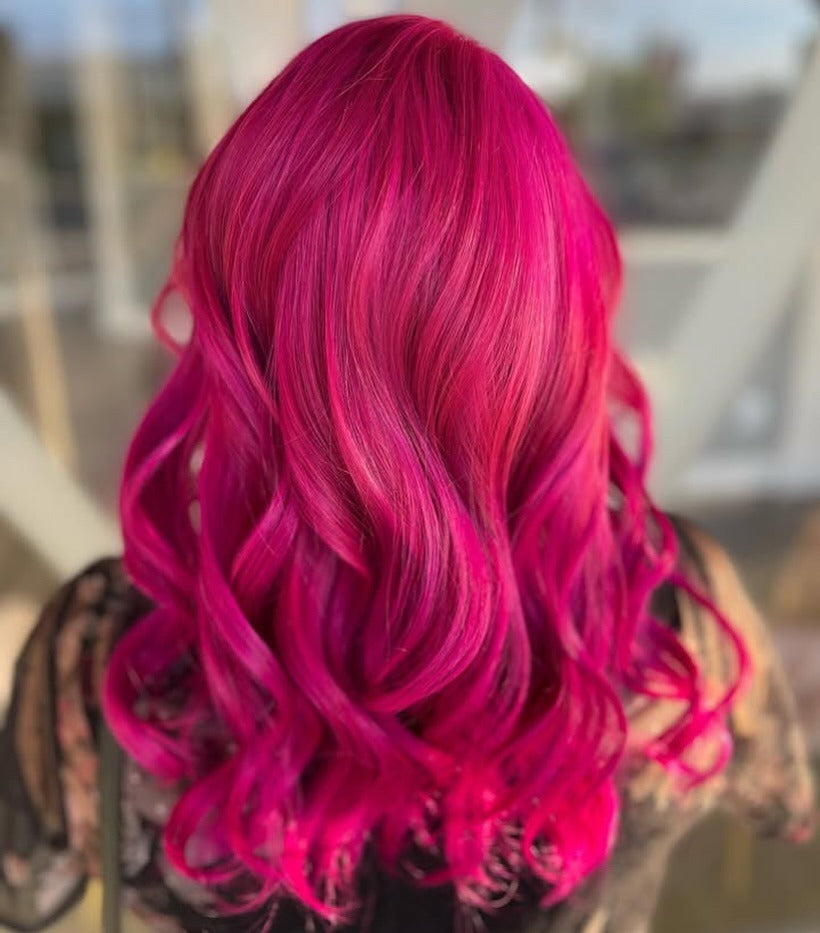
Photo via Creative Booster
Hot pink is pure statement colour, saturated, vivid and impossible to ignore. It works on every hair length, but long wavy hair shows it off best, because the movement lets the colour shift from deep magenta in the shadows to bright pink where the light hits. It suits a wide range of skin tones, though it is especially striking against medium and deep complexions, where the contrast makes both the hair and the skin glow.
Because the pigment is so strong, hot pink actually holds up better than pastels between appointments, though it still needs colour-safe washing and minimal heat to stay vivid. Expect some colour transfer onto pillowcases and collars in the first few washes, and plan root touch-ups every four to six weeks if the base was heavily lightened. A colourist can also deepen the roots slightly for a softer grow-out.
You may also like: 20 Simple Fall Nails That Look Effortless and Polished
4. Rose Gold Pink Hair
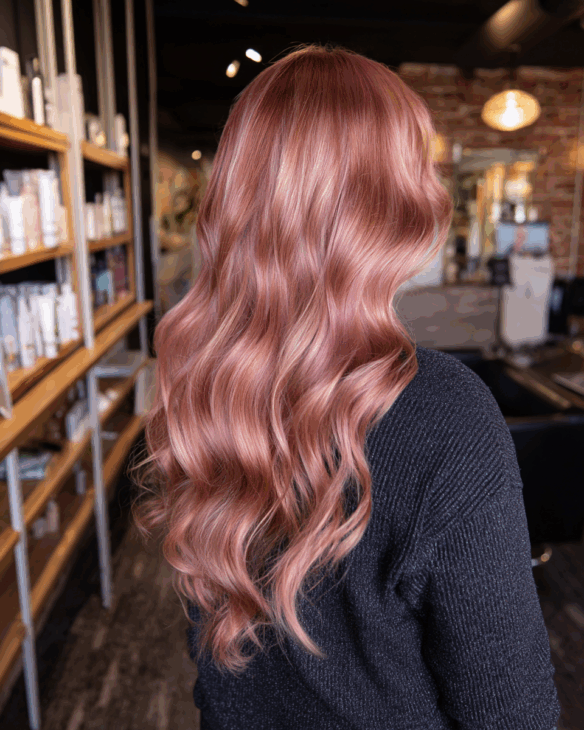
Photo via She Wore It Like This
Rose gold pink blends warm pink with golden, almost metallic undertones, and it is one of the most universally flattering shades in the pink family. The warmth keeps it from washing out fair skin, while the golden reflect adds dimension that flat pinks can lack. It works beautifully in loose waves, where the different tones catch the light and give the hair a luminous, almost lit-from-within quality.
This shade is also one of the more forgiving pinks to live with. It fades into a pretty peachy champagne rather than going dull, and it pairs well with a shadow root, which stretches the time between salon visits. The main thing to watch is brassiness: a weekly toning treatment keeps the golden tones rosy rather than orange, especially for anyone whose hair lifts warm.
5. Blush Pink Balayage
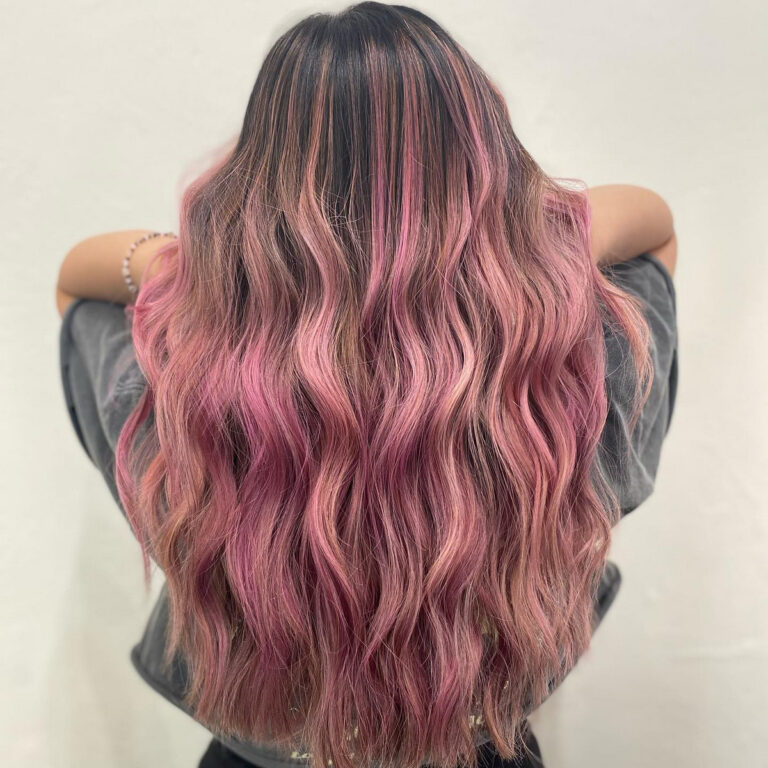
Photo via Hood MWR
Blush pink balayage hand-paints a soft, washed-out pink through the mid-lengths and ends, leaving the natural base untouched at the roots. The result is dimensional and sun-kissed rather than a solid block of colour, which makes it one of the easiest pink looks to wear day to day. It works particularly well on brown and dark blonde hair, where the contrast between the base and the blush sections is gentle rather than stark.
Because the colour never touches the roots, grow-out is almost invisible, and touch-ups can stretch to every few months instead of every few weeks. The balayage placement also means less overall lightening, which is kinder to the hair. Wavy styling shows off the painted sections best, while straight styling gives a sleeker, more polished read on the same colour.
6. Pink Ombre Hair
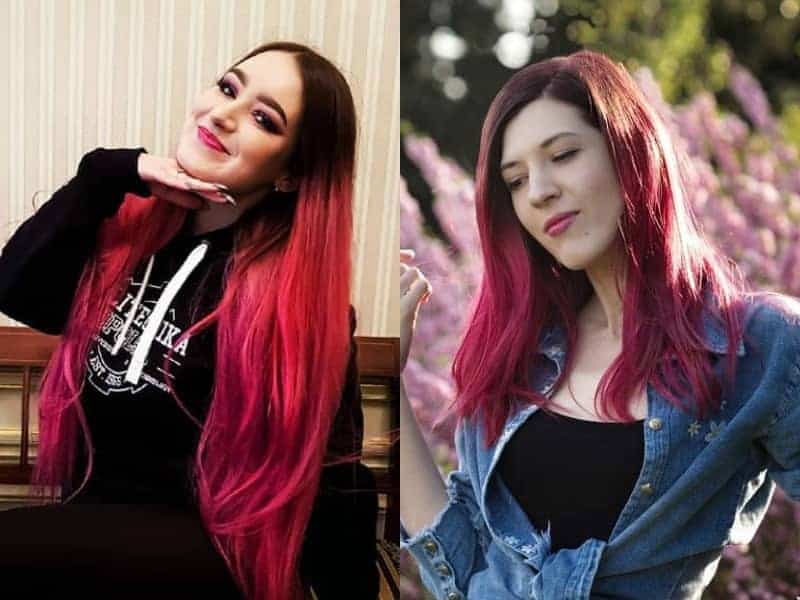
Photo via Hairstyle Camp
Pink ombre moves from a darker root into vivid pink ends, with the colour getting brighter as it travels down the length. The gradient can be subtle, with a smoky or dark base melting into pink, or dramatic, with a sharp shift from near-black roots to electric tips. Either way, the technique gives the drama of pink hair while keeping the roots low-maintenance and the grow-out intentional.
The key to a good ombre is the blend. A skilled colourist melts the transition so there is no harsh line where the base meets the pink, and the ends carry the most saturated colour. Because only the lower half is lightened, the hair stays healthier overall, and refreshing just the ends is quicker and cheaper than a full-head colour. Loose waves show the gradient off better than any other styling.
7. Dusty Rose Pink Hair
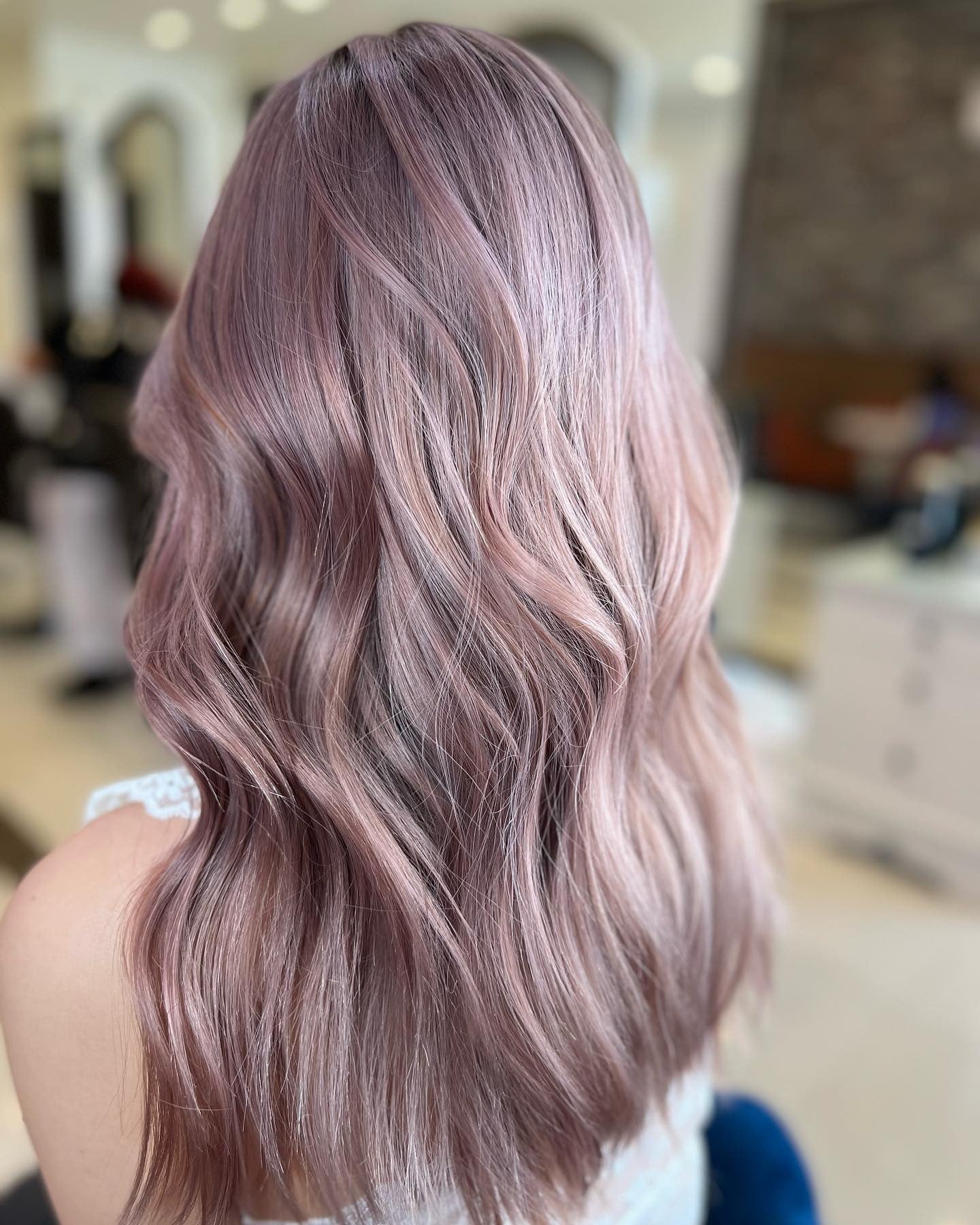
Photo via Creative Booster
Dusty rose pink is pink with the volume turned down, a muted, greyed shade that feels vintage and sophisticated rather than sweet. The soft lavender-rose tones give it depth that brighter pinks do not have, and it is one of the few pink shades that reads as genuinely elegant in a professional setting. It suits cool and neutral skin tones especially well, though the muted finish is flattering across the board.
This is a great choice for anyone who wants pink hair without the high-maintenance brightness of a vivid shade. The muted pigment fades gracefully into a soft mauve-blonde, and it works on a slightly darker base than pastel pink, so less lightening is needed. Long, wavy hair shows off the smoky dimension best, and a gloss treatment between appointments keeps the tone from going flat.
8. Neon Pink Hair
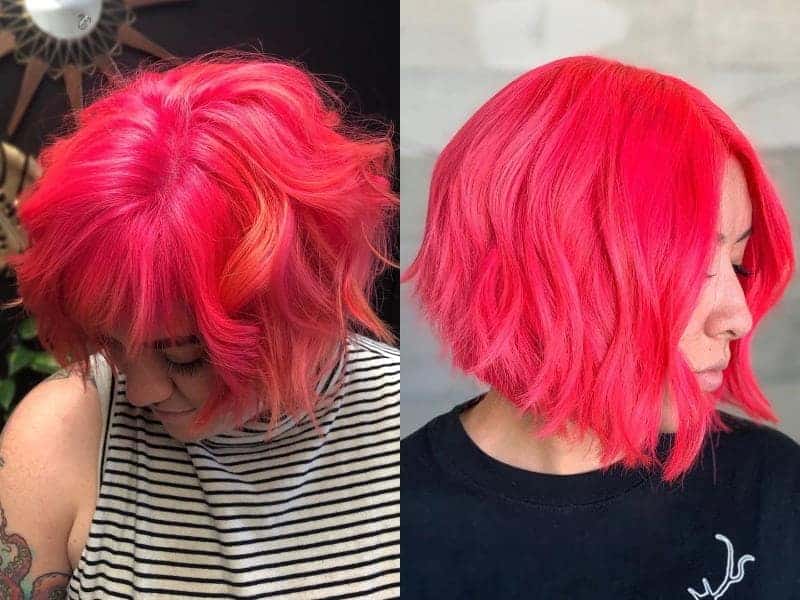
Photo via Hairstyle Camp
Neon pink is the brightest shade in the pink family, an almost fluorescent colour that glows in daylight and photographs like a highlighter. It is a bold choice that works best with confidence and a cut that shows it off, like a sharp bob or long straight lengths where the colour reads as one unbroken sheet of vivid pink. On short, layered cuts it looks edgy and modern; on long hair it is pure drama.
The colour demands a very pale base and a good semi-permanent dye to reach full intensity, and it fades faster than deeper shades, so expect refresh sessions every three to four weeks to keep the glow. Washing in cool water and skipping heat styling helps, and the faded stages usually drift toward a bright bubblegum pink, which is still a perfectly wearable colour in its own right.
9. Pink Money Piece Highlights
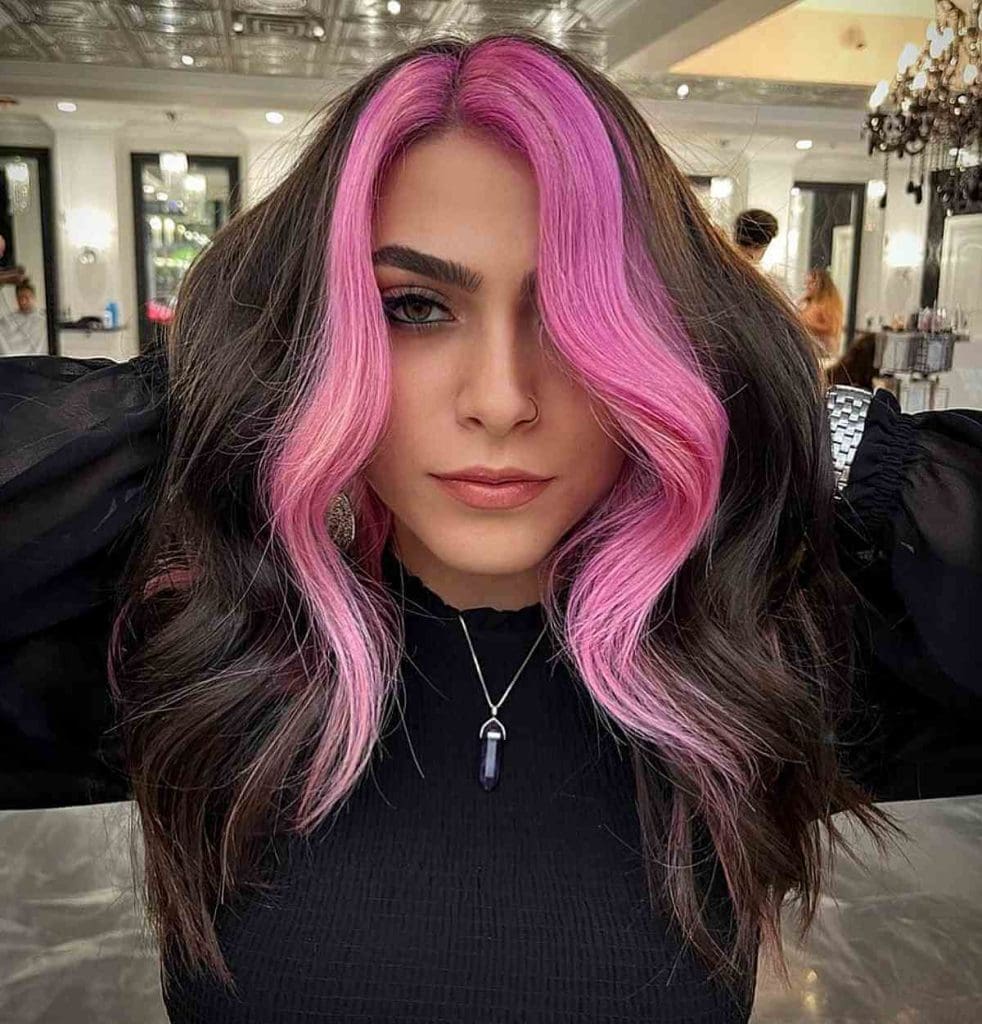
Photo via Hairs London
The money piece is the pair of face-framing front sections lightened and toned pink, while the rest of the hair stays its natural colour. It is the lowest-commitment way to wear pink, since only a small amount of hair is coloured, yet the effect is striking: the pink frames the face, brightens the complexion and draws attention to the eyes. On a chocolate brown base, the contrast is rich and dimensional rather than harsh.
Upkeep is minimal compared with full-head pink. The front sections can be refreshed quickly, and because the rest of the hair is untouched, there is no all-over grow-out to manage. Tucking the hair behind the ears hides the colour for conservative settings, while wearing it down shows it off fully, which makes this one of the most versatile pink placements around.
10. Cotton Candy Pink Hair

Photo via Rush Hair
Cotton candy pink is a light, airy pastel with a sugary sweetness, a touch brighter than baby pink but softer than bubblegum. The shade has a slightly powdery finish that looks beautiful on long, straight or gently waved hair, where the colour reads as one soft cloud of pink. It suits fair to medium skin tones best, though it can look stunning against deep skin too, where the pale pink creates a striking contrast.
Like all pastels, cotton candy pink needs a very light base and fades quickly, often within two to three weeks of regular washing. A colour-depositing conditioner is almost essential here, and washing less often makes a real difference. The faded result is usually a soft blush blonde that still looks intentional, so the in-between weeks are rarely awkward.
11. Pink Peekaboo Highlights
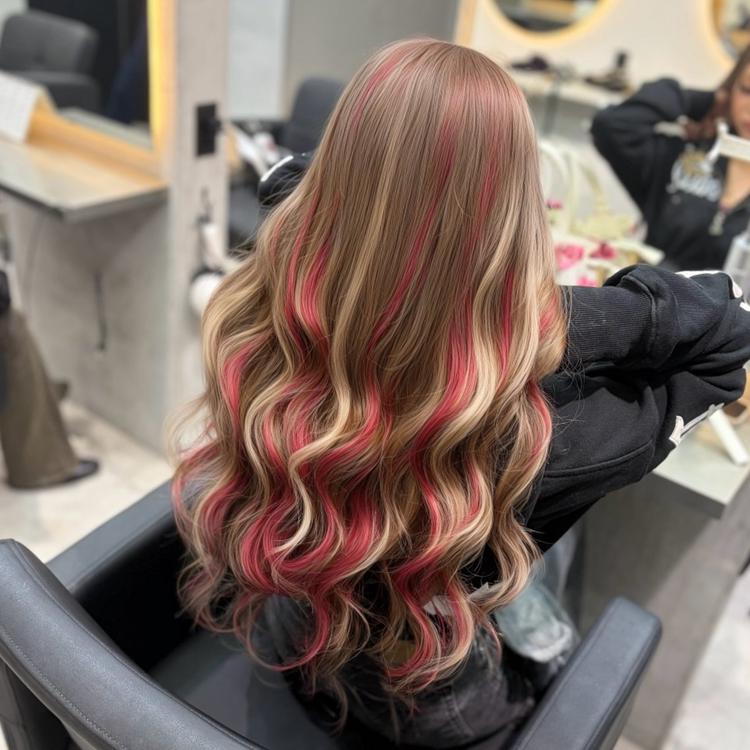
Photo via Minimodel
Peekaboo highlights hide vivid pink in the underlayer of the hair, so the colour only shows when the hair moves, is tied up, or is tucked behind the ear. It is the perfect compromise for anyone who loves bold colour but needs a professional look most of the time: worn down, the hair looks like its natural shade, and the pink flashes out only on purpose. The placement works on any length, though mid-length and long hair hide the panels most effectively.
Because only the underlayer is lightened, the damage is limited and the grow-out is easy to manage. The hidden sections can be as bright or as soft as the wearer likes, from neon pink to a muted rose, and refreshing them is a quick appointment. It is also a great way to test a vivid shade before committing to a full head of it.
12. Magenta Pink Hair
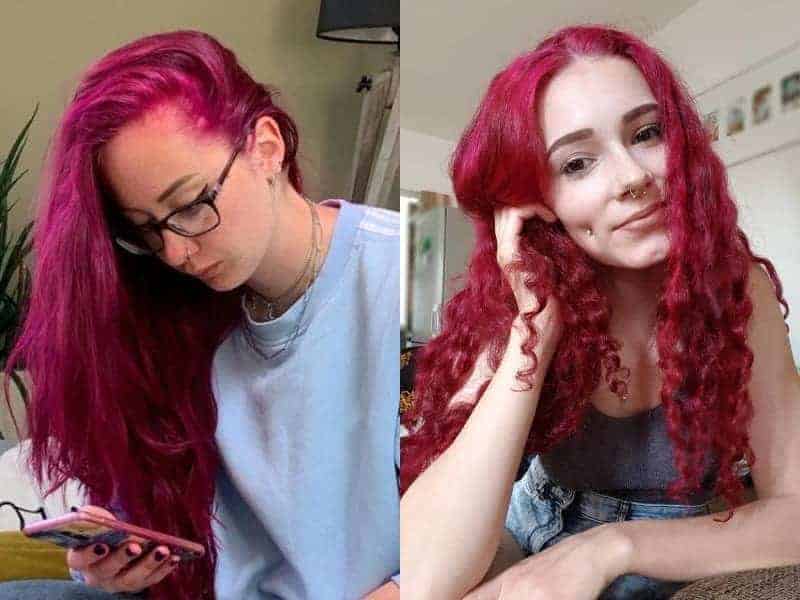
Photo via Hairstyle Camp
Magenta is a cool, blue-leaning pink with real depth, richer than hot pink and more dramatic than bubblegum. It flatters a wide range of skin tones, from pale to deep, because the cool undertone contrasts beautifully with warm skin and harmonises with cool skin. On straight hair it has a glossy, almost liquid shine, while on curls each ringlet shows a slightly different depth of the colour.
Magenta holds its pigment better than pastel pinks, so it is a practical choice for anyone who wants vivid colour without weekly refreshing. It still fades, usually drifting toward a softer pink-purple over time, which many wearers enjoy as a second phase of the colour. A colour-safe routine and cool-water washing keep the blue tones from washing out first, which is what keeps magenta looking magenta rather than plain pink.
13. Strawberry Pink Hair
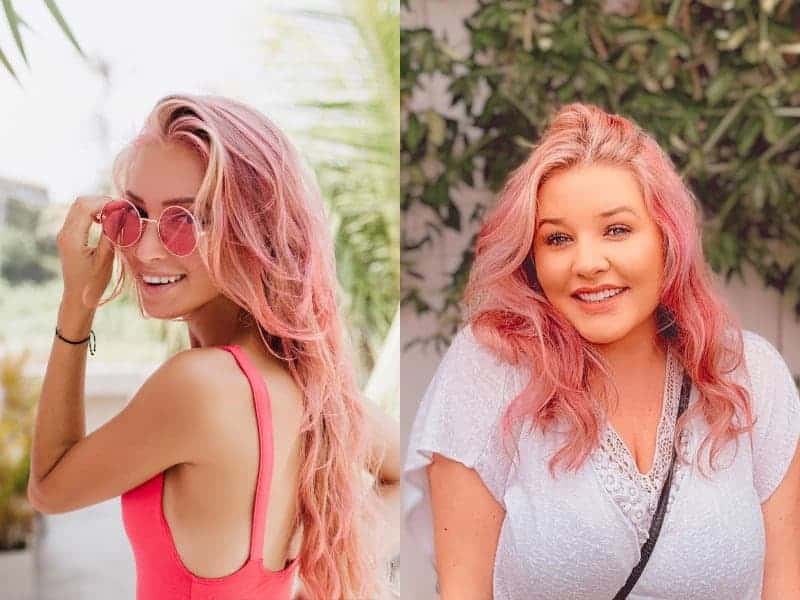
Photo via Hairstyle Camp
Strawberry pink sits between pink and red, a warm, fruity shade that blends pink pigment with a hint of coppery red. The result is a romantic, sun-kissed colour that looks natural in a way brighter pinks do not, and it is especially flattering on warm and olive skin tones. Beachy waves suit it perfectly, giving the colour a relaxed, summer feel that works year-round.
This shade is more forgiving than most pinks when it comes to base colour, since the warm red tones show up on mid-blonde bases without needing a platinum lift. It fades into a soft strawberry blonde that still looks deliberate, and it pairs well with a side part or half-up styling that shows off the warmth around the face. A gloss treatment every few weeks keeps the fruity tones fresh.
14. Pink Dip-Dyed Ends on Brown Hair
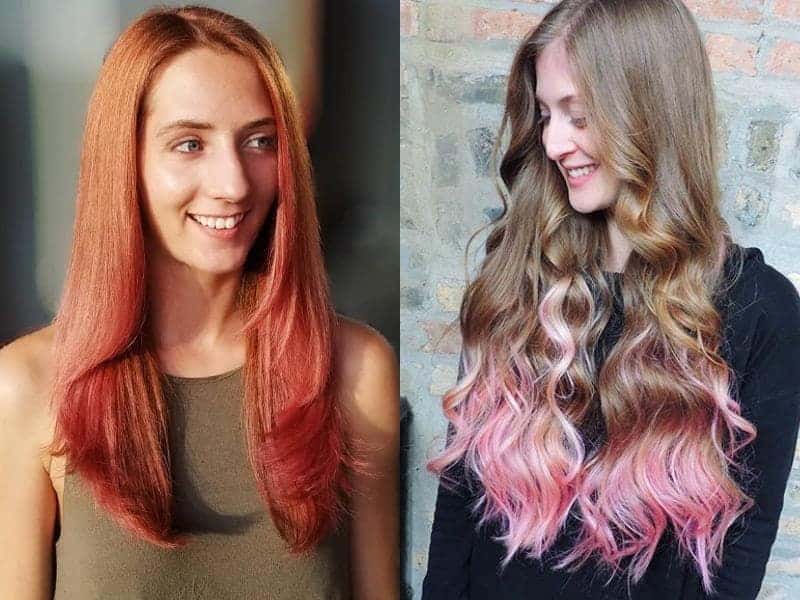
Photo via Hairstyle Camp
Dip-dyed ends take a brown base and colour only the last few inches pink, as if the ends were dipped in dye. The effect is playful and low-commitment, and the brown-to-pink contrast makes the colour pop without touching the roots at all. A coral or baby pink works beautifully against warm brown, while a brighter pink gives a bolder, more graphic finish.
Because only the ends are lightened, the hair stays healthy and the grow-out is a non-issue: the pink simply moves further down the hair as it grows, and a trim removes it entirely when the mood changes. It is one of the easiest pink looks to try at home with a semi-permanent dye, and refreshing the ends takes minutes rather than a full salon appointment.
15. Coral Pink Hair
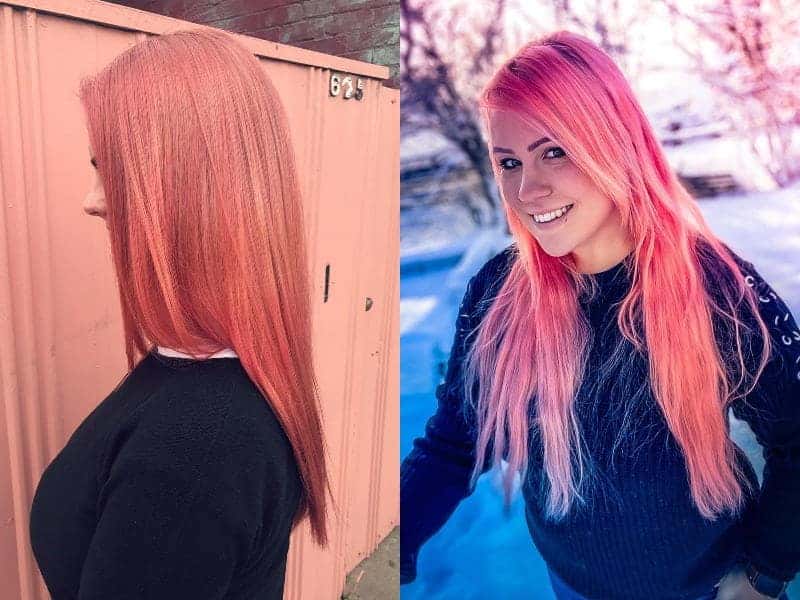
Photo via Hairstyle Camp
Coral pink lives on the line between pink and orange, a warm, fiery shade that looks different from every angle. The orange undertone makes it glow against warm and golden skin tones, and it is one of the most eye-catching pinks in sunlight, where the colour seems to shift between peach, pink and tangerine. Long, straight hair shows the fiery blend at its best, with the colour reading as one seamless warm gradient.
Coral is a high-energy colour that fades faster than cooler pinks, often softening into a pretty peach within a few weeks. That faded stage is lovely in its own right, but keeping the original fire needs regular colour-depositing treatments and minimal heat. It is a great summer shade, and it pairs naturally with gold jewellery and warm-toned makeup.
16. Pink and Purple Hair
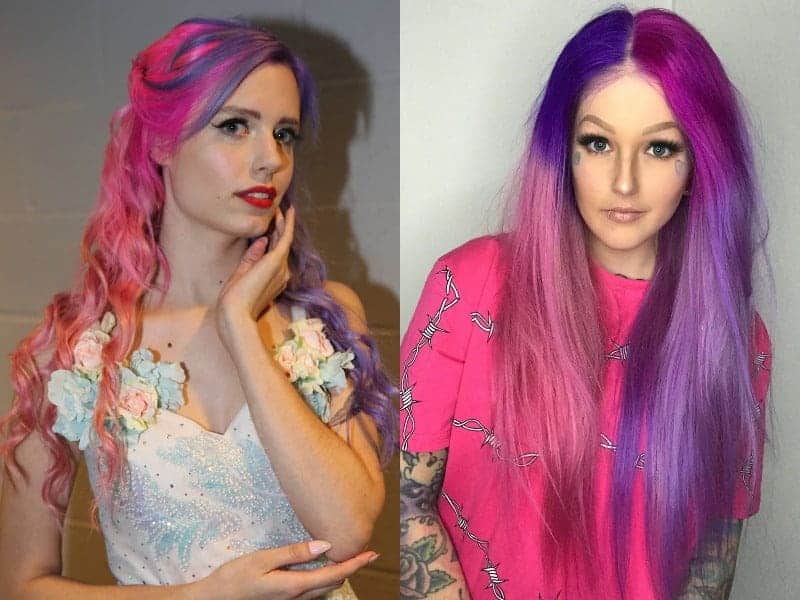
Photo via Hairstyle Camp
Pink and purple together make one of the most popular fantasy colour combinations, whether blended into a soft gradient or split into bold colour blocks. The two shades sit next to each other on the colour wheel, so they melt together naturally, and the purple adds a cool depth that keeps the pink from feeling too sweet. A half-and-half split is the boldest version, while a pink-to-purple ombre is softer and more wearable.
The two colours fade at different rates, with purple usually holding longer than pink, so the blend shifts over time in interesting ways. Keeping both vivid needs colour-depositing products in each shade, applied to the right sections. It is a look that rewards a good colourist, since the placement of the two tones decides whether the result reads as a deliberate blend or a muddled mix.
17. Pink Balayage on Brown Hair
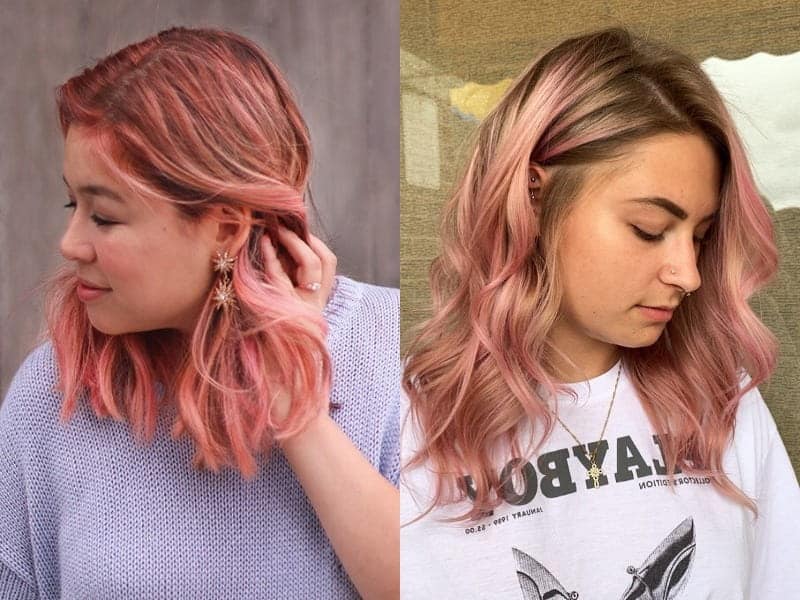
Photo via Hairstyle Camp
Pink balayage on brown hair paints soft pink sections through a chestnut or dark blonde base, creating a dimensional, sun-kissed effect. The hand-painted technique means the pink appears in ribbons and sweeps rather than a solid block, so the colour catches the light differently with every movement. A side part and tucked-back sections show off the painted pieces around the face especially well.
This is one of the most low-maintenance ways to wear pink. The roots stay natural, so there is no regrowth line, and the balayage can go months between appointments. The pink sections do fade, but because they are woven through brown hair, the fade is far less noticeable than on an all-over colour. It is a smart first step for anyone curious about pink but not ready for a full transformation.
18. Pastel Pink Bob
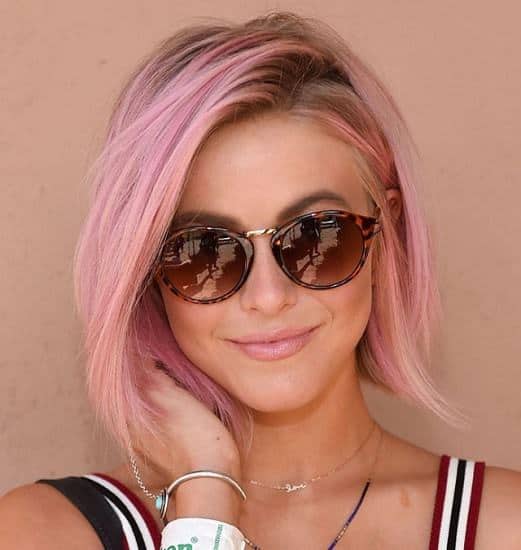
Photo via Hairstyle Camp
A pastel pink bob pairs a soft, delicate shade with a clean, structured cut, and the combination is effortlessly chic. The shorter length means less hair to lighten and maintain, and the blunt or gently layered ends give the pale colour a crisp frame that keeps it from looking washed out. It suits most face shapes, and the pink softens the sharpness of the cut in a way that feels modern rather than severe.
The bob length also makes pastel pink more practical: colour refreshes are quicker, less dye is needed, and regular trims keep the ends healthy and the colour even. Styling is simple, with a straight finish showing the colour at its cleanest and a slight wave adding softness. It is a polished, wearable take on pink that works as well in the office as it does at the weekend.
19. Long Wavy Pink Hair
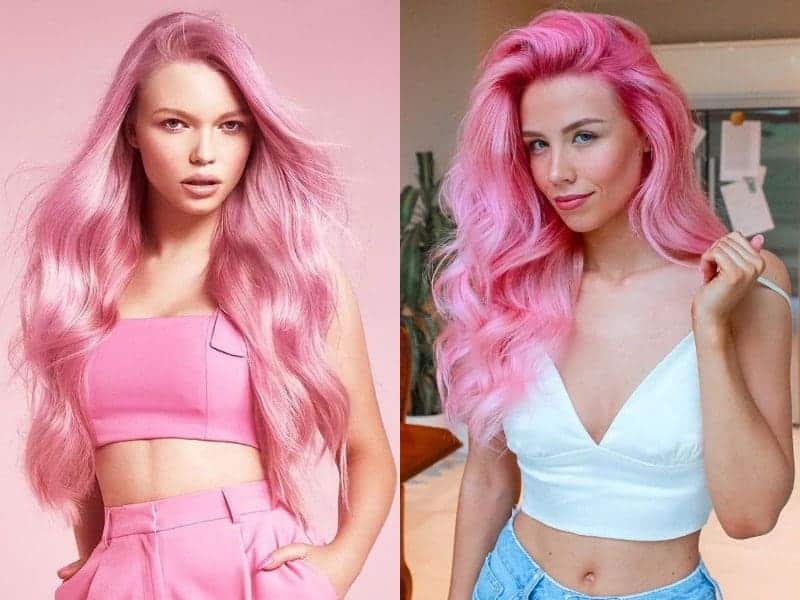
Photo via Hairstyle Camp
Long, wavy pink hair is the classic fantasy look, whether the shade is a soft pastel or a brighter bubblegum. The waves give the colour room to show its full range, with lighter tones at the crests and deeper pink in the shadows, and the length makes the colour the undeniable centrepiece of the whole look. A side part adds volume at the crown and lets the waves fall over one shoulder for maximum impact.
Long pink hair needs more upkeep than shorter cuts, simply because there is more hair to colour and the ends are older and more porous, so they grab and lose pigment unevenly. A colour-depositing mask applied mainly to the ends keeps the tone even, and a silk pillowcase and gentle detangling protect the lightened lengths. The effort is worth it: few looks photograph as beautifully as long pink waves in natural light.
20. Pink Pixie Cut
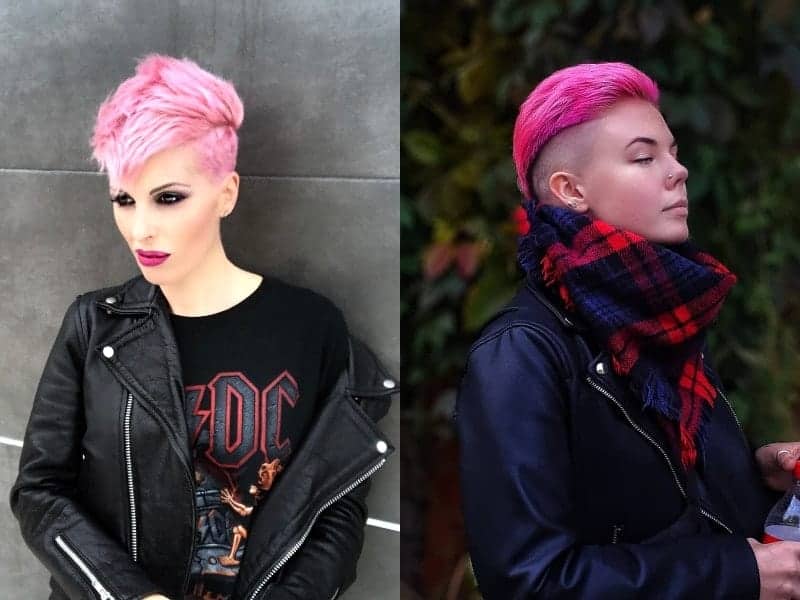
Photo via Hairstyle Camp
A pink pixie cut is bold, edgy and surprisingly versatile. The short length means the colour can be as vivid or as soft as the wearer likes without a huge maintenance burden, and textured bangs combed forward or swept back give the cut two very different personalities. A faded or pastel pink on a pixie reads as artistic and modern, while a hot pink pixie is pure statement.
Short hair makes pink more affordable and lower-maintenance: less dye, faster appointments, and the colour grows out quickly enough to change shades often. The trade-off is that roots show faster on short hair, so touch-ups come more frequently, though each one is quick. Styling takes minutes, with a little texturising product giving the cut its shape and showing off the colour.
21. Silver Hair with Pink Streaks
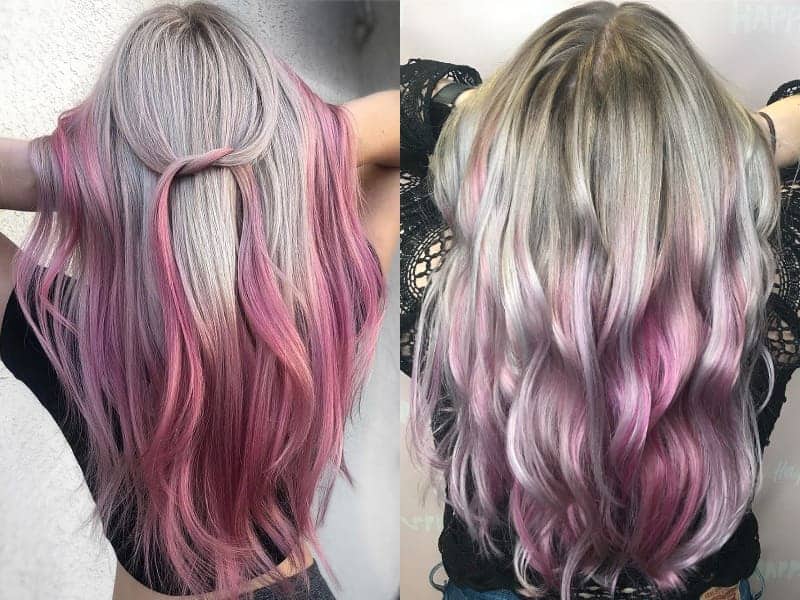
Photo via Hairstyle Camp
Silver hair with pink streaks pairs a cool, metallic grey base with soft dusty rose or pink balayage pieces, creating a look that is both futuristic and romantic. The silver keeps the pink feeling grown-up and editorial, while the pink stops the silver from looking flat or cold. It works on any length, though longer hair gives the two tones more room to weave together.
This is a high-maintenance combination, since both silver and pink fade quickly and the silver base needs regular toning to stay icy rather than yellow. The reward is a colour that looks genuinely unique and catches light beautifully. It suits cool skin tones best, and a gloss treatment between appointments keeps both tones luminous.
22. Fuchsia Pink Hair
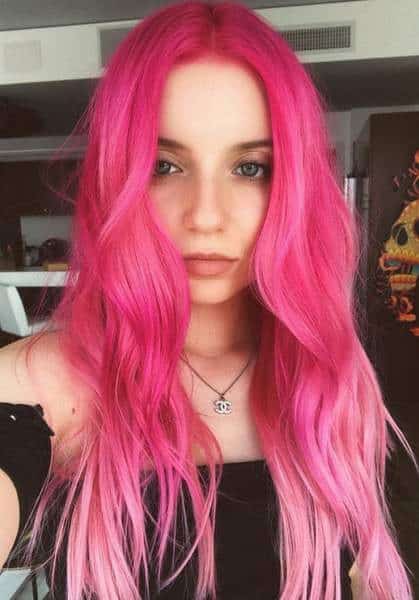
Photo via Hairstyle Camp
Fuchsia is a vivid, slightly purple-leaning pink that sits between magenta and hot pink in intensity. It is bold without being neon, and it has a richness that makes it flattering on a wide range of skin tones, particularly medium and deep complexions where the cool purple undertone creates a beautiful contrast. Long waves with lighter pink ends show off the shade’s full depth, with the colour shifting from deep fuchsia at the roots to a softer pink at the tips.
Fuchsia holds its pigment well compared with pastel shades, and the faded version is usually a pretty medium pink rather than a dull wash. It needs a lightened base for full vibrancy, though it shows up on mid-blonde hair better than most vivid pinks. Colour-safe washing and a weekly colour-depositing treatment keep the purple tones from fading first, which is what keeps fuchsia looking rich rather than flat.
23. Champagne Pink Hair
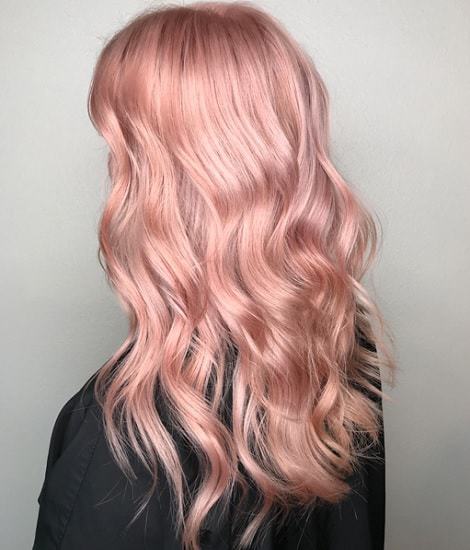
Photo via Hairstyle Camp
Champagne pink mixes gold and pink pigments into a shade that sits halfway between pink and blonde, light, luminous and quietly luxurious. It is one of the most discreet pinks, reading as a warm blonde with a rosy glow in some lights and a definite pink in others. That subtlety makes it ideal for anyone who wants pink hair without a dramatic change, and it flatters fair and light-medium skin tones beautifully.
The shade needs a light blonde base and a careful hand with the toner, since too much gold turns it blonde and too much pink turns it pastel. It fades into a warm blonde that still looks polished, so the grow-out is gentle. A gloss treatment every few weeks keeps the rosy reflect alive, and the colour looks best with a healthy shine, so regular conditioning matters more here than with deeper shades.
24. Blonde-to-Pink Ombre
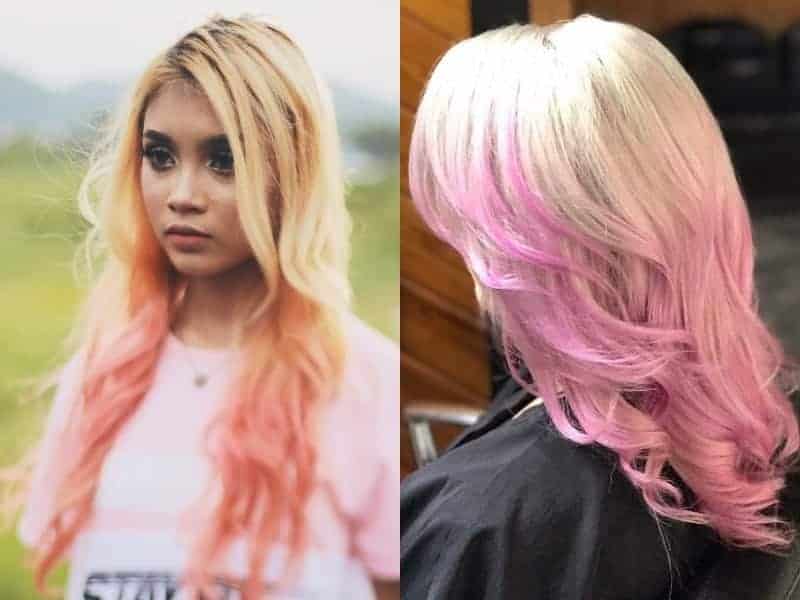
Photo via Hairstyle Camp
Blonde-to-pink ombre starts with a blonde base at the roots and melts into pink at the ends, creating a soft, romantic gradient. A warm salmon pink works beautifully on a golden blonde base, while a cool baby pink pairs best with platinum. The transition can be gradual and dreamy or more defined, depending on how bold the wearer wants the pink to read.
This is a practical choice for blondes, since the base needs little or no extra lightening and only the ends take the pink. Refreshing the colour means re-toning the ends, which is quick and inexpensive compared with a full-head colour. The ombre grows out gracefully, and the pink can be changed to a different shade at each refresh without touching the blonde top section.
25. Pink Hair with Dark Roots
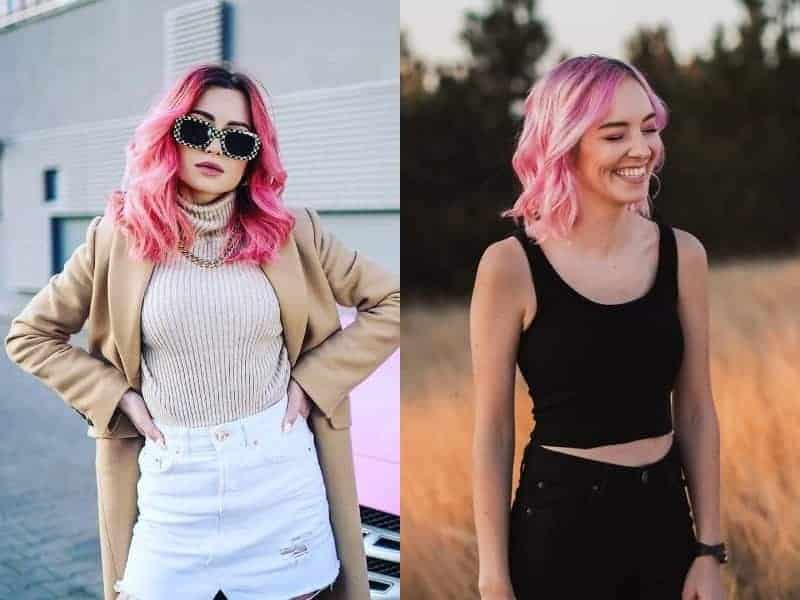
Photo via Hairstyle Camp
Pink hair with dark roots keeps the natural colour at the crown and lets the pink take over from the mid-lengths down, creating a deliberate, lived-in contrast. The dark root adds depth and makes the pink look richer by comparison, and it is the most forgiving pink placement for grow-out, since regrowth simply extends the root section. A bubble pink or pastel shade against dark roots is a classic combination that never looks unfinished.
This placement suits shoulder-length and longer hair best, where there is enough length for the contrast to read clearly. Waves help the transition look soft rather than stark, and the root area can be left completely untouched, which keeps the hair healthier and the salon visits further apart. It is the ideal pink for anyone who loves the colour but not the constant root maintenance.
26. Deep Magenta Hair
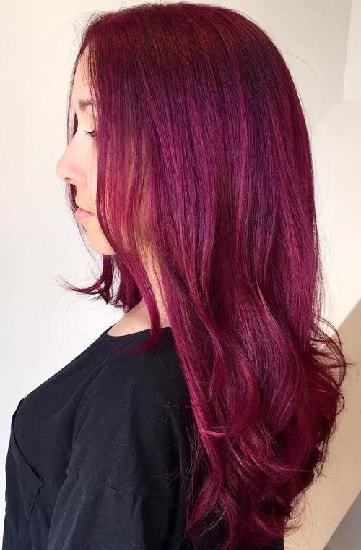
Photo via Hairstyle Camp
Deep magenta mixes blue, purple and red into a dark, vibrant pink with real intensity. It is moodier than bright magenta, with a richness that looks almost jewel-toned in low light and vividly pink in sunlight. The depth makes it especially flattering on deeper skin tones, where the contrast is striking without being harsh, and it gives straight hair a glossy, lacquered finish.
The darker pigment means deep magenta lasts longer than lighter pinks, often holding its richness for five to six weeks with colour-safe care. It also shows up on darker bases than most vivid pinks, needing less pre-lightening. The colour fades toward a softer berry pink over time, which is a lovely second phase, and a colour-depositing conditioner in a magenta shade keeps the depth topped up between appointments.
27. Pink Curly Hair
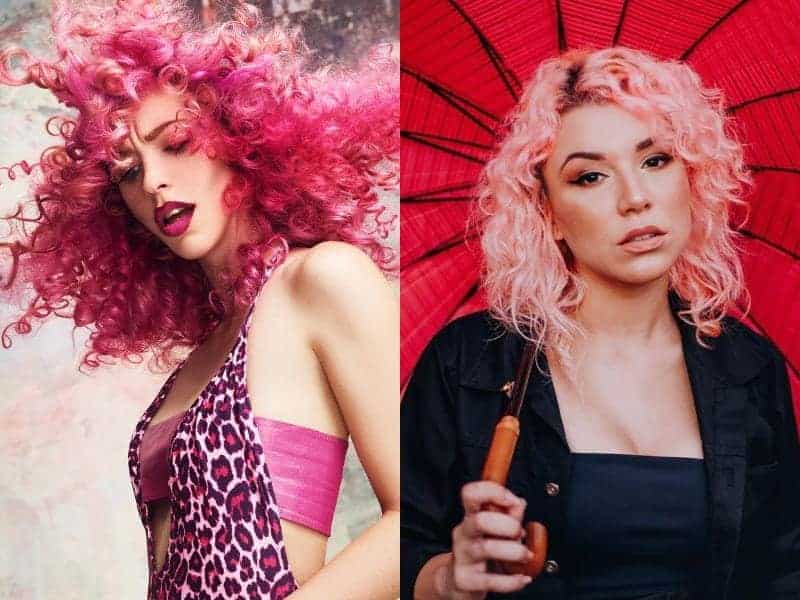
Photo via Hairstyle Camp
Pink curly hair is a showstopper, because each curl catches the light differently and shows a slightly different depth of pink. Whether the shade is an electrifying fuchsia or a soft baby pink balayage, the curl pattern gives the colour dimension that straight hair cannot match. Shoulder-length curls are a great canvas, with enough length for the ringlets to form fully and the colour to wrap around each one.
Curly hair needs extra care when it is colour-treated, since the lightening process can loosen the curl pattern and dry out the hair. Deep conditioning and a good curl cream are essential, and a colourist experienced with curly hair will lighten gently to protect the curl shape. The payoff is a head of pink curls that looks different from every angle and needs very little styling to make an impression.
28. Rose Pink Lob
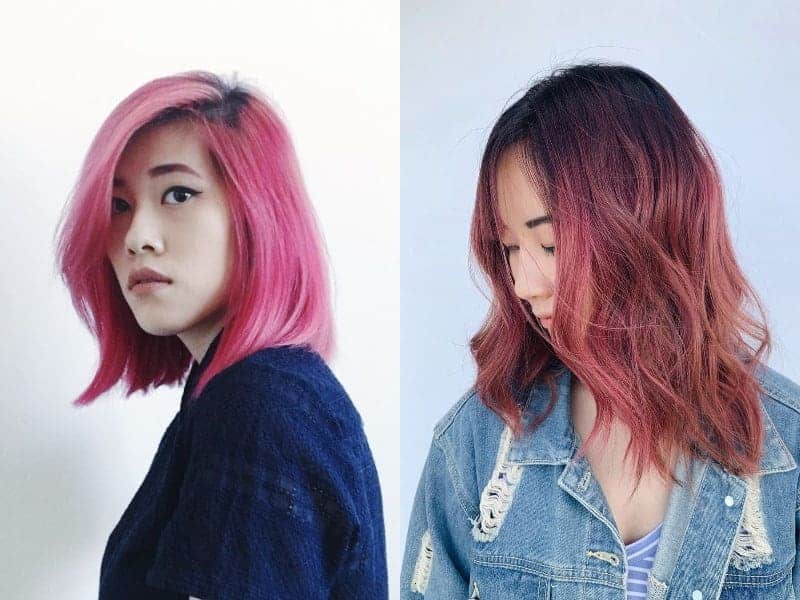
Photo via Hairstyle Camp
The rose pink lob, a long bob that grazes the collarbone, is one of the most wearable ways to go pink. A bright rosy pink on an angled lob creates a noticeable contrast against warm skin, while a muted dusty rose version gives the same cut a softer, more understated feel. The length is long enough to tie back but short enough to keep the colour maintenance manageable.
The lob works with both cool rosy pinks and warmer rose-brown shades, so it is easy to tailor the tone to the wearer’s undertones. A centre part gives the cut a sleek, symmetrical frame, while a side part adds volume and movement. Regular trims keep the ends blunt and the colour looking fresh, and the length is forgiving as the pink fades, since the colour stays evenly distributed.
29. Pink High Bun Updo
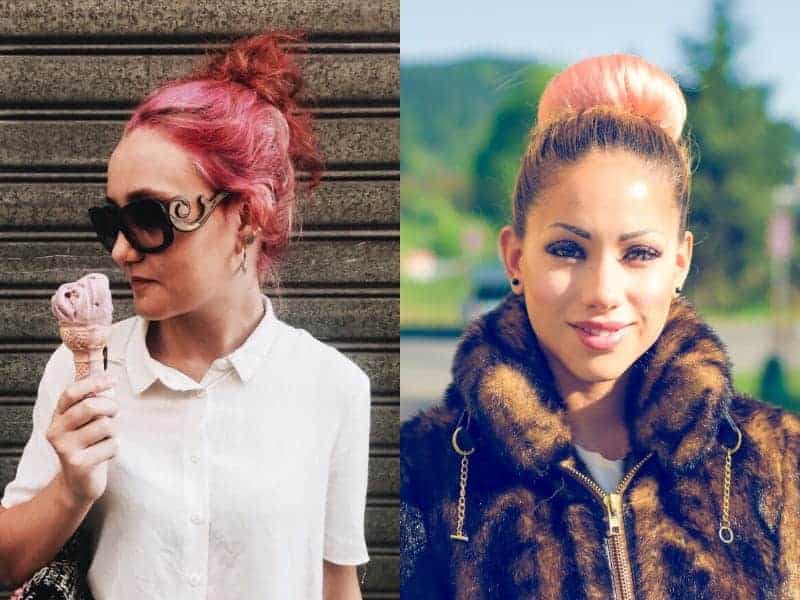
Photo via Hairstyle Camp
A pink high bun takes an everyday updo and turns it into a statement, whether it is a casual tousled top-knot or a polished donut bun. Gathering the hair up concentrates the colour in one place, making even a soft pink look bold, and leaving a few loose tendrils around the ears and nape softens the effect. If the roots are kept natural, the pink portion of the bun stands out in contrast to the rest of the hair.
The updo is also practical: it keeps coloured hair off the neck and shoulders on hot days, and it shows off the colour at events without needing a full styling session. It works on any pink shade, from pastel to neon, and pairs well with statement earrings or sunglasses that echo the hair colour. A little texture spray gives the bun grip and keeps it from looking too neat.
30. Watermelon Pink Hair
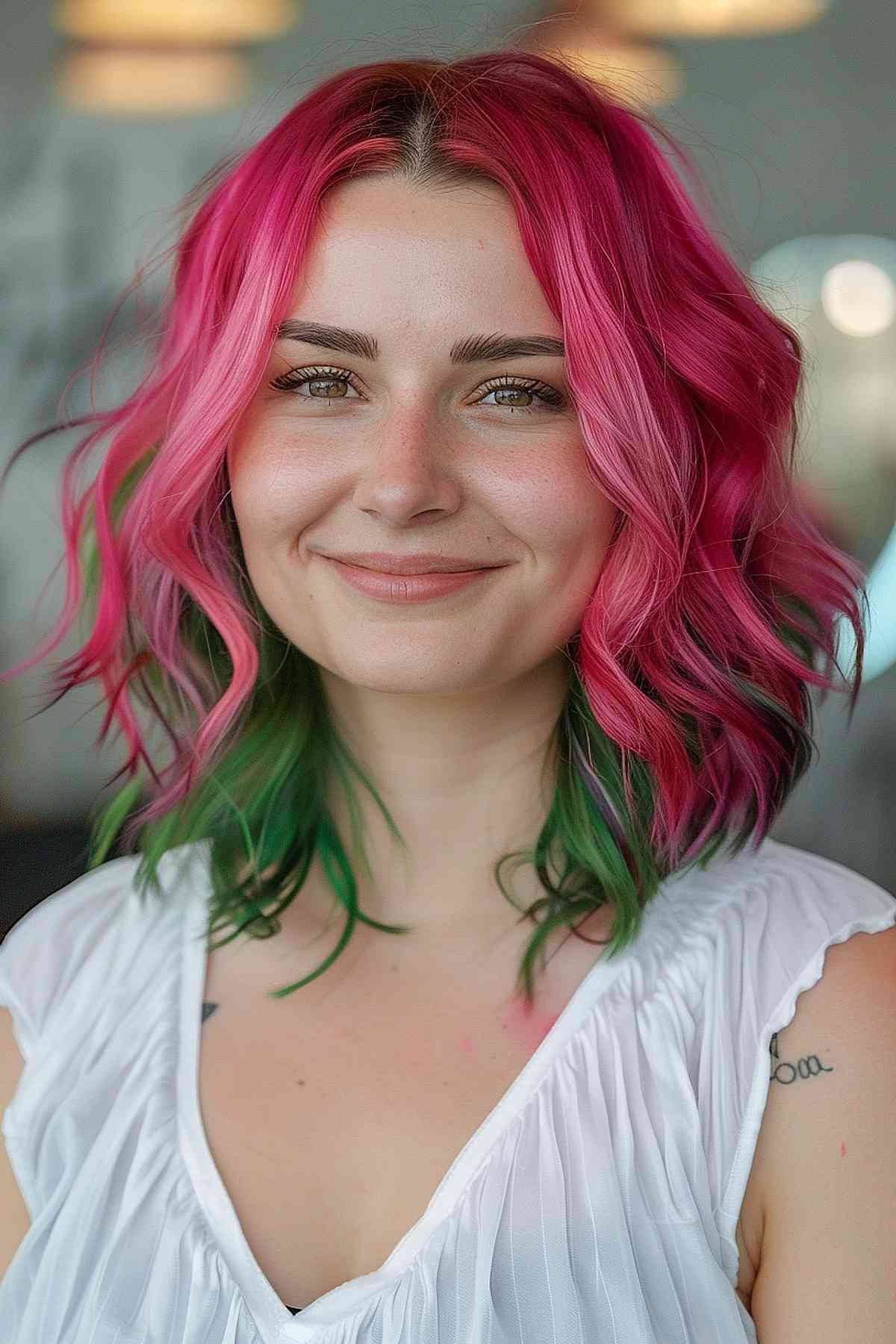
Photo via Latest Hairstyles
Watermelon pink hair pairs vivid pink with a touch of fresh green, mimicking a slice of watermelon. The most wearable version keeps the pink dominant, with deep pink roots flowing into bright pink lengths and just a hint of green at the very tips. On a wavy bob, the colour frame around the face is playful and bold, and the green tips are the detail that makes people look twice.
This is a high-commitment look: both pink and green need a pale blonde base to glow, and the two colours fade at different rates, so regular refresh sessions are part of the deal. The payoff is a colour combination that is genuinely unique and photographs beautifully in summer light. It suits anyone who treats their hair as a creative canvas and does not mind the upkeep that comes with it.
31. Pink Hair with Bangs
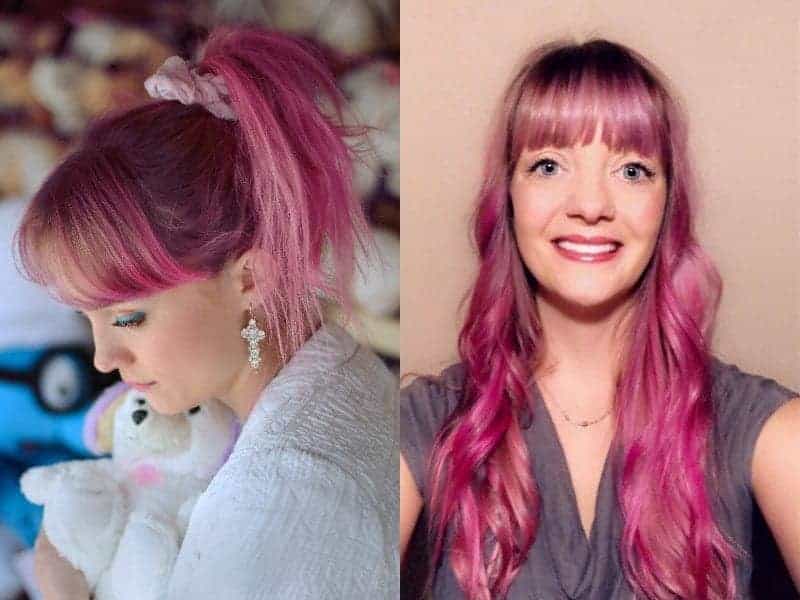
Photo via Hairstyle Camp
Pink hair with bangs has a sweet, doll-like quality that works whether the fringe is full and straight or parted in the middle to show a little forehead. The bangs put the pink right at the face, which makes the colour feel more present than the same shade on hair without a fringe, and the effect is playful rather than severe. A ponytail or half-up style shows off the pink at the ends while the bangs frame the face.
Bangs need trimming every few weeks to keep their shape, and the fringe area fades fastest because it gets the most washing and heat styling, so a colour-depositing conditioner on the bangs specifically is worth doing. The combination suits most face shapes, with a slightly longer, curtain-style bang being the most forgiving option for anyone trying a fringe for the first time.
32. Blorange Pink Hair
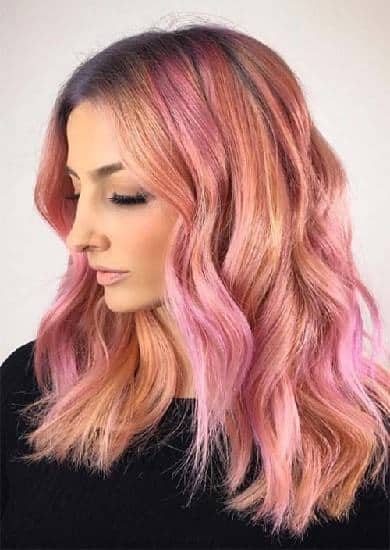
Photo via Hairstyle Camp
Blorange mixes pink, gold and red into a rosy-orange shade that sits between blonde and pink, warm, glowing and a little bit unexpected. It is a softer alternative to coral pink, with more blonde in the mix, and it suits warm skin tones beautifully, giving the complexion a sun-kissed glow. The colour looks best in loose waves, where the golden and pink tones blend and separate as the hair moves.
Like other warm pinks, blorange fades toward peach, which is a pretty second phase that many wearers prefer to the original shade. It needs a light blonde base to show its pink tones properly, and a colour-depositing conditioner in a pink-copper shade keeps the balance between the gold and the pink. It is a fun, summery colour that transitions well into autumn, when the warm tones feel right at home.
Final Thoughts
Pink hair rewards a little planning more than most colours. The shade that looks best is rarely the one on the inspiration photo alone; it is the one that suits the skin’s undertone, the hair’s starting level and the amount of upkeep the wearer is honestly willing to do. Pastels and neons fade fast and need frequent refreshing, while deeper magentas, dusty rose and balayage placements are far more forgiving between appointments. A good colourist can adjust any of these shades to the individual, and bringing reference photos to the consultation makes the conversation much easier.
Whatever shade makes the shortlist, the basics stay the same: wash less often and in cool water, use colour-safe products, protect the hair from heat, and top up the tone with a colour-depositing conditioner once a week. Pink is one of the most joyful hair colours to wear, and with thirty-two shades to choose from, there is a version of it for every mood, season and comfort level.