
How to Build a Healthy Lifestyle That Actually Feels Good

Most healthy lifestyle advice fails for the same reason: it reads like a list of punishments. Wake up earlier, eat less, exercise harder, give up everything enjoyable — and somehow keep it going forever. It is no wonder so many people start strong in January and quietly give up by February. A routine built on willpower alone has a short shelf life, because willpower is a limited resource and life keeps asking for it elsewhere.
The approach that actually lasts works the other way around. Instead of stripping things away, it adds small habits that feel good enough to keep: a calmer morning, meals that satisfy rather than restrict, movement that feels more like play than penance, food that looks after the gut, and evenings that give the mind a chance to switch off. These five habits are not dramatic on their own, but stacked together over weeks and months, they quietly reshape how a normal day feels.
1. Start the Day With a Slow, Intentional Morning

Photo via Re-Store
The first hour of the day sets the tone for everything after it, yet most mornings are spent in a rush — phone in hand, coffee on the run, already behind before the day has properly begun. A slower start does not require waking up at dawn or following a complicated routine. It can be as simple as a glass of warm water before the coffee, a few minutes of gentle stretching to loosen a body that has been still all night, and one quiet moment before the notifications start. Those small acts signal to the body that the day is beginning on purpose, not in panic.
Breakfast deserves the same unhurried attention. A meal built on fibre, protein and healthy fats — oats with berries and seeds, or wholegrain toast with avocado and an egg — releases energy slowly and keeps hunger away until lunch, while a sugary pastry does the opposite, spiking energy and crashing it before mid-morning. For anyone who finds coffee leaves them jittery, a matcha latte offers a steadier kind of alertness, thanks to the amino acid L-theanine, which softens the caffeine lift. The point is not a perfect morning ritual; it is a morning that feels like a beginning rather than an alarm.
2. Eat for Balance, Not Restriction
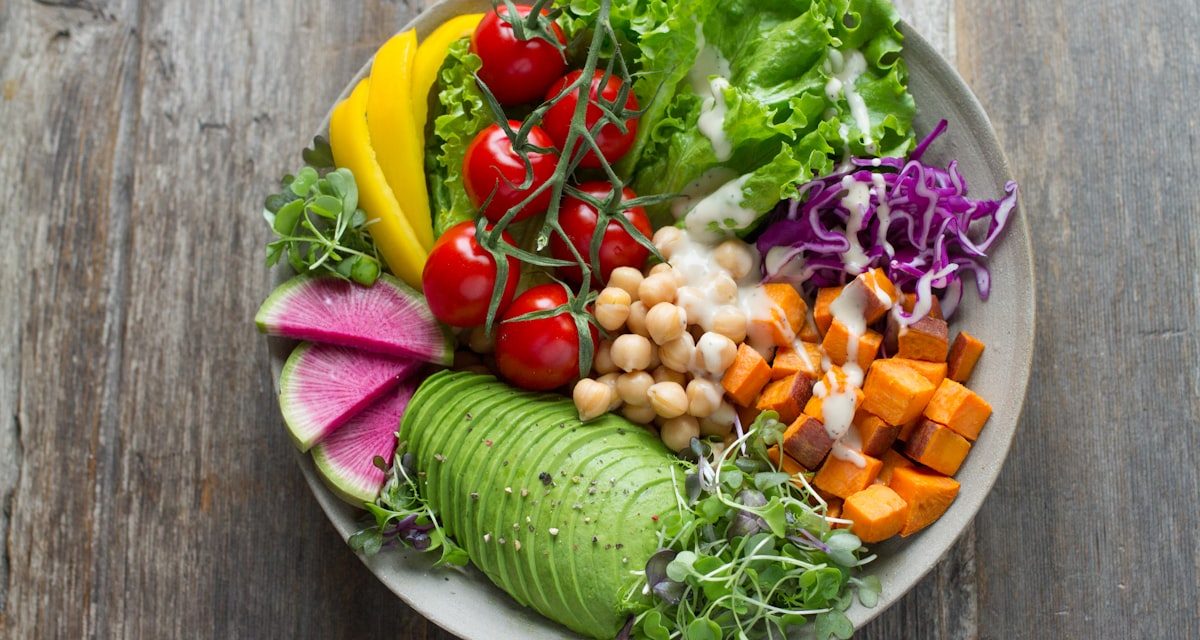
Photo via Fitness Lines
Strict diets fail because they treat food as the enemy, and nobody can stay at war with something they need three times a day. A far more sustainable approach is the 80/20 rule: aim for whole, nutrient-rich foods most of the time, and leave genuine room for the birthday cake, the pizza night, the glass of wine — enjoyed without guilt. Once indulgence stops being framed as failure, the exhausting cycle of restriction and bingeing loses its grip, and healthy eating becomes a default rather than a performance.
Building a balanced plate does not require counting anything. A simple visual guide works: roughly a third lean protein such as chicken, fish, tofu or lentils, a third fibre-rich carbohydrates like sweet potato, quinoa or vegetables, and a third healthy fats from avocado, nuts, seeds or olive oil. Choosing complex carbohydrates over refined ones matters too, since whole grains and legumes release energy slowly while white bread and sugar burn fast and leave the body asking for more. Slowing down at the table helps just as much — it takes around twenty minutes for fullness signals to reach the brain, so eating slowly is often the difference between satisfied and stuffed.
3. Move Because It Feels Good, Not as Punishment

Photo via Pacer
Exercise only becomes a habit when it stops feeling like a sentence. Anyone who hates running will never become a runner through discipline alone — but the same person might happily dance in the kitchen, hike on weekends, swim laps, or join a casual sports league. The best form of movement is the one that gets done without a battle, and rediscovering what felt fun as a child is a surprisingly reliable guide. When movement is reframed as play, it becomes something to look forward to rather than something to dread and postpone.
Small doses of movement scattered through the day count just as much as a formal workout. A ten-minute walk after dinner aids digestion, steadies blood sugar and marks a clean break between the working day and the evening. For desk-bound days, short movement breaks — two or three minutes of stretching or walking every hour — prevent the stiffness and mental fog that come from sitting too long. None of this needs special clothes or equipment. The goal is a body that moves often and easily, not one that is punished into shape once a week.
You may also like: 20 Cute Summer Nail Ideas
4. Look After Your Gut, the Quiet Engine of It All

Photo via Inspired Taste
Health advice tends to focus on what is visible — weight, skin, energy — while the gut quietly influences all three. The gut-brain connection is real and well studied: the trillions of microbes in the digestive system help regulate digestion, immune function and even mood, which is why a stressed gut and a stressed mind so often arrive together. Looking after that inner ecosystem does not require expensive supplements. It starts with food, and fermented foods are the simplest place to begin.
A spoonful of kimchi or sauerkraut, a serving of kefir or live yogurt, a glass of kombucha — these foods introduce beneficial bacteria that support a more diverse microbiome. The key detail is choosing raw, unpasteurized versions, since heat-treated jars have had their live cultures killed off; the refrigerated section is usually where the real thing lives. Start small, a tablespoon a day, and build up gradually, since a sudden influx of fermented food can cause temporary bloating while the gut adjusts. Over time, this small daily habit supports steadier digestion and a calmer, more resilient mood.
5. Protect Your Attention and Your Evenings

Photo via Zen Tech Focus
A healthy lifestyle is not only about the body; it is about what the mind is fed all day. Constant notifications, news alerts and endless scrolling keep the brain in a state of low-grade alert that drains focus and fuels comparison. The result is a mind that never fully rests, even in the hours meant for rest. Intentionally unplugging is no longer a luxury for the wellness-obsessed — it is basic maintenance for anyone whose attention feels frayed by the end of the day.
The simplest version of a digital detox is a rule with a clear edge: no phones after nine in the evening, or one screen-free hour before bed, filled instead with a book, a journal, music, or a real conversation. Even a single phone-free day each month can reset the habit of reaching for the screen at every idle moment. What returns in that space is often surprising — better sleep, sharper focus the next morning, and a sense of calm that no app has ever delivered. Protecting the evening is what makes the morning routine possible, and the whole system holds together because of it.
Final Thoughts
Building a healthy lifestyle is not a transformation project with a deadline. It is a set of small, repeatable choices — a glass of warm water, a balanced plate, a walk after dinner, a spoonful of sauerkraut, an evening without a screen — that compound quietly over time. None of them requires perfection, a big budget, or a personality change. They only require starting, and starting small is the whole point.
The best place to begin is with whichever habit on this list feels easiest, not hardest. Master one until it feels effortless, then add the next. A healthy lifestyle built this way does not feel like a diet or a regime; it feels like a life that is simply easier to live in. That is the version worth keeping.