
How to Fix Dry Damaged Hair for Good This Time

Dry hair has a way of making every promise feel empty. A new conditioner works for a wash or two, then the straw texture creeps back. A mask leaves the ends soft in the shower and brittle again by lunchtime. The frizz halo returns no matter what the forecast says, and the sound of strands snapping during a gentle brush-through is enough to make anyone give up on the whole routine. The frustration is real, and it usually has less to do with the products than with the fact that the underlying problem was never actually identified.
Fixing dry, damaged hair for good is not about finding one miracle product. It is about building a small system: understanding what kind of dryness the hair has, washing it in a way that stops stripping it, giving it one serious treatment a week, changing the daily habits that quietly undo the progress, and supporting it from the inside. None of these steps is dramatic on its own. Together, they are what turns a cycle of quick fixes into hair that stays soft between washes.
1. Find Out Why Your Hair Is Dry Before You Treat It
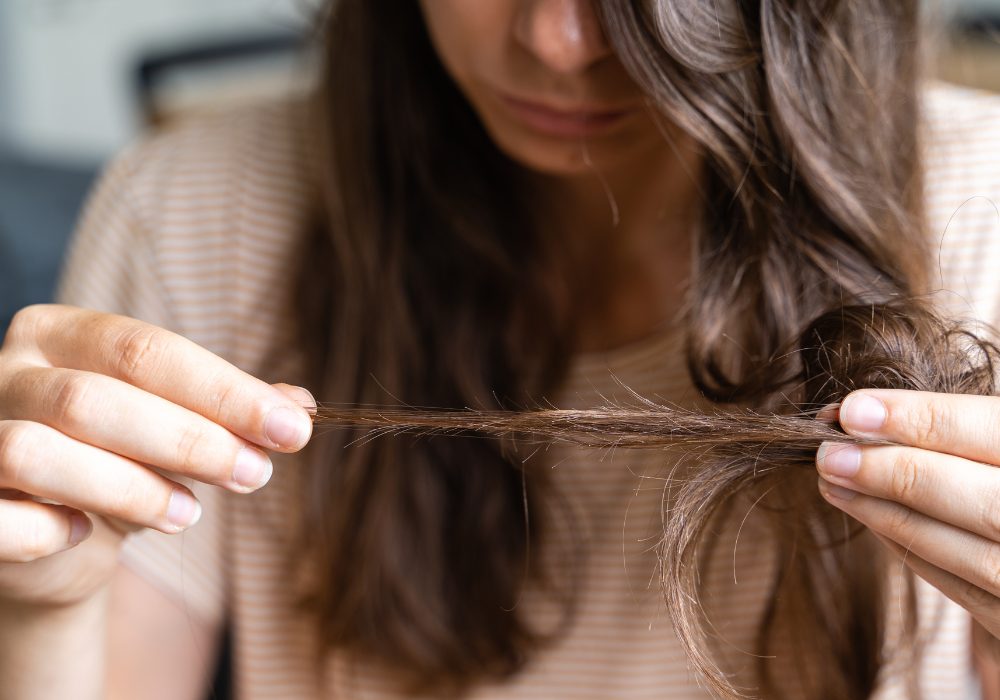
Photo via Actu Santé Fenua
Two heads of dry hair can need opposite treatments, which is why guessing at products so often fails. The most useful thing to learn first is porosity — how readily the hair absorbs and holds moisture. Hair with a tightly closed cuticle resists water and products, so heavy butters sit on the surface and leave it greasy; hair with a raised or chipped cuticle drinks moisture in fast and loses it just as fast, so it needs richer sealing products to hold anything in. A simple strand test tells the story: drop a clean, product-free strand into a glass of water and watch. Floating means low porosity, sinking fast means high porosity, and hovering in the middle means a fairly balanced cuticle.
The second part of the diagnosis is an honest look at daily habits, because most dryness is made, not born. Harsh, heavily foaming shampoos strip the scalp’s natural oils along with the dirt, leaving the scalp dry and sometimes over-producing oil to compensate. Daily heat styling does quieter damage: the sizzle of a flat iron is water boiling out of the strand, and each pass leaves tiny cracks in the cuticle that make the next round of moisture even harder to hold. Knowing which of these is doing the damage changes everything about what comes next, and it costs nothing to find out.
2. Rebuild Your Wash Routine Around Gentleness
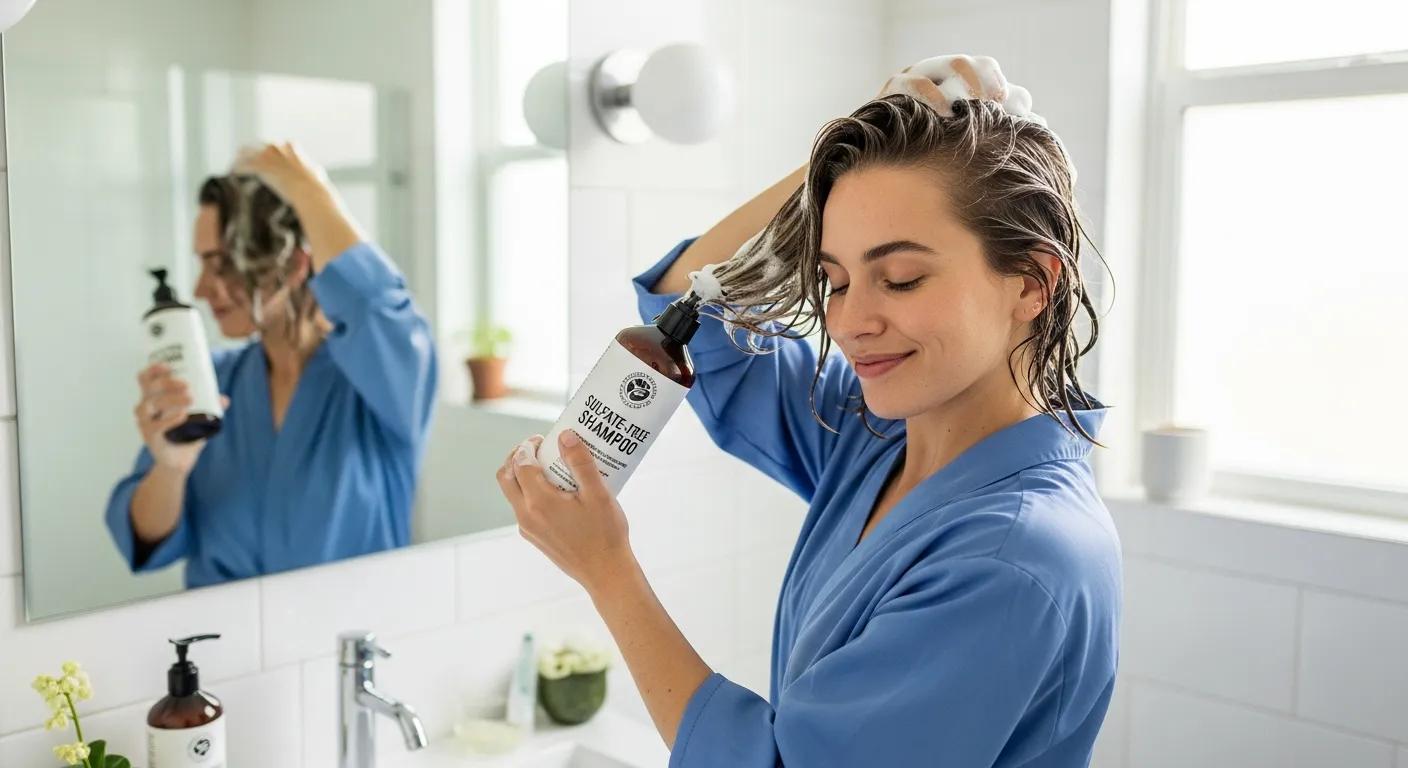
Photo via Hair Traders
The wash is where most damage either starts or stops, and the biggest single change is moving to a gentle, sulfate-free shampoo. Sulfates are the detergents behind the big, satisfying lather, but that squeaky-clean feeling is the sound of the scalp’s protective oils being stripped away. A sulfate-free formula cleans without that harshness, and the adjustment period — a week or two of hair that feels different rather than worse — is worth pushing through. Washing less often helps too; every wash is a small stripping event, and most dry hair does better on two or three washes a week with the scalp massaged properly on wash day rather than a daily rinse.
Water temperature and conditioner placement matter more than most people expect. Hot water lifts the cuticle and lets moisture escape, so lukewarm water for washing and a cool final rinse keeps the cuticle flatter and the hair shinier. Conditioner belongs on the mid-lengths and ends, where the hair is oldest and driest, not on the roots where it weighs things down and dulls the scalp. Left on for two or three minutes instead of rinsed straight away, even an ordinary conditioner has time to do real work — and that small pause costs nothing at all.
3. Make One Weekly Deep Treatment Non-Negotiable

Photo via Glowette
Daily conditioner maintains hair; a weekly deep treatment actually repairs it. The difference is time and concentration. A mask or an oil treatment left on for thirty to sixty minutes — ideally under a warm towel or a shower cap that traps body heat — penetrates far deeper than anything rinsed off after two minutes. Warmth matters especially for low-porosity hair, whose tightly closed cuticle needs gentle heat to open up and let the treatment in, while high-porosity hair benefits from the extra time for richer ingredients to fill in the gaps in its cuticle.
The best treatment depends on what the hair actually needs. Very dry, brittle hair responds to rich oils and butters — argan for softness, castor for strength, or a deep mask built around fatty acids that restore flexibility to the strand. Hair that snaps easily as well as feeling dry usually needs protein alongside the moisture, since protein rebuilds the strand’s structure while oils seal it. Whatever the choice, consistency beats intensity: one unhurried treatment every week, done properly, does more than a frantic round of three masks in a weekend followed by a month of nothing.
You may also like: 20 Warm Autumn Outfits to Stay Cozy, Warm and Effortlessly Chic
4. Change the Small Daily Habits That Undo Your Progress

Photo via Curls For You
Treatments are powerful, but the small things done every day decide whether the results last. The most damaging of these is often the towel: rough terrycloth is designed for abrasion, and rubbing wet hair with it roughs up the cuticle, creates frizz and snaps fragile strands. Squeezing the water out gently with an old cotton t-shirt or a microfiber towel instead preserves the hair’s natural pattern and dramatically cuts frizz, and it takes no more time than the old way. A short cold rinse at the end of a wash does similar quiet work, flattening the cuticle so it reflects light and holds the conditioner’s moisture in.
Overnight care is the other half of the equation, since a third of life is spent asleep. A cotton pillowcase absorbs moisture from the hair all night and creates friction that tangles and breaks strands; a silk or satin pillowcase lets the hair glide instead, protecting it and helping it keep its natural oils. Heat styling deserves the same honest look — turning the flat iron down, using a heat protectant every single time, and giving the hair a few heat-free days a week will do more for long-term softness than any product applied afterwards. These are unglamorous changes, but they are the ones that stop the damage from coming back.
5. Feed Your Hair From the Inside Out

Photo via Ezilon
No product can fully fix a problem that starts internally. Hair is a non-essential tissue, which means that when the body runs low on nutrients, the follicles are among the first places supply gets cut. Hydration comes first — every process in the body, including hair growth, needs water, and chronic dehydration shows up as a dry, flaky scalp and brittle strands long before it shows up anywhere else. Before buying another product, a steady habit of drinking enough water through the day is the cheapest hair treatment there is.
Food does the rest of the quiet work. Omega-3 fatty acids, found in salmon, walnuts, chia seeds and flaxseeds, nourish the oil glands in the follicles and give hair natural lustre and elasticity. Iron and zinc are the building blocks: iron carries the oxygen that powers growth and repair, and a deficiency is one of the most common causes of shedding and brittleness — spinach, lentils and lean red meat are the everyday sources, with pumpkin seeds covering zinc. Biotin supports keratin, the protein hair is made of, and vitamin C helps the body absorb iron while building the collagen that strengthens the strand. None of this works overnight, but over weeks it changes what the hair is made of, not just what it is coated in.
Final Thoughts
Dry, damaged hair is rarely one problem with one fix. It is usually a combination of a cuticle that has been stripped and cracked, a wash routine that takes more than it gives, treatments that never get enough time to work, daily habits that undo the progress, and a body that is not getting what it needs to grow strong hair in the first place. That is why the quick fixes keep failing — they only ever address one layer of it.
The system in this guide works because it addresses all five layers at once, and because none of the steps depends on an expensive purchase. Start with the porosity test and a gentler wash this week, add the weekly treatment next week, and let the small habits and the food do their slow work in the background. Hair that has been dry for years will not transform in a weekend — but a few weeks of consistency is usually enough to feel the difference, and that difference is what makes the routine stick for good this time.