
How to Get Thicker Hair Naturally, From the Inside Out

Thinning hair has a way of showing up quietly. The ponytail feels a little lighter than it used to, the part looks a little wider in bright light, and the brush seems to collect more than it should. It is easy to reach for a volumising spray or a thickening shampoo first, but those only dress up the strands that are already there. Real thickness is built further back, at the follicle, and it depends on what the body is fed, how the scalp is treated, and how gently the hair itself is handled day after day.
The encouraging part is that none of this requires expensive treatments or a complicated routine. Six habits cover most of the ground: enough protein and the right minerals at the table, a few minutes of scalp care, a couple of time-tested natural treatments, gentler washing and heat habits, and less tension on the hair, day and night. None of them works overnight, but together they give every follicle a better chance to grow the thickest strand it can.
1. Make Protein the Priority at Every Meal

Photo via ActiveMan
Hair is almost entirely keratin, a protein the body has to build from the amino acids in food, so a diet short on protein shows up in the hair before almost anywhere else. When protein runs low, the body rations it to the organs that need it most, and hair growth is one of the first things to slow down. The result is not always dramatic shedding — more often it is strands that feel finer, snap more easily, and seem to stop growing at a certain length.
Fixing this is less about one big protein-heavy meal and more about steady supply across the day. Eggs or Greek yogurt at breakfast, lentils or chickpeas at lunch, and fish, chicken or tofu at dinner keep amino acids available whenever follicles need them. Plant-based eaters can get there too, but it takes a little more planning, since most plant proteins need to be combined across the day to cover the full range of amino acids. The change is gradual — new growth coming in stronger over months — but it is the foundation everything else rests on.
2. Cover the Minerals and Healthy Fats Your Follicles Need

Photo via Elithair
Protein builds the strand, but iron, zinc and omega-3 fats decide whether the follicle can do its job at all. Iron carries oxygen to the scalp, and low iron is one of the most common and most overlooked reasons for diffuse thinning, especially in women. Zinc supports the rapid cell division that hair growth depends on, and a shortfall can leave the growth cycle stalling. Anyone who feels tired alongside the thinning is worth a blood test before reaching for supplements, since guessing at doses can cause its own problems.
Food covers most of it without much effort. Spinach, lentils and red meat supply iron — and pairing them with vitamin C, like lemon squeezed over the lentils or peppers in the salad, noticeably improves how much iron the body absorbs. Pumpkin seeds and chickpeas are easy sources of zinc, while salmon, flaxseed and chia bring the omega-3 fats that keep the scalp calm and hydrated rather than dry and irritated. A scalp that is comfortable and well nourished is simply a better place for hair to grow.
3. Give Your Scalp a Five-Minute Massage
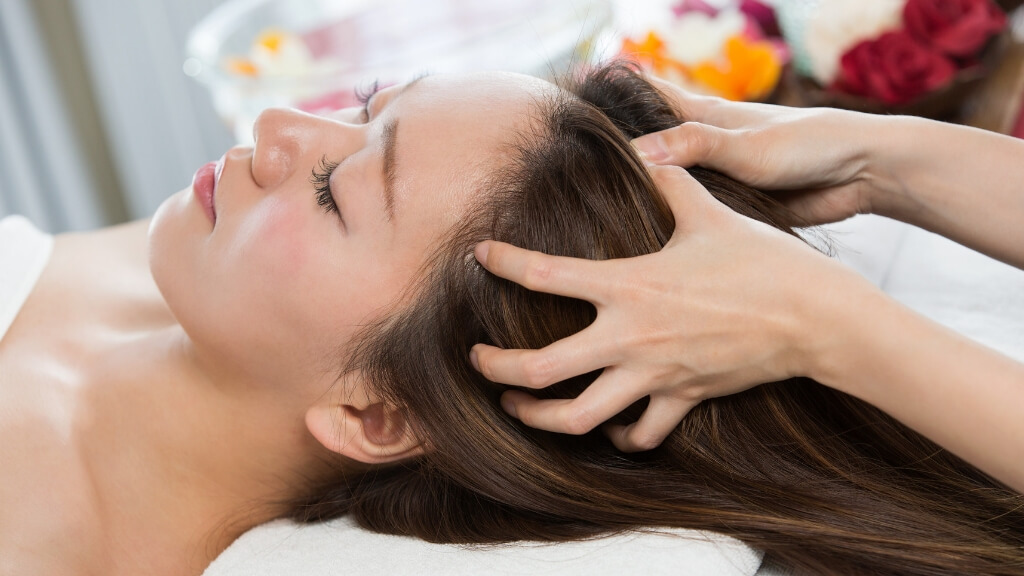
Photo via Fashionterest
A scalp massage sounds too simple to matter, but the logic is straightforward: pressing the fingertips into the scalp in slow circles increases blood flow to the follicles, and better blood flow means more of those nutrients from the last two sections actually reaching the roots. Small studies have found that regular massage can measurably increase hair thickness over several months, and it also loosens the tight, tense scalp that so many people carry without noticing.
Five minutes before a wash is enough. Fingertips, not nails, with firm but comfortable pressure, working from the hairline back over the crown and down to the nape, pausing wherever the scalp feels tight. It pairs naturally with an oil treatment, since the massage spreads the oil and the oil gives the fingers glide, but it works just as well on a dry scalp. The real challenge is consistency — a daily five minutes beats an occasional twenty, and it is one of the few hair habits that also happens to be genuinely relaxing.
You may also like: 20 Chic Mom Jeans Outfits That Will Turn Heads: From Casual Days to Dressed-Up Nights
4. Try Nature’s Scalp Treatments: Rosemary, Onion and Rice Water
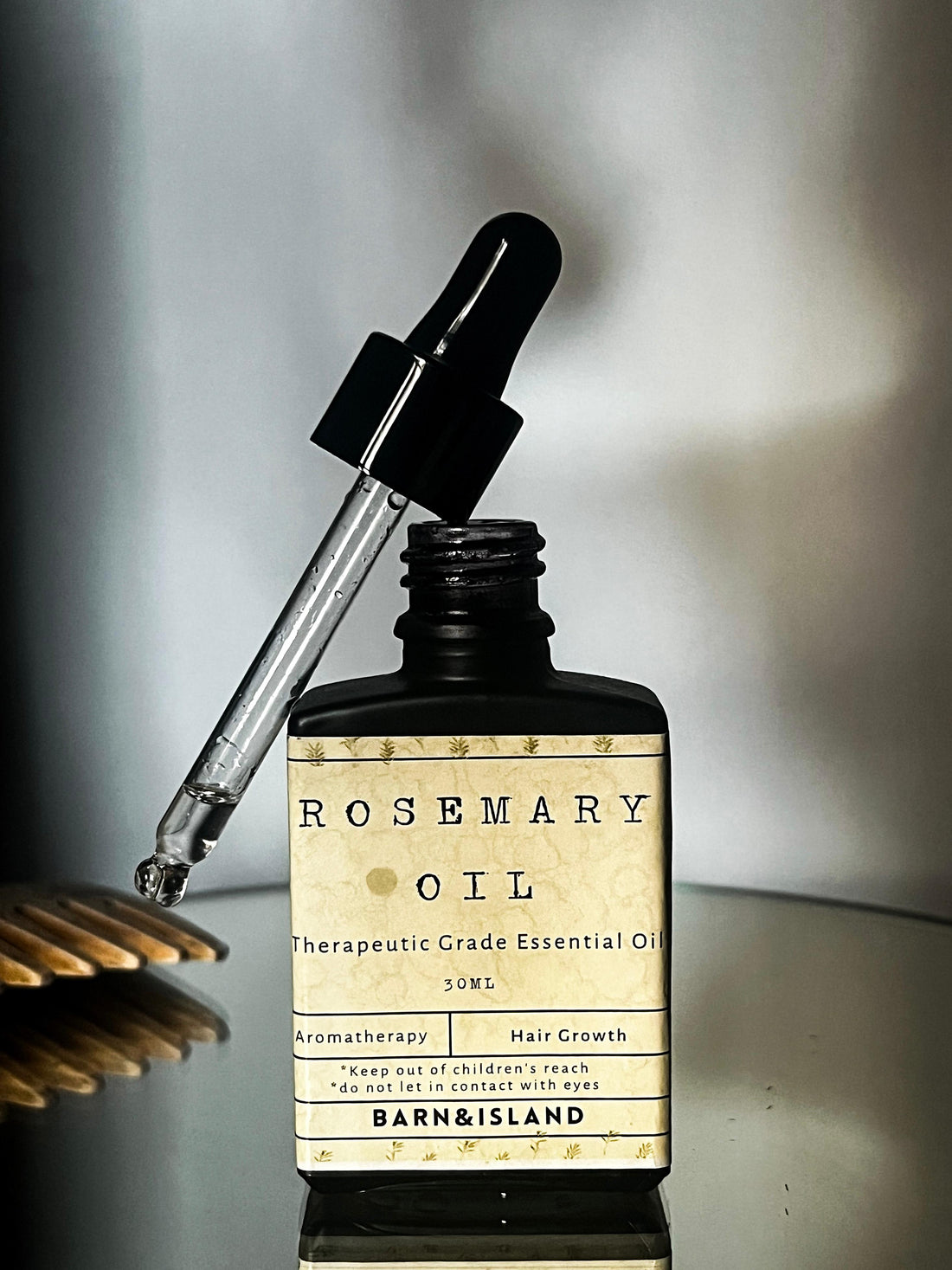
Photo via Barn and Island
Of all the kitchen-cupboard remedies for hair, rosemary oil has the strongest evidence behind it. A well-known study found it performed comparably to minoxidil for stimulating growth over six months, with less scalp irritation. A few drops mixed into a carrier oil like jojoba or coconut, massaged in and left for at least half an hour before washing, is the usual method — and a patch test first is wise, since essential oils can irritate sensitive skin.
Two older remedies are worth knowing about as well. Onion juice is rich in sulfur, a building block of keratin, and dabbing the strained juice onto the scalp once a week has a long folk history, though the smell is a real commitment and thorough shampooing afterwards is non-negotiable. Rice water, the cloudy liquid left after soaking rice, has been used for centuries across Asia as a strengthening final rinse; its starches and minerals coat the shaft and leave hair feeling smoother and more resilient. None of these is a miracle, but as weekly rituals alongside good nutrition they add up.
5. Wash Gently and Make Peace With Heat

Photo via Pravda
Thick hair is not only about growing more of it — it is also about keeping the hair that is already there from breaking off before it reaches its full length. Harsh, stripping shampoos and very hot water both work against that, lifting the scalp’s protective oils and leaving the cuticle rough and snag-prone. A gentle, sulfate-free shampoo, lukewarm water, and shampooing mainly at the roots rather than scrubbing the lengths will keep far more length intact over a year than any single product swap.
Heat is the other quiet thief of thickness. Flat irons and high-heat blow-drying damage the very protein the hair is made of, and the damage accumulates invisibly until ends start splitting and snapping. Air-drying more often is the simplest fix, and when heat is unavoidable, a protectant spray and the lowest effective temperature make a real difference. It helps to think of it as a budget: every heat session spends a little of the hair’s strength, so the fewer withdrawals, the thicker the hair stays.
6. Loosen Up and Protect Your Hair While You Sleep

Photo via Yorkshire Pudd
Constant tension is one of the few causes of thinning that is entirely within reach to fix. Tight ponytails, slicked-back buns and heavy extensions pull on the follicle day after day, and over time that pulling can damage the follicle itself — a condition called traction alopecia that often starts at the hairline and temples. Looser styles, rotating where the hair is gathered, and giving the hair whole days down and free of ties all take pressure off the roots.
Night is the other half of the equation, since roughly a third of life is spent asleep with hair pressed against a pillow. Cotton pillowcases create friction that roughs up the cuticle and tangles fine hair, while silk or satin lets strands slide instead of catching. A loose braid before bed keeps the hair contained without tension and wakes up with far fewer tangles to brush through. Between looser days and gentler nights, the hair simply gets more chances to survive to full length — and length that survives is what reads as thickness.
Final Thoughts
Thicker hair is rarely the result of one dramatic change. It comes from a handful of ordinary habits stacking up over months: protein and minerals at the table, a few minutes of scalp care, a weekly oil or rinse, gentler washing, less heat, and less pulling. Each one on its own is small, but each one removes a different obstacle standing between a follicle and the thickest strand it can grow.
Patience matters as much as any of it. Hair grows about half an inch a month, so the fuller ponytail is a project measured in seasons, not weekends. Start with the two or three habits that feel easiest, keep them steady, and let the mirror catch up in its own time.